

Kfar Aza Oct. 7 memorial forms unforeseen stop on trail envisioned by murdered Ofir Libstein
The Sha’ar Hanegev Regional Council head had opened the tourist route 10 days before he was killed by terrorists; station includes carved signatures of murdered residents
 Add ToI as a Preferred Source on Google
Sue Surkes is The Times of Israel's environment reporter
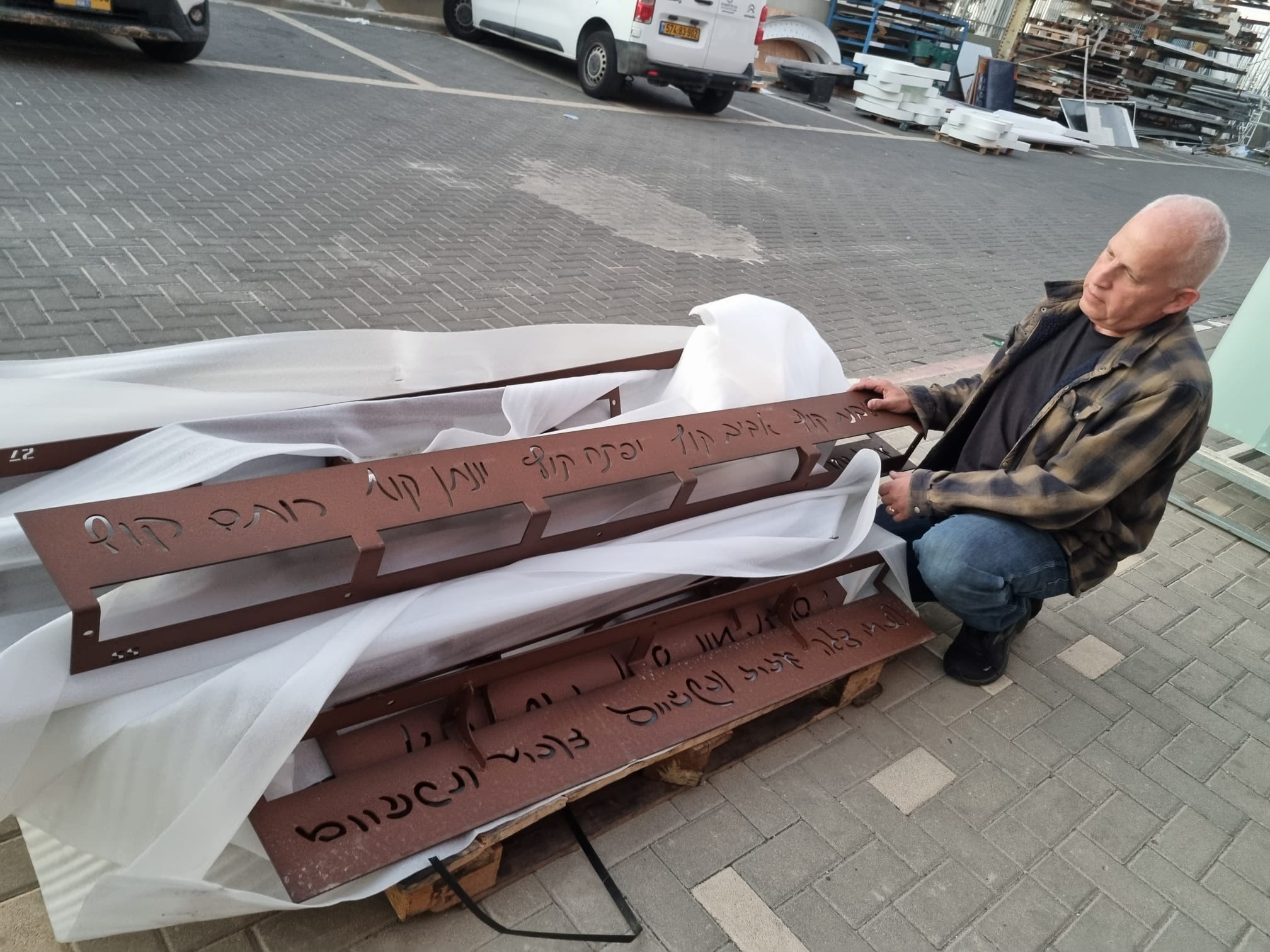
Among the visionary ideas of Ofir Libstein, the late head of the Sha’ar Hanegev Regional Council, was a tourist trail that would tell the story of Jewish settlement in the Negev Desert, as well as the challenges of security and lack of water in the region close to the Gaza Strip.
Between 2021 and 2023, Libstein worked with architect Zvika Pasternak on 14 stations, telling stories of different sites, starting with the period before Israeli independence.
The trail runs along a pipeline that was laid in 1947 to bring water to the desert area.
On September 27, 2023, Libstein marked the trail’s opening with a celebration.
Ten days later, he was dead — murdered by Hamas terrorists as he tried to defend his community in Kibbutz Kfar Aza.
His son, Nitzan Libstein, his mother-in-law, Bilha Epstein, and his wife’s nephew, Netta Epstein, were also slain.
They were among 64 Kfar Aza residents killed, as some 250 gunmen swarmed around the kibbutz. Throughout the border region, thousands of invading terrorists murdered some 1,200 people, the vast majority of whom were civilians. They abducted 251 to the Gaza Strip, including 19 from Kfar Aza.
According to Pasternak, Libstein’s dream was for the trail’s 15th station to be built at Kfar Aza.
“A few weeks after his death, I asked Ofir’s wife, Vered, for permission to create a memorial site at Kfar Aza,” Pasternak told The Times of Israel.
With permission granted, he set to work with the bereaved families.
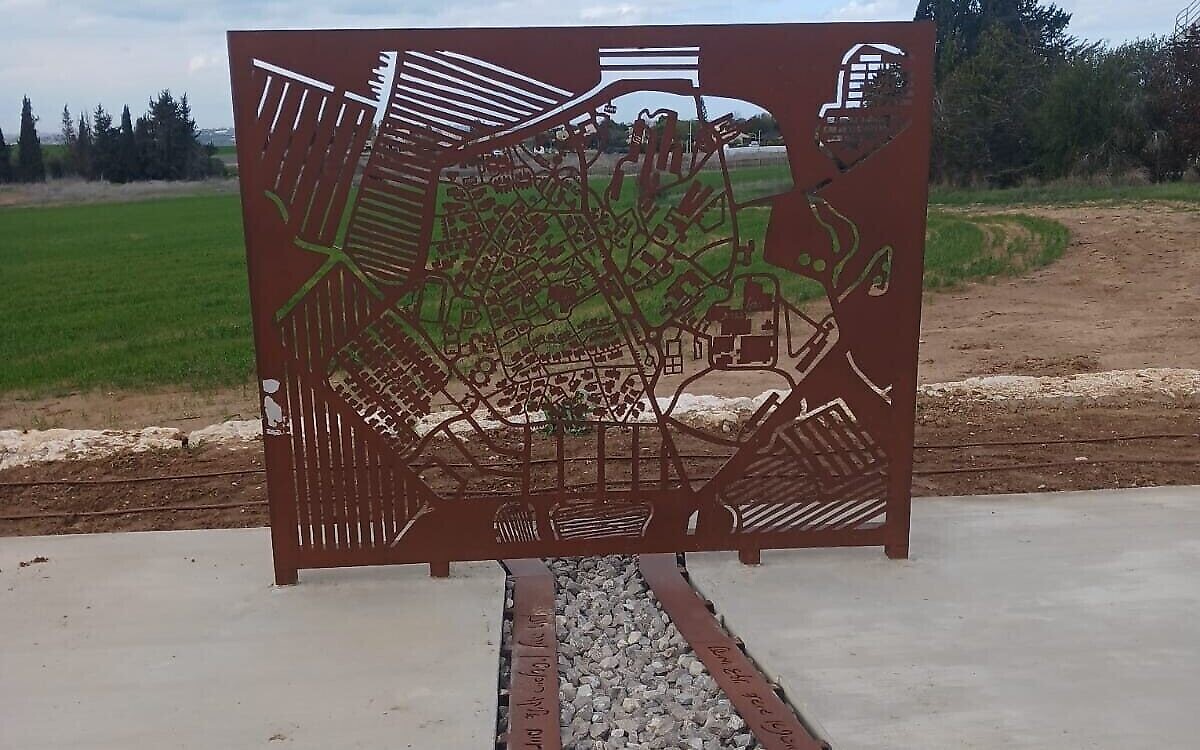
Opened to the public earlier this month, but not yet formally dedicated, the memorial continues the design language of the other 14 stations by using a stylized pipe to tell the story of October 7, locate the site on a map of the trail, and provide a QR code that leads the visitor to an explanatory film.
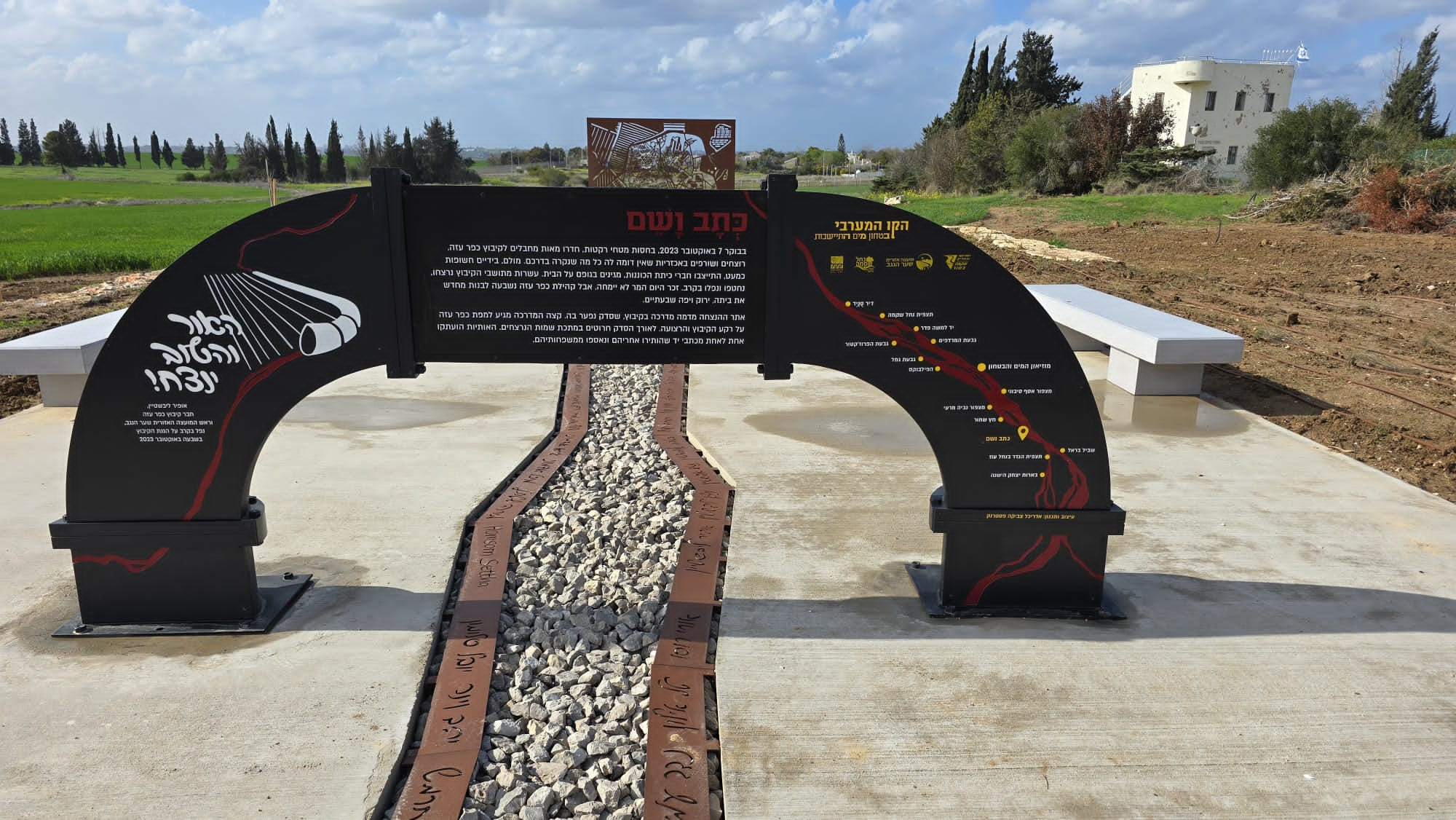
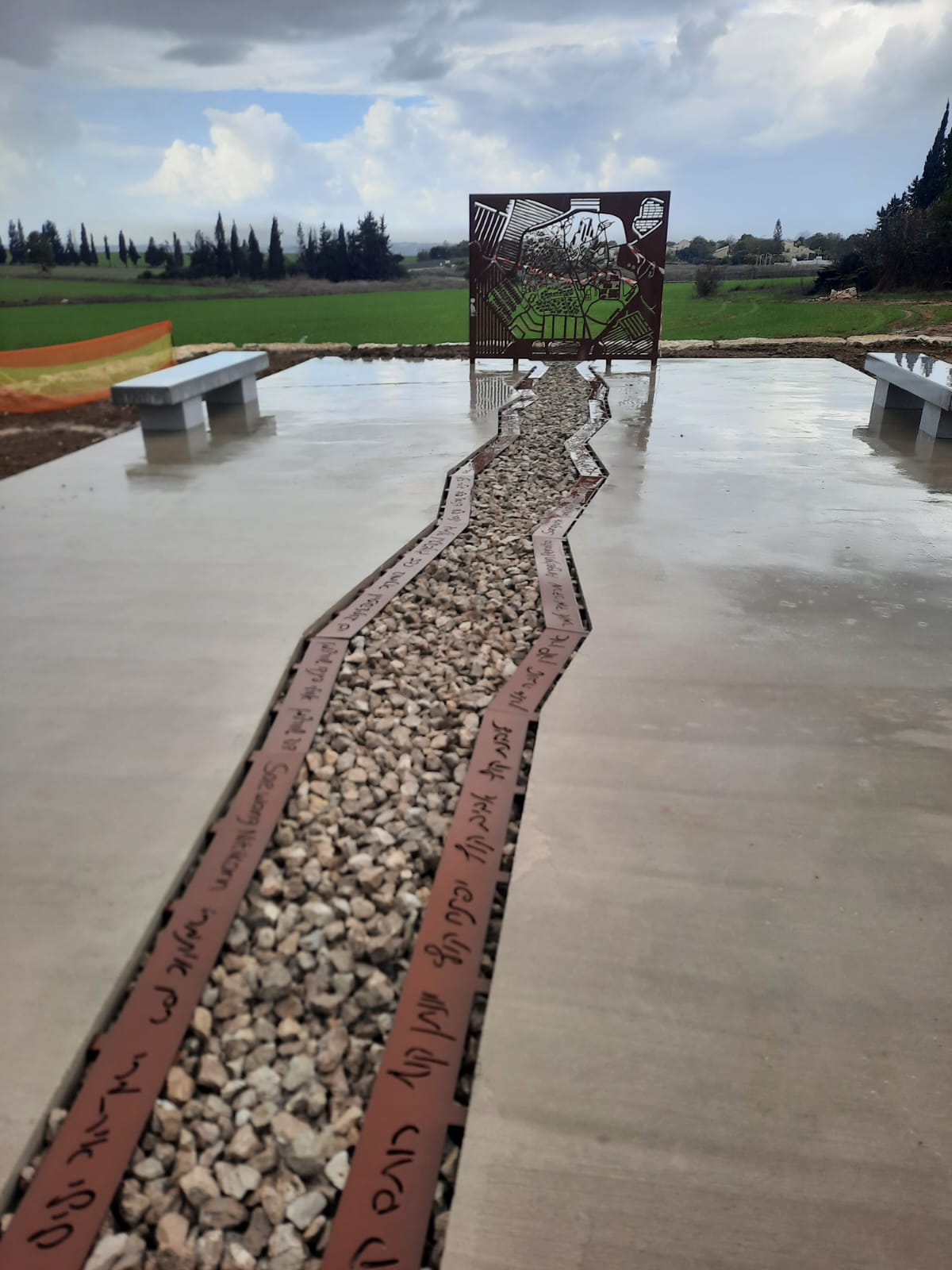
It has benches and a pathway of brushed concrete, similar to the paths that wind through Kibbutz Kfar Aza. Cutting through the center is a ribbon of gravel — a metaphor for the deep wound sustained by the community on October 7.
Pasternak’s idea was to get the bereaved families to write the names of their 64 loved ones and to cut these names into metal that would run alongside the symbolic gash.
“Then one of the bereaved parents said, ‘But we have the handwriting of our son,’ and we understood that we could take each person’s handwriting as if those murdered were taking part in the project,” Pasternak said.
Pasternak and his team spent a month at Kibbutz Shefayim in central Israel where the Kfar Aza community had been initially evacuated en masse, and went through all manner of documents with the families, from diaries to scribbled notes, in order to locate examples of each victim’s signature.
When it came to naming the site, “Ktav Yad,” meaning “handwriting” in Hebrew, was suggested. The families proposed “Ketav Vashem,” or “writing and name.” When Pasternak pointed out that this was similar to Yad Vashem, the name of Israel’s official memorial to the victims of the Holocaust, “They said, ‘Yes, that’s what we want,'” he recalled.
The metaphorical wound ends with a metal map of Kfar Aza, through which the real Gaza can be seen, specifically the Shejaiya neighborhood of Gaza City.
Pasternak explained that he designed the map this way because of the central role Gaza played in the life of the kibbutz.
The memorial is the first built at a rural community hit on October 7. In November, a commemorative monument was opened on the site of the demolished police station in the city of Sderot, where Hamas terrorists killed 20 police officers before barricading themselves inside. After heavy exchanges of fire with security forces, the station was bulldozed to kill the remaining terrorists.
Built with the help of the Drainage Authority and the Sha’ar Hanegev Regional Authority, this latest memorial sits just outside Kfar Aza. Residents were not yet ready to decide how to commemorate October 7 within the kibbutz, Pasternak said.
They still live in temporary accommodation outside Kfar Aza, split between two communities (Kibbutz Shefayim and Kibbutz Ruhama in the Negev), and privately rented accommodation all over Israel. The Tekuma Directorate, tasked by the state with rehabilitating the Gaza border area, aims to complete the physical overhaul of Kfar Aza sometime next year.
Agreement has been reached to extend the trail to Kibbutz Zikim, at the northern tip of the Gaza Strip, and down to Kerem Shalom, at the southern end, on the Egyptian border.









The Times of Israel Community.