

Lapid takes to Facebook to calm public fear of ‘scary’ austerity measures
‘I know it isn’t easy … but the steps we are taking now are necessary fixes that will not last too long,’ promises finance minister
 Add ToI as a Preferred Source on Google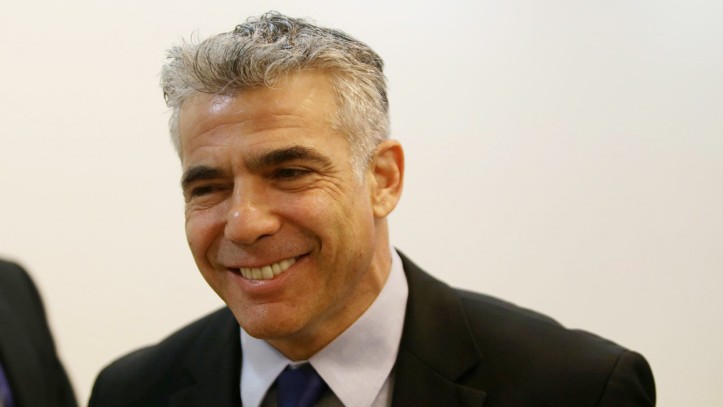
Finance Minister Yair Lapid once again chose Facebook Saturday as the medium through which to calm an Israeli public fearful of looming austerity measures as the country faces a NIS 39 billion budget deficit.
“I know it isn’t easy and I know the austerity measures are scary … but the steps we are taking now are painful, but necessary, fixes that will not last too long,” Lapid assured his 190,000 Facebook friends. “Everything we are doing is part of a long-term plan that will produce a fundamental change in education, housing, lowering the cost of living and equality of the burden — everything that is important to the working Israeli.”
“It’s said that Israelis care only about their money. I don’t believe it for a moment. Israelis aren’t angry because times are difficult — the upcoming Remembrance Day is a sad reminder to the fact that we have stood together through more difficult times in the past. What angers them is the feeling that the money is going to the wrong places, and that the government forgets that it has to treat every tax-payer penny as holy,” Lapid wrote. “We are balancing the budget knowing full well that it involves an exacting price. We are shifting priorities despite knowing full well that habits are hard to break. We are putting honesty and trust back on the table.”
Lapid concluded by promising that the planned measures would work, even though it might take a while.
“It will work because we will be patient and determined, and won’t give in to short-sighted, populist rhetoric. It will work because, instead of handing money to those closest to the plate, we will focus on the working public and the need to improve their lives. It will work because the last elections showed us that in times of crisis, it is better to turn to the Israeli public, and instead of handing out empty promises, tell them the truth to their faces,” Lapid wrote.
Lapid, a former journalist, rose to prominence earlier this year, shocking the political system by leading his Yesh Atid party to win 19 Knesset seats in its first election campaign. Lapid ran on a platform that sought to gain the support of Israel’s middle class, casting aside traditional right-left divisions and focusing instead on economic issues.
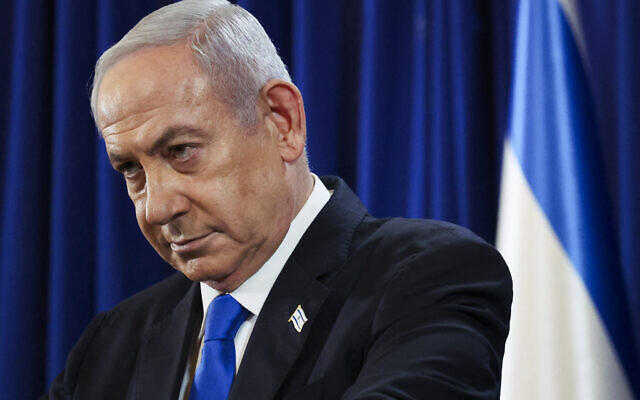
On Thursday, Lapid presented his outline for Israel’s 2014 budget to Prime Minister Benjamin Netanyahu, kicking off negotiations over what measures Israel will take to shrink its shortfall. Netanyahu was said to be opposed to proposed tax hikes, and requested that the Finance Ministry formulate alternatives to the heavy budget cuts for road and rail development and the Defense Ministry, while expressing support for other measures.
An additional meeting between Lapid and Netanyahu is set to take place Sunday.
Among the planned measures are cuts to allowances for children and a tax increase for consumers and top earners. Also included in the plan’s specified measures is a 1 percent hike in the VAT sales tax, which will bring it up to 18%.
The budget outline further suggests that Israel will gradually cancel the VAT exemption on fruits and vegetables, and will impose the sales tax in the southern resort city of Eilat, which is currently a duty-free zone. The proposal also includes a 1% rise in income taxes for those making over NIS 20,000, a similar hike in corporate taxes, a NIS 3-4 billion cut to the Defense Ministry budget, and a NIS 6 billion cut to the rest of the ministries.
Lapid’s spokesperson added that the outline contains an imposition of taxes on luxury cars, luxury apartments, and other luxury goods like yachts and television screens larger than 50 inches wide.
The budget outline, which also includes a freeze in raises for government workers and new infrastructure development, will likely face an uphill battle before it goes to a vote this summer. On Wednesday, ministers preemptively denounced the prospect of cuts and vowed to protect their budgets.
According to an estimation in the Hebrew daily Maariv, the budget plan will put an extra NIS 26.9 billion in the state’s treasury.
Finance Ministry officials stressed Wednesday that the presentation was not a final draft, but a suggestion of steps that should be taken to shrink the deficit, Israel Radio reported.
Lapid had warned upon taking office that he would have to make severe cuts, calling the deficit “monstrous,” and saying the country’s financial situation was worse than he thought.
Israel’s budget deficit in 2012 reached NIS 39 billion, or 4.2% of its gross domestic product, more than double the state’s original projection for the shortfall. Officials have said new taxes and severe cuts in public expenditures would have to be put into place in the 2013 budget in order to bring the deficit under control.
The cabinet will have until June 9 to pass the budget, at which time the Knesset will have a day to vote to move it to the Knesset Finance Committee. The final budget will go up for final passage by the end of July.
Opposition leader Shelly Yachimovich, in an interview on Channel 2’s Meet the Press Saturday, said that during coalition talks in February, Netanyahu had offered her the Finance Ministry portfolio, but said she refused it, citing insurmountable differences in their economic worldviews. Yachimovich has promised to oppose deficit-fighting measures that will harm Israel’s poor.








The Times of Israel Community.