

Lebanon can’t handle next COVID wave, hospital chief says
Economic crisis piling on pressure, leaving health service ill-equipped to face new spike in illness
 Add ToI as a Preferred Source on Google
BEIRUT — Lebanon’s deepening economic crisis has piled pressure on hospitals, leaving them ill-equipped to face any new wave of the coronavirus, a top hospital director has warned.
Already struggling with shortages of medicine and an exodus of staff abroad, the country’s health facilities are now also having to contend with almost round-the-clock power cuts.
“All hospitals… are now less prepared than they were during the wave at the start of the year,” said Firass Abiad, the manager of the largest public hospital in the country battling COVID-19 .
“Medical and nursing staff have left, medicine that was once available has run out,” and ever-lengthening cuts to the mains power supply have left hospitals under constant threat.
Even the Rafik Hariri University Hospital (RHUH) he runs has been struggling to cope.
“We only get two to three hours of mains electricity, and for the rest of the time it’s up to the generators,” Abiad said.

On top of worrying that doctors could burn out, “we have the huge burden of having to constantly be on the hunt for fuel oil.”
Huge demand for the increasingly scarce commodity has driven up prices by more than 80% since June 17.
Even at the prestigious RHUH, some medicines are routinely running out.
“Some days it’s antibiotics, others it’s anesthetics,” the hospital chief said.
Sometimes “we’re forced to ask the patients’ relatives to go and try to find the medicine from another hospital or a pharmacy.”
After dropping over the spring, COVID-19 cases are on the rise again, as Lebanese expats flood home for the summer and many gather with family and friends.
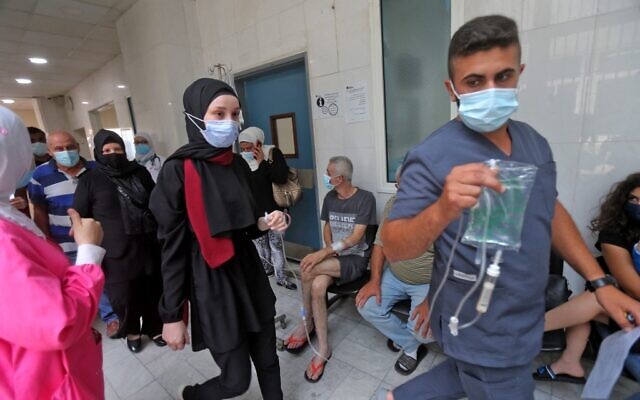
On Thursday alone, 98 people tested positive for COVID-19 on arrival at Beirut airport, the health ministry said.
“It could be catastrophic if this rise in coronavirus numbers leads to a spike like the one we saw at the start of the year,” Abiad said.







The Times of Israel Community.