

‘Life is really difficult’: Tehranis share economic grievances
Residents who have endured decades of hardship, revolution, war and sanctions feel the government does not care about them
 Add ToI as a Preferred Source on Google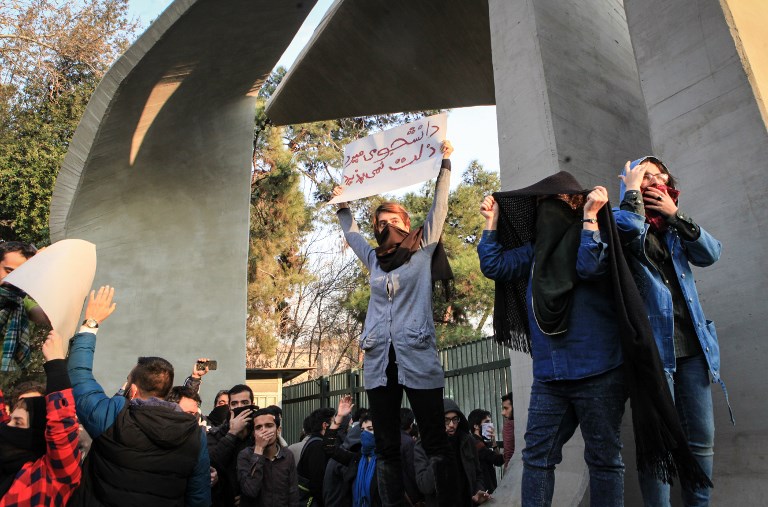
TEHRAN, Iran — The streets of Iran’s capital have been relatively quiet as protests hit much of the country, but Tehranis still have plenty to complain about and demand action from the government.
“Life is really difficult. The high prices really put me under pressure. My husband is a government worker but his salary is no way enough for us to make ends meet,” said Farzaneh Mirzaie, 42, a mother of two.
She said much of her family worked in a carpet factory in Kashan, a town 250 kilometres (150 miles) south of the capital, but they have all recently lost their jobs.
“The owner of the factory cannot afford to buy thread for carpets and so he sacked everyone. How should they survive?”
#Tehran uprising tonight Enghelab (revolution) square people are chanting: 'Guns, tanks, explosives do not work any more and mullahs must get lost' and 'shame on you Khamenei, leave our country alone' #IranProtests #FreeIran pic.twitter.com/wX5lBBLcqa
— Hossein Abedini (@HoAbedini) December 31, 2017
It is a story heard up and down the country as Iran struggles to recover from years of poor economic management and crippling international sanctions.
On Sunday night, Tehranis listened to President Hassan Rouhani address the mass protests that have spread across Iran since Thursday, in which he said people had the right to protest but should not engage in violence.
“He says it’s free for people to protest but we’re scared of speaking. Even now, I’m scared of talking to you,” said Sarita Mohammadi, a 35-year-old teacher.
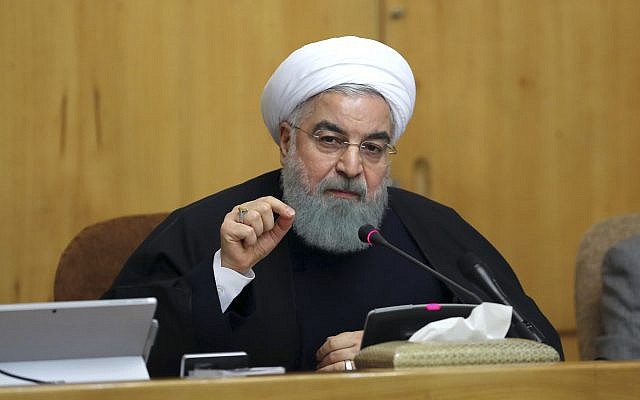
“If it’s free to speak out and protest, then why have they deployed so many forces out there in the streets?”
We’ll have to pay for it
Many people are nonetheless put off by the violence they have seen from protesters who have attacked banks, government buildings and symbols of the regime.
Sara, a 26-year-old student in conservative dress, agreed with the government line that the protests were being “guided from abroad”, but even she felt the protests began over “people’s economic hardship”.
“I’m not at all for demonstrations in which public property is vandalised. When some break windows, then we’ll have to pay for it later,” added Shiva Daneshvar, a 55-year-old housewife.
But everyone understands the frustration seething under Iranian society.
“I think people don’t like to vandalise and set fire to places, but this is the only way to make their voices heard,” said Nasser Khalaf, 52, who works for an oil company, adding that he has two unemployed sons in their twenties.
Just in: Taking down Khomeini picture in Tehran, Jan. 1
#IranProtests #IranianProtests pic.twitter.com/GOLcnkogfG
— Ali Safavi (@amsafavi) January 1, 2018
Many feel the nation has not been rewarded for enduring decades of hardship — the tumult of the 1979 revolution, eight years of brutal war with Iraq in the 1980s and recent US sanctions.
“After 40 years they have realised that all the hardship… was in vain,” said Arya Rahmani, a 27-year-old nurse.
“I’m working in this society but I always have the stress of whether I’m going to be sacked tomorrow.”
“Mr Rouhani says ‘protest in a proper way’, but what is the proper way? If I come and say ‘Mr Rouhani, I’m an educated person but I’m unemployed’… well, he wouldn’t give a damn.”
Trump in ‘his palace’
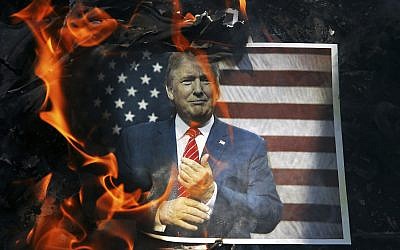
There was typical derision regarding US President Donald Trump, who has repeatedly tweeted his support for the protests in recent days, saying Monday that it was “TIME FOR CHANGE!”
Iran is failing at every level despite the terrible deal made with them by the Obama Administration. The great Iranian people have been repressed for many years. They are hungry for food & for freedom. Along with human rights, the wealth of Iran is being looted. TIME FOR CHANGE!
— Donald J. Trump (@realDonaldTrump) January 1, 2018
“Verbal support is of no use,” said Rahmani. “He’s living in his palace and here I’m arrested. What can Trump do?”
“It would be better if he didn’t support the protests,” added Khalaf, saying that external support from opposition groups was also unwelcome.
Many harbour a deep mistrust of Trump after he barred Iranians from visiting the United States as part of his ban on “terrorist” nations.
“The government should improve the people’s situation to a level where Trump won’t dare say such a thing,” said Mirzaie, the housewife.
Underlying it all is a deep-seated frustration that their country has failed to capitalise on its huge potential.
“Our country is really like gold. Whatever you can think of, you can find in Iran. But we are not benefiting at all from the things we have in our country,” said Mirzaie.
It remains unclear where the protests will go from here.
Without a clear leadership structure, the protests may struggle to stay focused, particularly if authorities decide to crack down more firmly than they have so far.
Khalaf, the oil company employee, said that may be tougher than during the last mass protests that followed allegations of election-rigging in 2009.
“In 2009 when people took to the streets it was only in Tehran and so they easily managed to suppress it,” he said.
“When it is widespread, then less forces can be sent.”


The Times of Israel Community.