

 From the Liveblog of
Friday, September 25, 2026
From the Liveblog of
Friday, September 25, 2026
At UN, Lebanon’s PM says recovering territory from Israeli occupation is existential challenge
 Add ToI as a Preferred Source on Google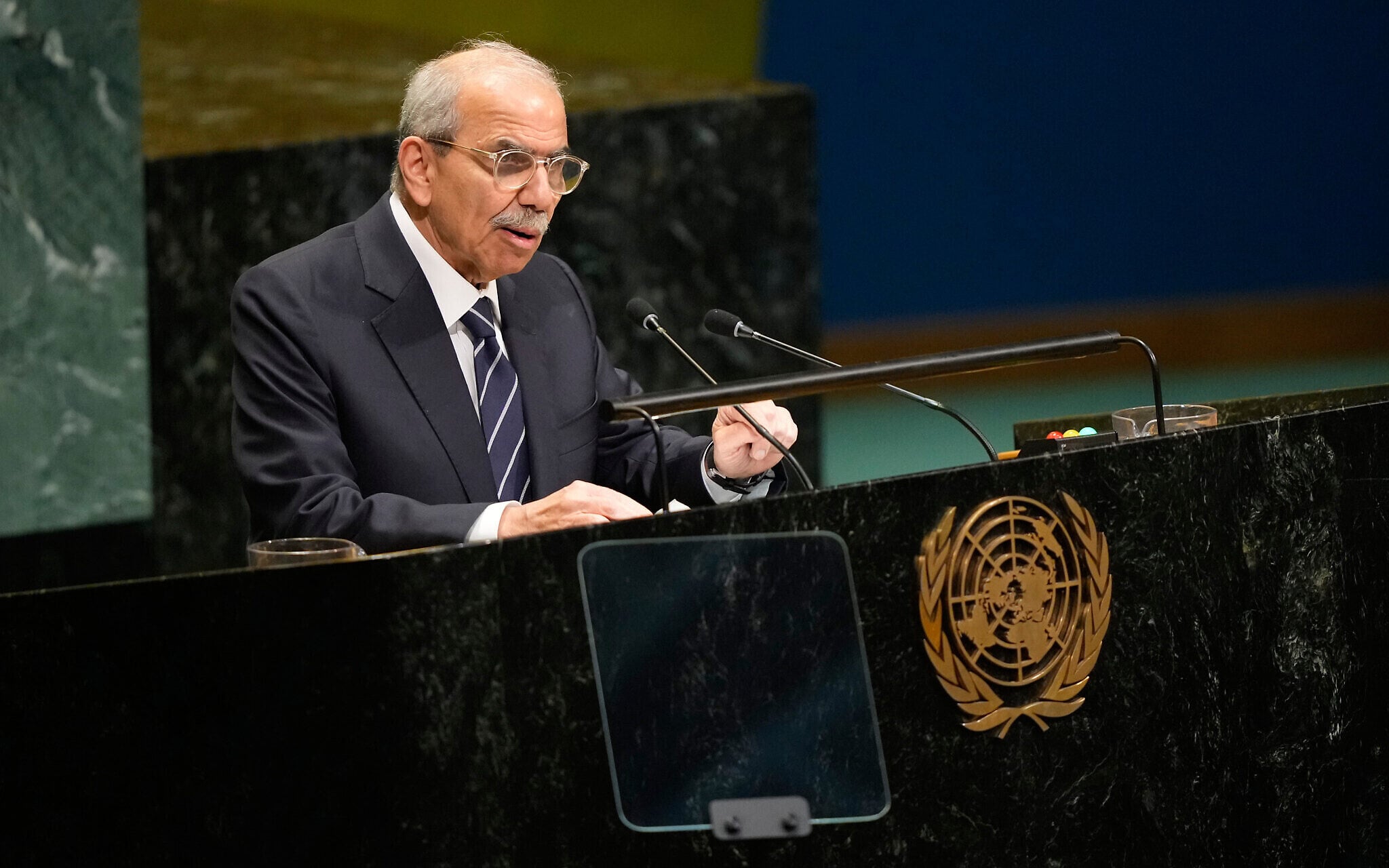
Lebanon’s Prime Minister Nawaf Salam says that recovering his country’s territory from Israeli occupation is one of the existential challenges for which he is responsible.
Israel occupied parts of southern Lebanon after the Hezbollah terror group launched attacks on Israel in March in support of its patron, Iran.
Salam insists at the UN General Assembly on the need to “avert the vacuum” that would be caused by withdrawing the UN peacekeeping mission, UNIFIL, deployed in the south of his country without a viable replacement.
The force is scheduled to begin its departure at the end of the year.
Salam lists “three existential challenges” for the country that he is tasked with solving as prime minister.
One is to “regain the trust of its people” after the country’s financial collapse and disastrous Beirut Port explosion in 2020, he says. The second is to “reclaim national decision-making,” that “no weapons exist outside armed forces,” and no decisions on war can be made by non-state actors.
The third is to “recover all of its territory from Israeli occupation and to extend its sovereignty and extend its sovereignty over its own national soil,” citing UN Security Council Resolution 1701 as a key guideline for relations with Israel.
The resolution ended the Israel-Hezbollah war in 2006 and required that the Iran-backed terror group disarm and retreat north of the Litani River.
Israeli officials repeatedly accused Lebanon and the UN’s UNIFIL mission of failing to implement the resolution.
Under a framework agreement between Israel and Lebanon reached in June, the Lebanese army is supposed to gradually take control of southern Lebanon as Hezbollah disarms and Israeli forces withdraw. Progress has been slow, however, with Israel saying it will remain in the area as long as Hezbollah poses a threat.




The Times of Israel Community.