

 From the Liveblog of
Tuesday, September 20, 2022
From the Liveblog of
Tuesday, September 20, 2022
Before meeting Lapid, Jordan’s king warns of ‘undermining Jerusalem status quo’ at UN
 Add ToI as a Preferred Source on Google
Luke Tress is The Times of Israel's New York correspondent.
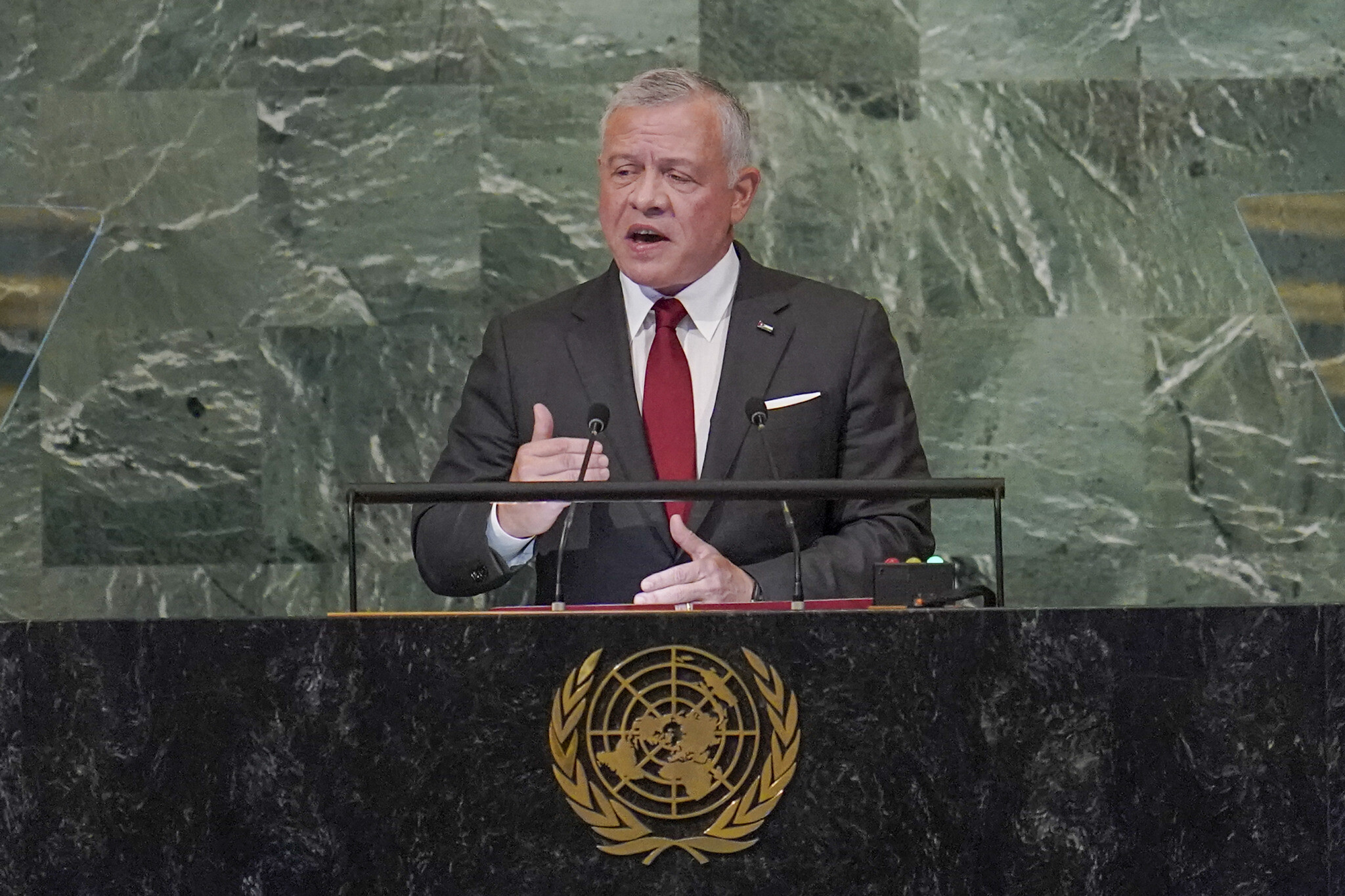
Jordan’s King Abdullah II warns against “undermining” the status quo in Jerusalem in his opening address to the UN General Assembly, ahead of his meeting today with Prime Minister Yair Lapid.
Jordan is the custodian of the Temple Mount complex in Jerusalem, a focal point of tensions in the Israeli-Palestinian conflict. An activist group said yesterday that Jewish visitors are going to the site in record numbers.
“The future of Jerusalem is an urgent concern. The city is holy to billions of Muslims, Christians and Jews around the world. Undermining Jerusalem’s legal and historical status quo triggers global tensions and deepens religious divides,” Abdullah says.
“The holy city must not be a place for hatred and division and as custodians of Jerusalem’s Muslim and holy sites we are committed to protecting the historical and legal status quo and to their safety and future,” he says.
He also claims Christians are “under fire” in Jerusalem. Israel has had some recent disputes with Christian leaders in the capital, with courts handing settler groups control of former church property.
“As a Muslim leader, let me say clearly that we are committed to defending the rights, the precious heritage of the Christian people for our region. Nowhere is that more important than in Jerusalem. Today, Christianity in the holy city is under fire. The rights of churches in Jerusalem are threatened. This cannot continue,” he says.
He calls for support for Palestinian refugees and their descendants, and for a two-state solution based on the 1967 borders with Jerusalem as the shared capital.
“Peace continues to be elusive. Neither war nor diplomacy has held the answer to this historic tragedy. It is the people themselves, not politics and politicians, who will have to come together and push their leaders to resolve this,” he says. “What would our world look like now if the conflict had been settled long ago? If walls had never gone up and people had been allowed to build bridges of cooperation instead?”
Without “the injustices of occupation, how many generations of youth could have grown up in the optimism of peace and progress?”



The Times of Israel Community.