

 From the Liveblog of
Saturday, November 14, 2026
Descendants of Jewish owners of Van Gogh piece ask Sotheby’s to pull it from auction, citing sale under Nazis — NYT
 Add ToI as a Preferred Source on Google
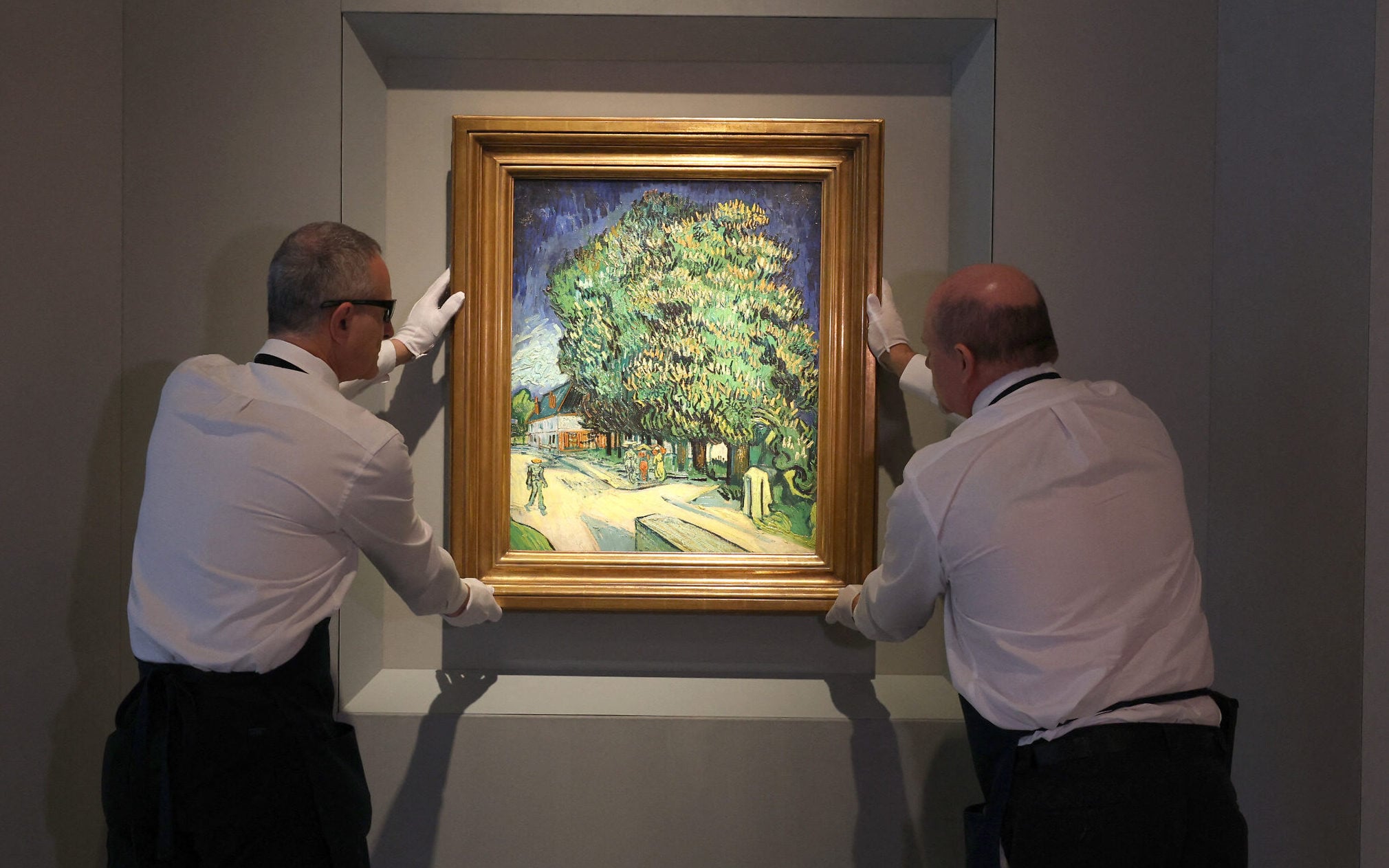
The descendants of the Jewish former owners of a Vincent van Gogh painting are asking New York’s Sotheby’s to pull the piece from its auction set for Wednesday night, arguing that it was sold by the family under pressure from the Nazis in 1936, the New York Times reports.
“Châtaigniers en Fleurs,” or “Blossoming Chestnut Trees” in English, was painted in 1890 and is estimated to be worth $180 million.
According to the New York Times, the claim centers on the 1936 sale by art dealer Walter Feilchednfeldt, to whom the Fischer family deposited the painting in either 1932 or 1933.
Gottfried Bermann Fischer, who inherited the painting as well as the S. Fischer Verlag publishing house from his father-in-law, fled Berlin for Vienna three months before the sale. Due to restrictions on what Jews could take when they emigrated, the family was forced to pay the “Reich flight tax,” according to research by the descendants’ lawyer, Gunnar Schnabel.
After the war, Fischer’s ownership of the publishing house was restored, but he did not seek restitution for his sold paintings due to lack of a legal basis for compensation for art sales in countries not under Nazi rule at the time of such deals, in this case, the Netherlands in 1936.
Schnabel urges Sotheby’s to prove that the painting was sold by the family regardless of Nazi pressures, and at market price, or “no auction may take place,” according to a November 12 email seen by the Times.
Schnabel says his client “is prepared to work toward a fair and just solution in the spirit of the 1998 Washington Principles,” a non-binding set of 11 guidelines on how to approach artwork that was stolen from Jews by the Nazis.
Acknowledging the concerns, Sotheby’s says in response: “While our research to date has not established that the painting was sold under duress, we recognize the importance of engaging thoughtfully and constructively with the family and are committed to working toward a mutually satisfactory resolution.”










The Times of Israel Community.