

 From the Liveblog of
Thursday, November 27, 2025
From the Liveblog of
Thursday, November 27, 2025
MK Bismuth’s draft bill keeps yeshiva students exempt from IDF, lets draft-dodgers age out of sanctions
 Add ToI as a Preferred Source on Google
Sam Sokol is a former political correspondent at The Times of Israel. He was previously a reporter for the Jerusalem Post, Jewish Telegraphic Agency and Haaretz. He is the author of "Putin’s Hybrid War and the Jews"
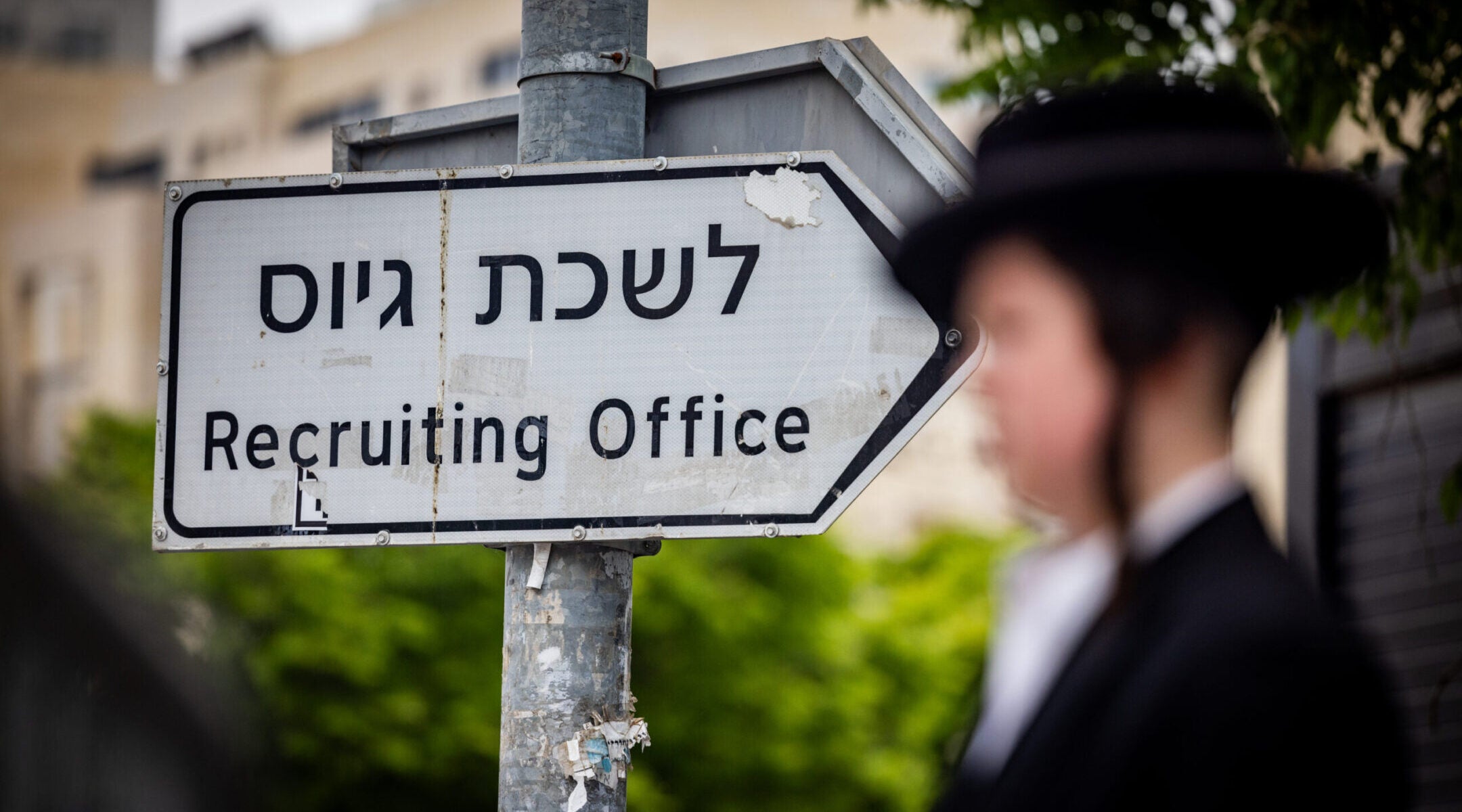
A new draft of the government’s controversial ultra-Orthodox conscription bill states that its goal is to “regulate the status of full-time yeshiva students while recognizing the importance of Torah study.”
The bill, drafted by Likud MK Boaz Bismuth, was released to members of the Knesset Foreign Affairs and Defense Committee this afternoon.
While stating that it aims to “reduce inequality in conscription for regular military service, including through the integration of members of the Haredi public into civil-security service,” the bill also says that full-time yeshiva students who do not engage in any other vocation may be granted yearly deferments from enlistment.
Provisions included in a previous version of the bill for providing oversight of yeshiva attendance, such as the implementation of fingerprint scanners in yeshivas, were removed from the updated version of the bill.
Students who receive deferment orders may be allowed, upon reaching the age of 20, to request civilian security service.
Striking out part of a clause from a previous version that stated that the government would recruit conscripts from among yeshiva students, the updated bill stipulates that the government will recruit them from among graduates of Haredi educational institutions, and says the recruits will perform military service or civilian security service, in accordance with annual minimal thresholds.
The bill lists these thresholds as 8,160 conscripts in the first year; 6,840 in the second; 7,920 in the third; 8,500 in the fourth; and “no less than 50 percent of the annual enlistment cohort from graduates of Haredi educational institutions” in the fifth year.
After the fifth year, the defense minister will be empowered, with the Foreign Affairs and Defense Committee’s approval, to set an annual minimal threshold no lower than that of the fifth year.
This minimum threshold will also include those performing non-military service, although this group will be capped at 10% of the total.
For the purposes of the law, Haredim will be defined as those who studied at a Haredi educational institution for at least two years between the ages of 14 and 18.
Failure to meet recruitment targets will mean the withdrawal of funding for yeshiva students enjoying deferrals.
Any yeshiva students who have not received an exemption and did not report for service will not be allowed to get a driver’s license until the age of 23, unless allowed by an exceptions committee, and will be ineligible for academic scholarships. They will also be banned from traveling abroad until the age of 23, unless otherwise allowed by an exceptions committee, and “shall not be eligible to participate in the subsidized public-housing program” or receive tax credits, national insurance discounts, daycare subsidies or transit discounts.
The sanctions will not apply after a yeshiva student reaches the age of exemption, which is set at 26.
Should the law fail to lead to the conscription of 95% its target for three consecutive years, the defense minister will establish a committee to examine the issue in order to issue recommendations for the implementation of the law and proposals for legislative amendments.
The bill further stipulates that the IDF will work to “enable the preservation” of Haredi recruits’ lifestyle while simultaneously working “to establish service tracks that are tailored to the lifestyles of graduates of Haredi educational institutions, and to expand such tracks, taking into account the minimum threshold for enlistment in each enlistment year.”
The IDF chief of staff will be required to report four times a year on the implementation of these efforts and create an advisory committee, some of whose members must have a yeshiva background, to deal with the issue. The Defense Ministry will work to establish Haredi pre-military preparatory academies.










The Times of Israel Community.