

 From the Liveblog of
Saturday, June 27, 2026
From the Liveblog of
Saturday, June 27, 2026
Netanyahu attacks Eisenkot as he touts operations against Hamas and Hezbollah since Oct. 7
 Add ToI as a Preferred Source on Google
Nava Freiberg is The Times of Israel's deputy diplomatic correspondent.
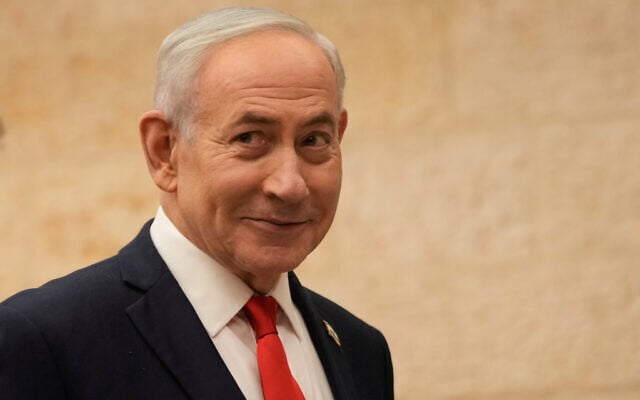
Prime Minister Benjamin Netanyahu attacks the ostensible security positions of former IDF chief Gadi Eisenkot, casting his rising election rival as too politically cautious to have ordered key operations that, the premier says, have reshaped the battlefield against Hamas in Gaza and Hezbollah in Lebanon.
Asked at his press conference to respond to recent criticism by Eisenkot of his handling of Lebanon, Netanyahu argues that the Yashar party leader and his political allies had opposed key wartime moves, including the IDF’s entry into Rafah, its seizure of the Philadelphi Corridor along the Gaza-Egypt border, and its expanded operations against Hezbollah in Lebanon.
“I remember what Gadi Eisenkot said, and what others said, when we were still in Gaza.… They said we should stop while we were still in Khan Younis. Not enter Rafah. Not take control of the Philadelphi Corridor. They said we should simply make a deal, bring out the hostages, and leave Gaza – leave all of Gaza. And then, two or three years later, we could come back to it,” he says.
Following that advice, Netanyahu claims, would have meant that “all of Hamas” and top officials assassinated by Israel during the war “would still be there, still alive, still in control.”
He says this also would have prevented the IDF from expanding operations against Hezbollah in Lebanon, as it did in late 2024, nearly a year after the Lebanese terror group first began attacking Israel in support of Hamas:
“It also means that we never would have entered Lebanon at all. We would not have carried out the [2024 beeper] operation. We would not have eliminated [former Hezbollah leader Nassan] Nasrallah. We would not have destroyed 90 percent of Hezbollah’s missile stockpile. We would have left all of Radwan Force’s terror tunnels right here on the border,” Netanyahu says, adding that recent expansions of the southern Lebanon security zone also wouldn’t have been carried out.
“So from the perspective reflected by Gadi Eisenkot and his colleagues, they essentially wanted us to end up with nothing,” he says. “Today, we control nearly 70 percent of the Gaza Strip. We are squeezing Hamas. And we are holding this strong security zone in Lebanon.”
Netanyahu charges that in order “to preserve his political future,” Eisenkot would never have been willing to act more aggressively militarily on these fronts.
“I believe the right thing to do is whatever is necessary to ensure Israel’s security and the security of the north. The alternative was to leave 150,000 rockets and missiles in Lebanon,” he says, adding that today there are “kilometers upon kilometers of tunnels there. And today we are destroying them. So I am doing what is right.”





The Times of Israel Community.