

Massive protests rock Iran after currency sinks; Tehran shopkeepers shutter stores
Footage shows authorities dispersing crowd with tear gas; protesters chant anti-regime slogans in largest demonstrations since death of Mahsa Amini in 2022
 Add ToI as a Preferred Source on Google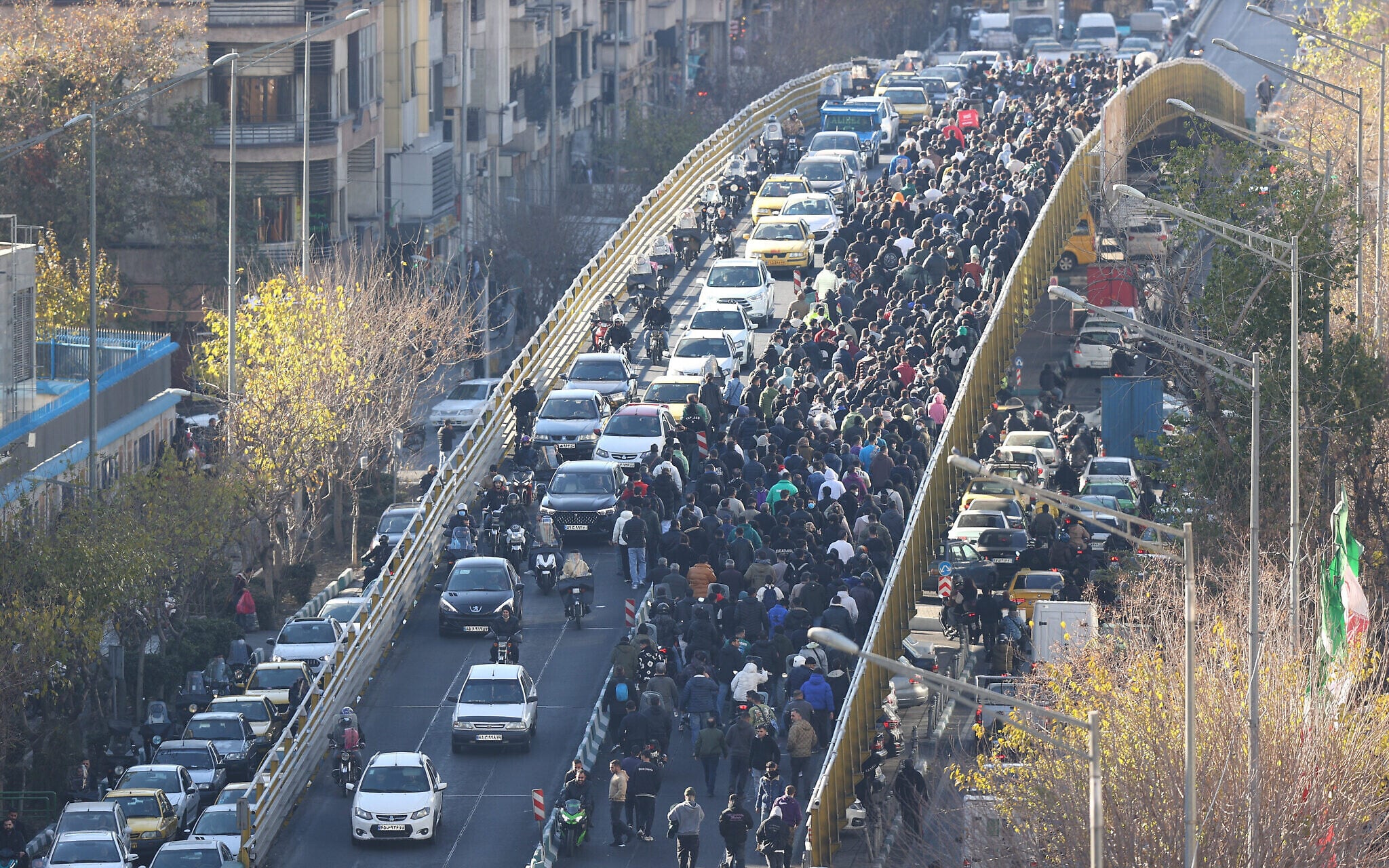
Iran’s largest protests in three years erupted Monday after the country’s currency plummeted to a record low against the US dollar, and the head of the Central Bank resigned.
State TV reported the resignation of Mohammad Reza Farzin, while traders and shopkeepers rallied in Saadi Street in downtown Tehran as well as in the Shush neighborhood near Tehran’s main Grand Bazaar. Merchants at the market played a crucial role in the 1979 Islamic Revolution that ousted the monarchy and brought Islamists to power.
The official IRNA news agency confirmed the protests. A journalist from the pro-labor news agency ILNA reported “demonstrations” at several bazaars in the center of the capital on Monday, the agency said.
It said protesters “are demanding immediate government intervention to rein in exchange-rate fluctuations and set out a clear economic strategy.”
Monday’s protests were the biggest since 2022, when the death of 22-year-old Mahsa Jina Amini in police custody triggered nationwide demonstrations. She was arrested by the country’s morality police for allegedly not wearing her hijab properly.
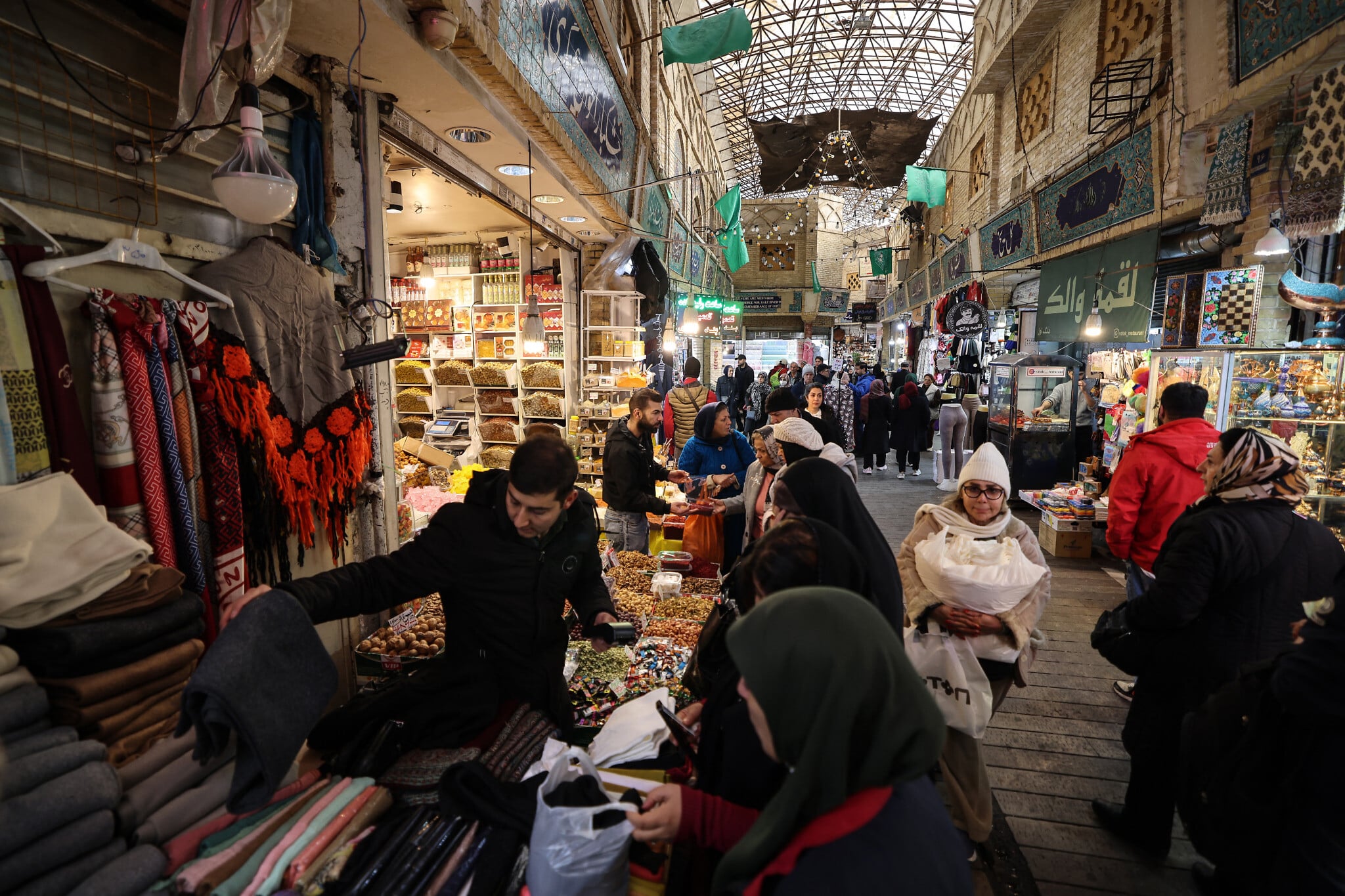
Witnesses told The Associated Press that traders shut their shops on Monday and asked others to do the same. ILNA said many businesses stopped trading, even though some kept their shops open.
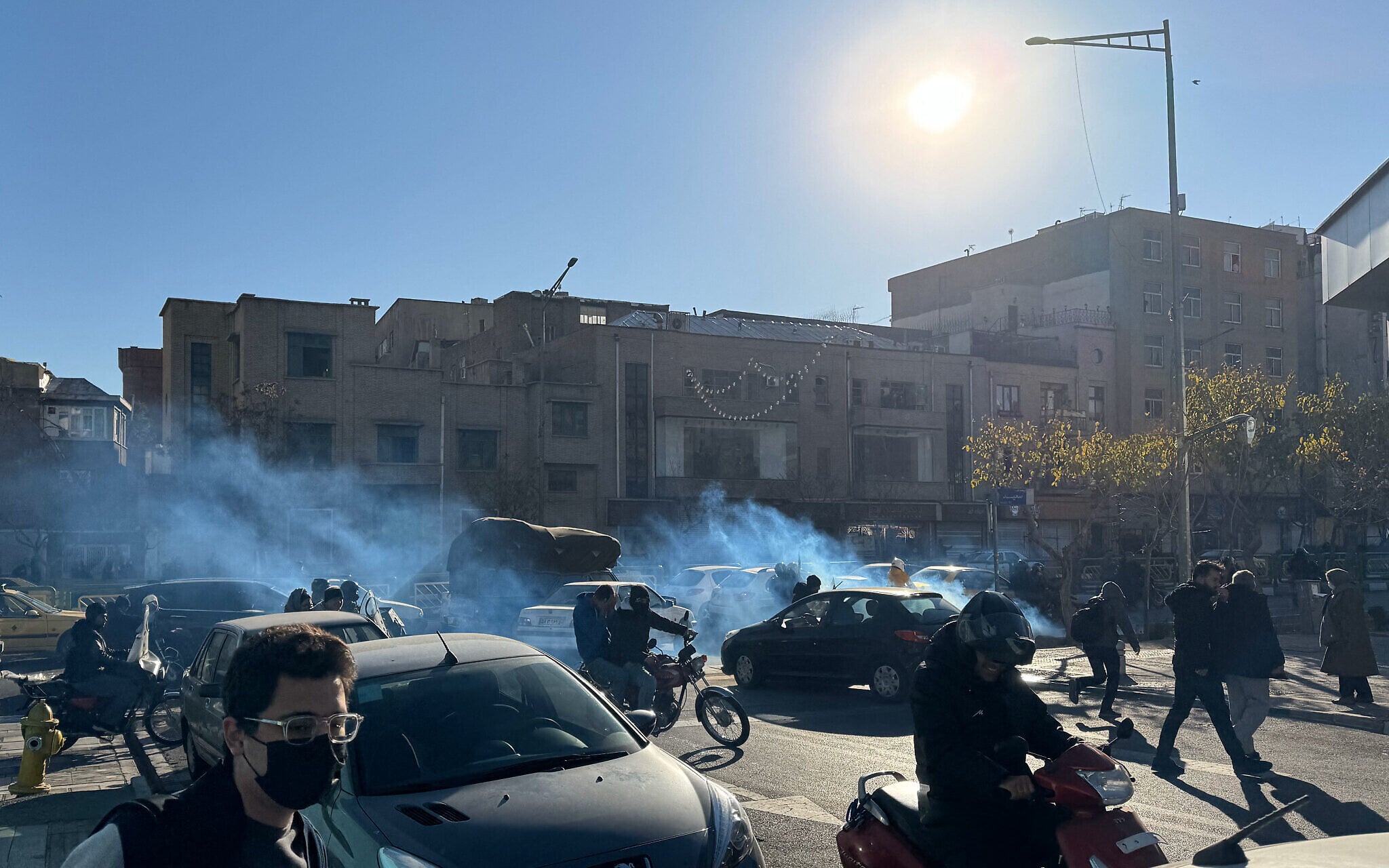
Videos sent to Iran International show security forces confronting protesting shopkeepers in central Tehran on Monday, with riot police deployed around the Grand Bazaar and tear gas used on Jomhouri Street near the Hafez underpass. pic.twitter.com/OyhQlyUJaN
— Iran International English (@IranIntl_En) December 29, 2025
Price fluctuations are paralyzing the sales of some imported goods, with both sellers and buyers preferring to postpone transactions until the outlook becomes clearer, AFP correspondents noted.
“Continuing to do business under these conditions has become impossible,” ILNA quoted protesters as saying.
State news agency IRNA reported: “Many shopkeepers preferred to suspend sales in order to prevent potential losses.”
Nighttime protests were held in several parts of Iran, from Qeshm in the south, to Zanjan and Hamadan in the north.
"Death to the dictator" was heard on Qeshm Island.
Zanjan protesters also chanted "Seyyed Ali (Khamenei) will be toppled this year". pic.twitter.com/G8h0yAE3nX— Iran International English (@IranIntl_En) December 29, 2025
It added that some protesters on Monday “chanted slogans.” Footage published by the Iran International news outlet showed crowds chanting slogans against the Islamic regime and in favor of the return of the Pahlavi monarchy.
The conservative-aligned Fars news agency released images showing a crowd of demonstrators occupying a major thoroughfare in central Tehran, known for its many shops.
Another photograph appeared to show tear gas being used to disperse protesters.
“Minor physical clashes were reported… between some protesters and the security forces,” Fars said, warning that such gatherings could lead to instability.
In Tehran's Saadi Metro Station, people were heard chanting "Long Live the King" and "This is the final battle, Pahlavi will return," a video obtained by Iran International shows.pic.twitter.com/hLkYu6hdBu
— Iran International English (@IranIntl_En) December 29, 2025
Witnesses reported similar rallies in other major cities, including Isfahan in central Iran, Shiraz in the south, and Mashhad in the northeast.
On Sunday, protests were limited to two major mobile markets in downtown Tehran, where the demonstrators chanted anti-government slogans.
On Monday, Iranian Chief Justice Gholamhossein Mohseni Ejei called for “the swift punishment of those responsible for currency fluctuations,” the justice ministry’s Mizan agency reported.
The government has also announced the replacement of the central bank governor.
“By decision of the president, Abdolnasser Hemmati will be appointed governor of the Central Bank,” presidency communications official Mehdi Tabatabaei posted on X.
Hemmati is a former economy and finance minister who was dismissed by parliament in March because of the sharp depreciation of the rial.
On Sunday, Iran’s President Masoud Pezeshkian delivered the budget for the next Persian year to parliament, vowing to fight inflation and the high cost of living.
Notably, the budget provides for a 20 percent increase in wages, a rate that is nonetheless well below that of inflation.
In December, inflation stood at 52% year-on-year, according to official statistics. But this figure still falls far short of many price increases, especially for basic necessities.
Additionally, Iran’s rial on Sunday plunged to 1.42 million to the dollar. On Monday, it traded at 1.38 million to the dollar.
The rapid depreciation is compounding inflationary pressure, pushing up prices of food and other daily necessities and further straining household budgets, a trend that could worsen with a gasoline price change introduced in recent days.
According to the state statistics center, the inflation rate in December rose to 42.2 percent from the same period last year and is 1.8% higher than in November. Food prices rose 72%, and health and medical items were up 50% from December last year, according to the statistics center. Many critics see the rate as a sign of approaching hyperinflation.
Reports in official Iranian media that the government plans to increase taxes in the Iranian new year, which begins March 21, have caused more concern.
Iran’s currency was trading at 32,000 rials to the dollar at the time of the 2015 nuclear accord that lifted international sanctions in exchange for tight controls on the country’s nuclear program. That deal unraveled after US President Donald Trump unilaterally withdrew the United States in 2018.
Iran’s economy, already battered by decades of Western sanctions, was further strained after the United Nations in late September reinstated international sanctions linked to the country’s nuclear program that were lifted 10 years ago.
Western powers and Israel accuse Iran of seeking to acquire nuclear weapons.
Negotiations with the United States on the issue are at a standstill, and uncertainty stemming from 12 days of war in June against Israel is also affecting the economic outlook.
Israel said its sweeping assault on Iran’s top military leaders, nuclear scientists, uranium enrichment sites, and ballistic missile program was necessary to prevent the Islamic Republic from realizing its avowed plan to destroy the Jewish state.
Iran has consistently denied seeking to acquire nuclear weapons. However, it enriched uranium to levels that have no peaceful application, obstructed international inspectors from checking its nuclear facilities, and expanded its ballistic missile capabilities. Israel said Iran had recently taken steps toward weaponization.
Pezeshkian, in an interview published on Saturday, accused the United States, Israel, and Europeans of waging “total war” against Iran.




The Times of Israel Community.