

Minister: Israel and Egypt share equal responsibility for Gaza
Ze’ev Elkin urges Arab world to solve humanitarian crisis; official in Cairo hits back, says beleaguered Palestinian enclave is exclusively ‘Israel’s problem’
 Add ToI as a Preferred Source on Google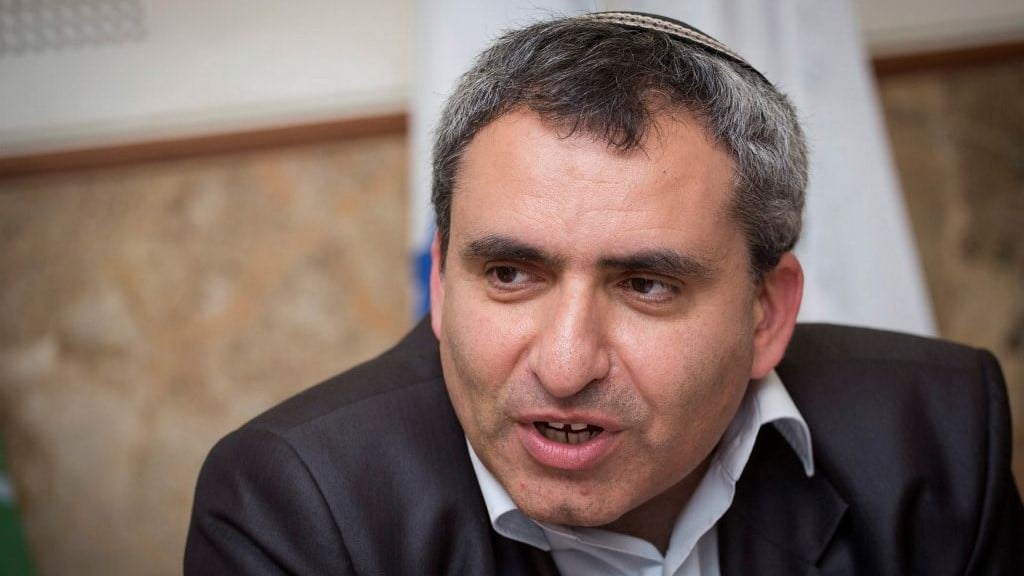
Environmental Affairs Minister Ze’ev Elkin said that Egypt bears as much responsibility for the situation in the Gaza Strip as does Israel, drawing censure from an official in Cairo, who said the beleaguered Palestinian enclave was exclusively “Israel’s problem.”
“As far as we are concerned, after Israel left Gaza, responsibility should not have been imposed on us,” Elkin told the Ynet news site on Monday. “Egypt is no less responsible.”
“We left Gaza. If someone strikes at us from Gaza, they will get hit back. Let the Arab world resolve the internal, humanitarian problem of the Gaza Strip. Why should we bear responsibility for this?”
Elkin’s comments came as Egyptian and UN officials were working to secure a long-term ceasefire deal between Israel and Hamas aimed at ending the current flareup in violence in the Strip.
An Israeli official close to Prime Minister Benjamin Netanyahu declined to say whether Elkin’s remarks reflected the government’s position.
There was also no official response from Cairo, but Reuters reported that Egyptian officials have privately expressed concern at Elkin’s call to assume more responsibility for the Palestinian territory.
One official said Cairo would stand firm in its position that Israel is alone responsible for the beleaguered Palestinian enclave.
“We are willing to do what we can to calm down the situation in Gaza or work on Palestinian reconciliation,” the official said, speaking on condition of anonymity. “But we will not take over from Israel in Gaza. It’s Israel’s problem.”
Conditions in the Gaza Strip deteriorated significantly after Hamas, an Islamic terror group sworn to Israel’s destruction, seized the territory from the Palestinian Authority in 2007. Since then, repeated attempts at intra-Palestinian reconciliation have failed and both Israel and Egypt have maintained a blockade on the territory to prevent Hamas from smuggling in weapons and material to construct fortifications and attack tunnels.
The Palestinian Authority also imposes sanctions on Gaza and has withheld payments for electricity and government workers.
As a result, many of Gaza’s nearly 2 million residents lack electricity, drinkable water, and food and the coastal enclave teeters on the verge of an economic and infrastructure collapse.
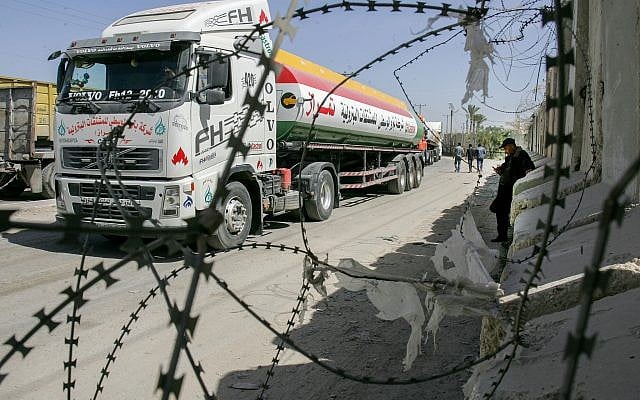
In response to the recent flareup in violence and arson attacks in Gaza, Israel levied further border restrictions, banning fuel imports the Kerem Shalom goods crossing.
According to reports, easing the Gaza blockade is one of the terms of a possible Israel-Hamas ceasefire deal being brokered by Cairo.
On Monday, the London-based, Saudi-owned Asharq al-Awsat newspaper said the first stage of the ceasefire proposed by Egypt would see Israel fully reopen Kerem Shalom and increase the fishing zone off the Gaza coast. A Hamas official said that in return, the terror group would commit to halting all attacks against Israel.
On Sunday, Prime Minister Benjamin Netanyahu met with the security cabinet to discuss the proposal. The several-hour meeting reportedly ended without any clear conclusions and the ministers did not vote on the framework.
Israel has said there will not be any deal unless Hamas releases the bodies of two Israeli soldiers it is holding and two other Israel civilians.






The Times of Israel Community.