

Moody’s boosts Israel’s credit outlook to stable as ceasefires in Gaza, Lebanon hold
While the rating agency revises its outlook from negative to stable, it keeps Israel’s Baa1 credit rating in place, warning of fragile ‘geopolitical and security environments’
 Add ToI as a Preferred Source on Google
Sharon Wrobel is a tech reporter for The Times of Israel
Credit rating agency Moody’s late on Friday upgraded Israel’s credit outlook from negative to stable, as geopolitical risks subside with ceasefires holding in Lebanon and Gaza.
The rating agency said that the stable outlook reflects the “assessment that Israel’s exposure to geopolitical risk has materially eased from very high levels,” following the end of the military conflict with Iran in June 2025 and the ceasefires with the Hamas terror group in Gaza and Hezbollah in Lebanon. The ceasefire in Gaza entered into effect on October 10, halting two years of war that began with the devastating Hamas-led attack on Israel on October 7, 2023.
“While Israel’s geopolitical and security environments remain fragile, the signs of resilience of the economy to the conflicts of the past two years and the evidence of a large but also controlled impact on government finances indicate that the credit risks are now balanced,” Moody’s said. “Israel’s credit strengths and resilience are evidenced by the relative robustness of GDP growth and continued strong growth and investment in the country’s advanced technology sector, which has continued despite the heightened geopolitical tensions in recent years.”
Meanwhile, Moody’s decided to keep Israel’s Baa1 credit rating in place. The agency cut the country’s credit score in September 2024 by two levels from A2 to Baa1, citing the “diminished quality of Israel’s institutions and governance” in their ability to manage state finances, and increased spending needs during the war period.
While Moody’s praised Israel’s resilient economy in its report, the change in outlook does not mean the credit agency is expected to upgrade the country’s credit rating in the near future; rather, it means the country is not at risk of a further downgrade. A lower rating raises credit costs for the government, businesses, and households.
“Geopolitical risks remain high and a constraint on the rating…with tensions occasionally flaring up, possibly resulting in ceasefires breaking and even military conflicts re-emerging,” Moody’s cautioned. “This translates into a long-lasting negative impact on the government’s finances and the economy.”
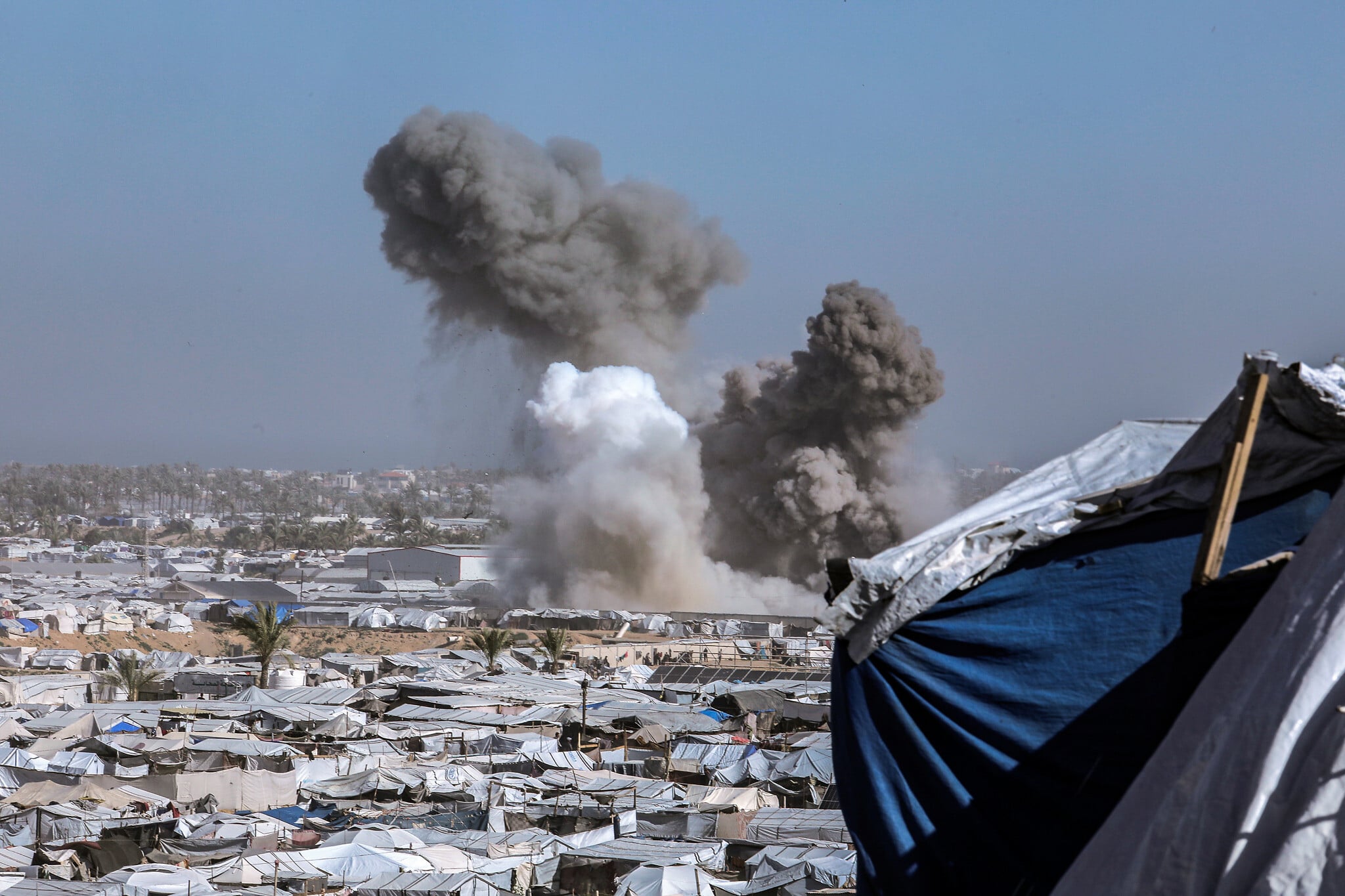
Despite the lingering geopolitical risks, Moody’s expressed confidence that “debt will remain relatively affordable and that the government will have no problems meeting its funding needs.”
Moody’s said it expects Israel’s government debt to stabilize around 68 percent of GDP, compared with a decline to 50% of GDP projected in assessments before the outbreak of the Hamas war on October 7, 2023.
Commenting on the Moody’s report, outgoing Accountant General Yali Rothenberg said that “looking ahead, consistent fiscal discipline and continued convergence measures are required to ensure a downward trend in the debt-to-GDP ratio over time.”
In 2026, Moody’s projects economic growth of 5%, driven by a “strong post-war rebound.” For 2027, the credit rating agency forecasts GDP growth of around 3% to 3.5%.
Moody’s change in Israel’s credit rating outlook follows a similar move by global credit rating agency Standard & Poor’s, which lifted Israel’s credit rating outlook to stable from negative in November, citing prospects of “military de-escalation” in Gaza and the wider region following the ceasefire agreement with Hamas. S&P, which downgraded Israel’s credit rating twice in 2024, kept the country’s A/A-1 credit rating in place.










The Times of Israel Community.