

New plan for ousting AG: Legal battle gov’t aims to win, or election campaign cudgel?
Supreme Court will almost certainly block new process for firing the AG. Ministers are well aware of this, and of the benefit of another judicial battle to distract attention from Haredi draft-dodging

 Add ToI as a Preferred Source on Google
Jeremy Sharon is The Times of Israel’s legal affairs and settlements reporter

The government resolution to change the process for firing the attorney general appears to be doomed from the outset, legally speaking, given the severe procedural problems with the drafting of the measure, its content, and its extremely problematic timing.
As the government knew would happen, good governance watchdog groups filed petitions to the High Court of Justice against the resolution immediately after ministers approved it on Sunday.
The Attorney-General’s Office has stated flatly that the new process — which excludes a professional committee’s recommendation and gives ministers absolute power to oust the country’s top legal official — is simply “unlawful.” It appears likely that the court will issue an injunction against the measure while it adjudicates the petitions, similar to how it stalled the dismissal of now-outgoing Shin Bet chief Ronen Bar.
Notwithstanding a full-blown constitutional crisis, for which the current government has not yet shown the stomach, what then was the purpose of passing a cabinet resolution so replete with legal difficulties, and so likely to be blocked?
The passage of the resolution comes against the most severe crisis so far within the current coalition, in which it appears that the government is on the cusp of falling due to the demands of the ultra-Orthodox parties to enshrine in law decades of blanket military service exemptions for yeshiva students.
Related: Government approves new method to fire AG, ignoring her warning that it’s illegal
This is a politically ruinous issue for Prime Minister Benjamin Netanyahu and his Likud party, given the widespread public support for Haredi men to be drafted into the IDF, especially amid the seemingly never-ending war in Gaza in which the burden of military service has fallen on every part of Jewish society, apart from the ultra-Orthodox.
If United Torah Judaism and Shas decide to vote in favor of dissolving the Knesset and holding new elections because rebels in the Likud party refused to do Netanyahu’s bidding and legislate the military service exemptions, those elections will be dominated by the Haredi draft issue.

This could be catastrophic for Netanyahu and Likud, who will be confronted on a daily basis with campaign ads and speeches warning that a Netanyahu-led government would legislate Haredi military service exemptions if re-elected, even as it is increasing the military burden on the rest of the population.
Could it be, therefore, that Justice Minister Yariv Levin and the government at large approved the measure knowing that it would create another incendiary confrontation with the judiciary to use it as a campaign cudgel?
If the Knesset begins the legislative process for its own dissolution in the coming days, Levin and Netanyahu could remake the upcoming election campaign about an issue that has far more traction with their political base: the supposed tyranny of the legal establishment over the people.
The current government and its many ministers have inveighed against the attorney general, the Supreme Court and every other legal institution on an almost weekly basis since the very beginning of the administration two-and-a-half years ago, accusing a liberal “elite” of dominating those institutions and defying the will of the people for decades.
Fighting an election campaign by vowing to once and for all “liberate” the people from such a “legal dictatorship” and using the attorney general issue to illustrate it, would be a far better playing field for the Netanyahu-led bloc than constantly having to answer questions about whether or not it intends to cobble together a new coalition by paying off the ultra-Orthodox parties with military service exemptions.
In the legal opinion he authored on the measure, Deputy Attorney General Gil Limon alluded to the idea that Sunday’s cabinet resolution was designed to cause further arguments with the judiciary.
“It appears that the purpose [of the resolution] is to weaken and deter the [law enforcement] gatekeepers, and to create further confrontation with the legal institutions,” he wrote.
The new method approved by ministers on Sunday for firing the attorney general allows the government to circumvent the longstanding procedure — which requires that the government consult a professional, statutory committee before such a decision can be made, a process the government has been unable to complete — and instead allow a ministerial committee to recommend whether or not to dismiss the current office holder, Gali Baharav-Miara.
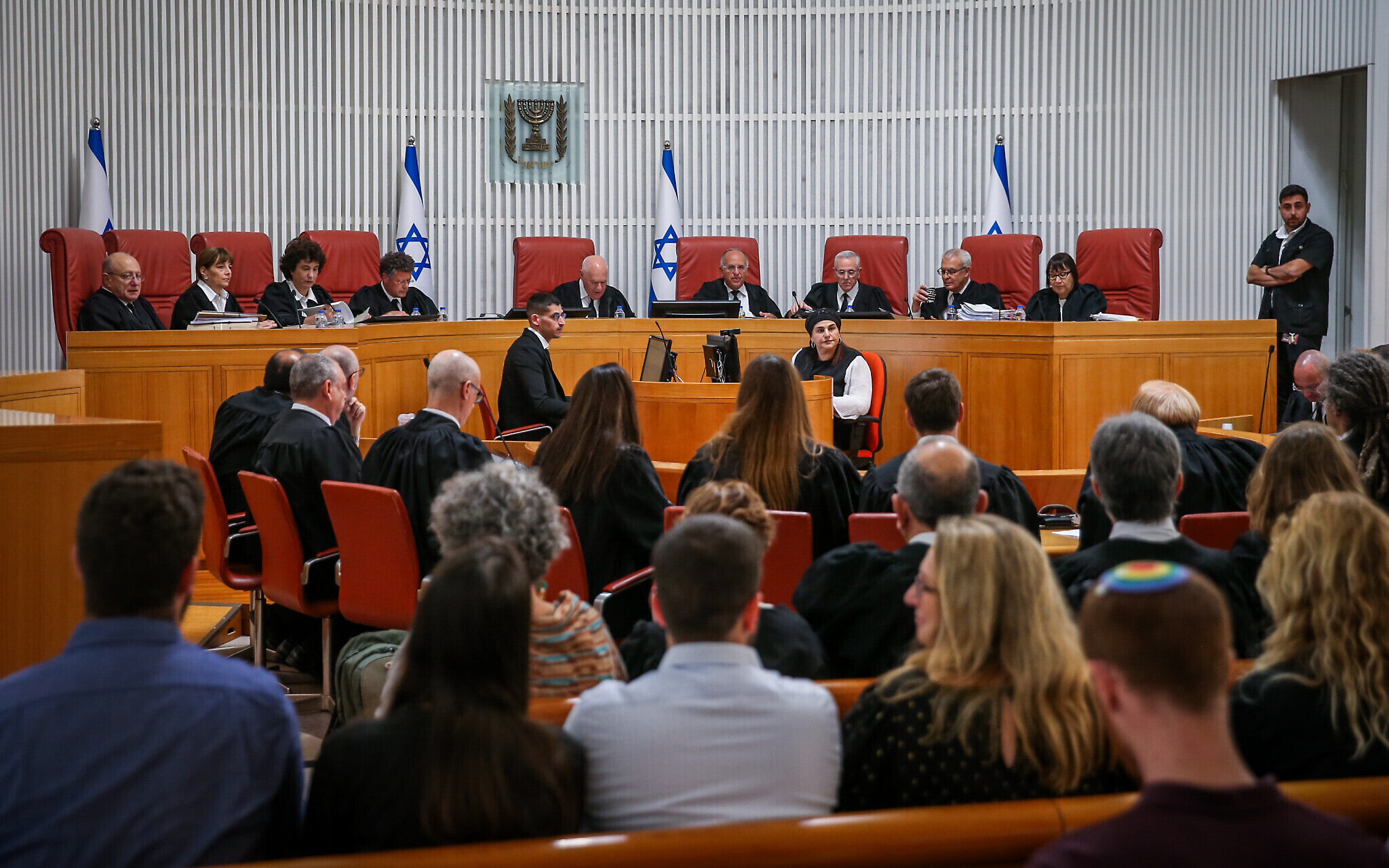
The Supreme Court has for a long time seen as anathema efforts to write legislation or change governmental procedures with short-term, narrow objectives in mind, especially when dealing with a process already underway.
It is almost unthinkable that the current court would approve the new method for firing the attorney general, when Levin has already embarked upon the old process but now decided to alter the dismissal process just because that effort has foundered.
This is to say nothing of the manner in which the resolution was drafted without any consultation with the Attorney General’s Office, and the way in which it essentially subjugates the role of the attorney general, a key figure in ensuring the rule of law in Israel, to the whim of the government and its ministerial committee.
If and when the court freezes implementation of the resolution, Levin and the other ministers who so frequently denounce the judiciary can fulminate against the ruling and vow during the election campaign to redress the situation if returned to power.
The urgency of such a message could then be used to drown out the cries of protest regarding Haredi non-enlistment.
This, and not any realistic expectation of speedily removing the attorney general from office, appears to be the primary motivating factor behind Sunday’s latest effort to antagonize Israel’s legal establishment.










The Times of Israel Community.