

New US group seeks to ensure young Jewish donors keep giving to Jewish causes
The Jewish Future Pledge calls on North American members of the faith to give 50% of charitable contributions in their estate plan to Jewish or Israel-related organizations
 Add ToI as a Preferred Source on Google
WASHINGTON — Though the US Jewish community may be more prosperous than at any other point in its history, young American Jews have become increasingly disengaged from organized Jewish life, according to surveys from the Pew Research Center.
This has led to a range of books and countless think pieces about the long-term implications for Jewish continuity.
But it’s also caused a trio of Jewish philanthropists to worry about something else: What will happen to the transference of wealth that takes place from the older generation to the next?
In other words, will millennial and Gen Z Jews give to Jewish causes or Israel advocacy groups at the same rate their parents and grandparents did?
Short answer: They don’t know.
That’s why they created a new nonprofit designed to ensure that North American Jews keep giving to Jewish organizations.
Launched this month, the Jewish Future Pledge calls on Jewish donors to commit to giving at least 50 percent of the charitable contributions in their estate plan to Jewish or Israel-related causes. If successful, it could funnel hundreds of millions of dollars to Jewish institutions over the next quarter century.
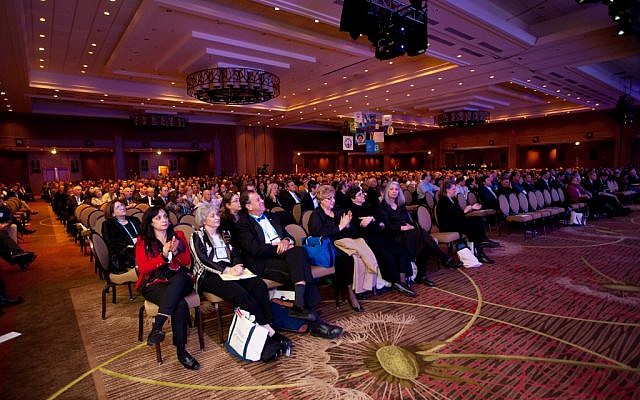
The Jewish Future Pledge estimates that Jewish donors will transfer roughly $1.26 trillion to charitable causes in the next 25 years. It hopes to direct half of that — or $630 billion — to Jewish causes specifically.
The nonprofit was created by entrepreneur and Jewish philanthropist Mike Leven, longtime Jewish nonprofit executive Amy Holtz, and former chair of the Jewish Federation of Greater Atlanta Mark Silberman.
Already, the three have convinced a number of big-name American Jewish donors to sign on to the pledge, including Canadian Jewish businessman and philanthropist Charles Bronfman and Home Depot founder Bernie Marcus.
But the founders insist that the pledge is not only for high net worth individuals, even though it was inspired in part by Bill Gates’ and Warren Buffet’s The Giving Pledge, which asks extremely wealthy people to give most of their money to charity.
“It’s not a billionaire’s club,” Leven told The Times of Israel. “It’s not just for the Bernie Marcus Jews. It’s for all Jews.”
‘A huge sense of urgency’
While Pew’s research started showing young Jews moving away from Jewish life in a 2013 report, Leven said he didn’t consider how that might affect Jewish giving until the summer of 2018, when he heard The Times of Israel’s founding editor, David Horovitz, give a talk at the Jewish Community Center in Aspen, Colorado.
There, Horovitz warned about the looming possibility that Jewish nonprofit institutions could face steep economic hardship if future generations stopped donating to them so generously.
“That really made an impression on me,” Leven, 82, said in an interview. “I walked away wanting to do something about it, but I wasn’t sure what.”
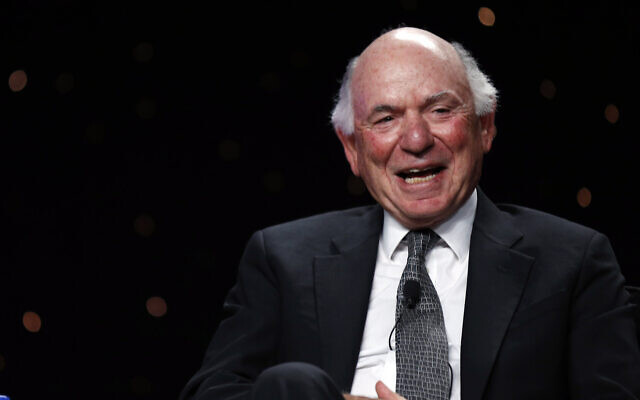
He then had a breakfast meeting the next morning with Silberman, who wanted his help with a new initiative; Silberman was head of the Atlanta Federations at the time.
During the conversation, Silberman mentioned that he wanted to set up a series of charitable funds that he would leave to each of his children.
“How do you know they will give Jewishly?” Leven asked him.
“The answer quickly became apparent — I didn’t,” Silberman told The Times of Israel. From then on, the two said, they were engaged in an ongoing discussion about the issue.
Silberman later decided to write a stipulation in his will that when his children inherited those funds, 50% of the donations from it should go to Jewish or Israel causes. The rest of it could go wherever they wanted it to go.
In further discussions, the two of them thought: If every Jew did the same thing — as in, give half of their charitable gifts to Jewish institutions — it could make a big difference for those institutions.
Shortly thereafter, Leven recruited Holtz, who used to co-own and operate 25 Party City stores and who served as head of multiple Jewish groups, to help.
Together, they decided to create a nonprofit — what ultimately became the Jewish Future Pledge. All of them thought 50% was an appropriate number to ask for Jewish giving since, they said, it still leaves open a substantial amount that can go to other causes.
“The rest of it can go wherever you want it to, whether it’s Jewish or non-Jewish,” said Leven, who was chief operations officer for Sheldon Adelson’s Las Vegas Sands Corps until December 2014.

Holtz said she was drawn to the idea because of her own experiences running Jewish nonprofits. She had served as both president of Jerusalem U and CEO of Mosaic United, an initiative funded in part by the Israeli government to strengthen the Jewish diaspora’s ties to Israel.
“I discovered that running a nonprofit is like running a business without a revenue stream,” she told The Times of Israel. “It’s really, really hard. I had to spend so much time raising money that I couldn’t focus as much on my core mission.”
While the three decided to unveil the initiative in May, coinciding with Jewish heritage month, the coronavirus crisis made it even more timely, as Jewish nonprofits — like all nonprofits — have seen a sharp and sudden decline in donations while the disease ravages virtually every sector of the global economy.
“The next generation may not be as interested in Jewish life or the legacy institutions or any institutions in the Jewish world that we’re currently interested in now,” Silberman said. “There’s a huge sense of urgency, but it’s become amplified in the last 60 days. What’s really going to happen to Jewish institutions now?”
While the JFP website has already gone live — they’ve been working on the project for more than a year now — the organization is soon to start an integrated digital campaign that will include written and video vignettes, highlighted on social media, of people sharing their stories about why they are signing the pledge.
The founders said they have received some pushback from a few people. Some skeptics, they said, have questioned whether the pledge is telling Jews what to do with their money.
The JFP leadership responded by saying they were only encouraging Jewish donors to give a certain percentage of their charitable contributions to Jewish causes.
“We trust the next generation,” Holtz said. “We think they’re going to make great decisions. We’re not mandating where they give. We just want to make sure that they give Jewish.”










The Times of Israel Community.