

NGO petitions High Court to force Dead Sea Works to pay water bill in full
State wiped NIS 65 million off an NIS 83.5 million water bill in October, after mineral extraction company argued payments were included in royalties
 Add ToI as a Preferred Source on Google
Sue Surkes is The Times of Israel's environment reporter
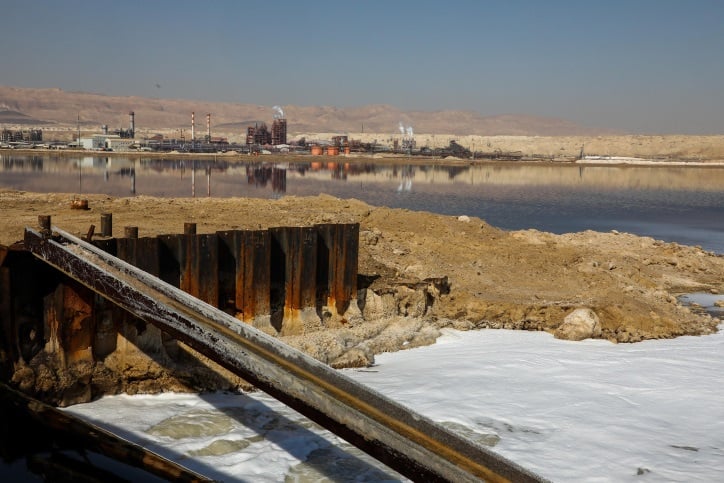
The environmental advocacy organization Adam Teva V’Din took action this week against Dead Sea Works, appealing to the High Court in connection with a NIS 65 million ($20 million) discount the company received on a NIS 83 million water bill.
In October, the Justice Ministry scratched the NIS 65 million over fears it could lose a legal battle against billionaire owner Idan Ofer in court.
The national water company, Mekorot, originally presented a NIS 83.5 million water bill to the company, with the backing of the Water Authority, the state regulator. The Water Authority then got cold feet and advised the Justice Ministry that it could be on shaky legal ground.
At issue was whether water produced from wells within the franchise area fell under a 2017 amendment to the Water Law, which introduced charges for water with a certain salinity, or, as Dead Sea Works argued, was covered by the royalties it pays in line with a franchise to mine Dead Sea minerals signed with it by the state in the 1960s.
Last month, Adam Teva V’Din warned Attorney General Gali Baharav-Miara that unless the Justice Ministry changed its position, it would appeal to the High Court.
As there was no change, the organization filed a petition to the High Court on Thursday against the Justice Ministry, the Water Authority, Mekorot, and Dead Sea Works in a bid to force the latter to pay its dues under the Water Act.
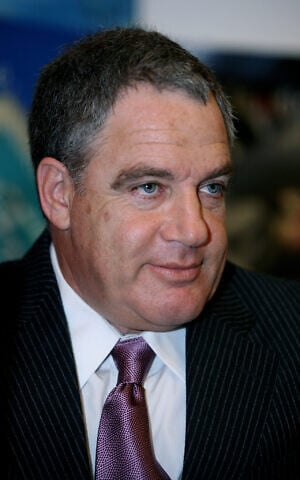
Businessman Idan Ofer, former chairman of the board of Israel Corporation. (Moshe Shai/FLASH90)
In a separate move, Adam Teva V’Din filed a Freedom of Information request to the Tax Authority on Tuesday asking for details about a compromise agreement the authority signed with Dead Sea Works’ parent company, ICL Group, on payments into a sovereign wealth fund based on profits from the mineral extraction.
The fund, to enable future generations of Israelis to enjoy some of the profits made from natural resources such as fossil fuel natural gas, and minerals, was anchored in law in 2011.
After years of haggling by the companies involved, among them ICL Ltd, the government only managed to collect the minimum billion shekels (roughly $300,000,000) needed to start the fund in June.
Adam Teva V’Din argued that the compromise the Tax Authority reached with ICL Ltd was clearly of public interest, because the minerals belong to the public, and because over many years, reports had surfaced of huge differences in opinion between the authority and ICL on the matter.
In late July, ICL notified the Tel Aviv Stock Exchange that the sides had reached a final agreement on the amounts to be paid for the years 2016-2020, as well as a framework for the payment mechanism to be applied from 2021 on. A central issue, according to the report, was the methodology for valuing Dead Sea Works’ assets at the end of its mining franchise in 2030.
After this public notice of the compromise, Hebrew media reports emerged that the Tax Authority had wiped a third off ICL’s sovereign wealth fund bill.
“The public has the right to know and understand why a compromise arrangement was reached, why more than a third of the original demand was waived, and what the principles are upon which the tax will be calculated from now,” Adam Teva V’Din argued.
The Tax Authority invariably cites commercial privacy to avoid providing information of this kind.
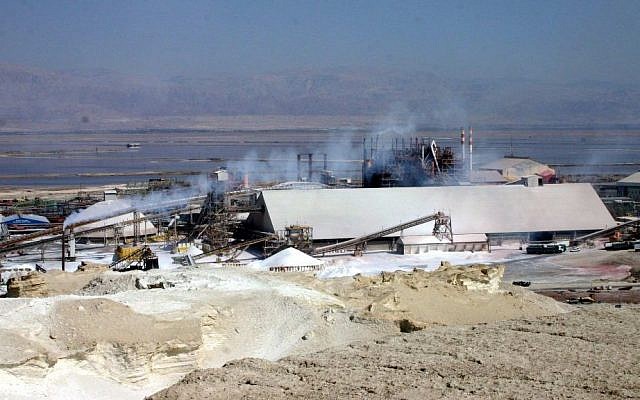
A different Freedom of Information request, which Adam Teva V’Din submitted in April 2021 to clarify the status of natural resources in Israeli law and the obligation for transparency, failed to yield results.
Partially accepting the request in February, the Jerusalem District Court rejected the government’s position that it was not responsible for weighing companies’ rights to secrecy with the public’s right to know.
Judge Eli Abarbanel found that the Tax Authority official responsible for Freedom of Information requests had failed to strike a balance between the two interests and consulted neither the head of the authority nor the finance minister on what to do.
He ruled that this “defect” was sufficient to justify partial acceptance of the petition and instructed the Tax Authority to review its response to Adam Teva V’Din’s request, “while balancing the right interests.”
The Tax Authority decided not to release the information.









The Times of Israel Community.