

On Sukkot, eroding Temple Mount status quo lays bare rifts in the Orthodox world
As thousands of Jewish worshipers visit over the holiday, Haredim and religious Zionists spar over religious prohibition on touring the flashpoint holy site
 Add ToI as a Preferred Source on Google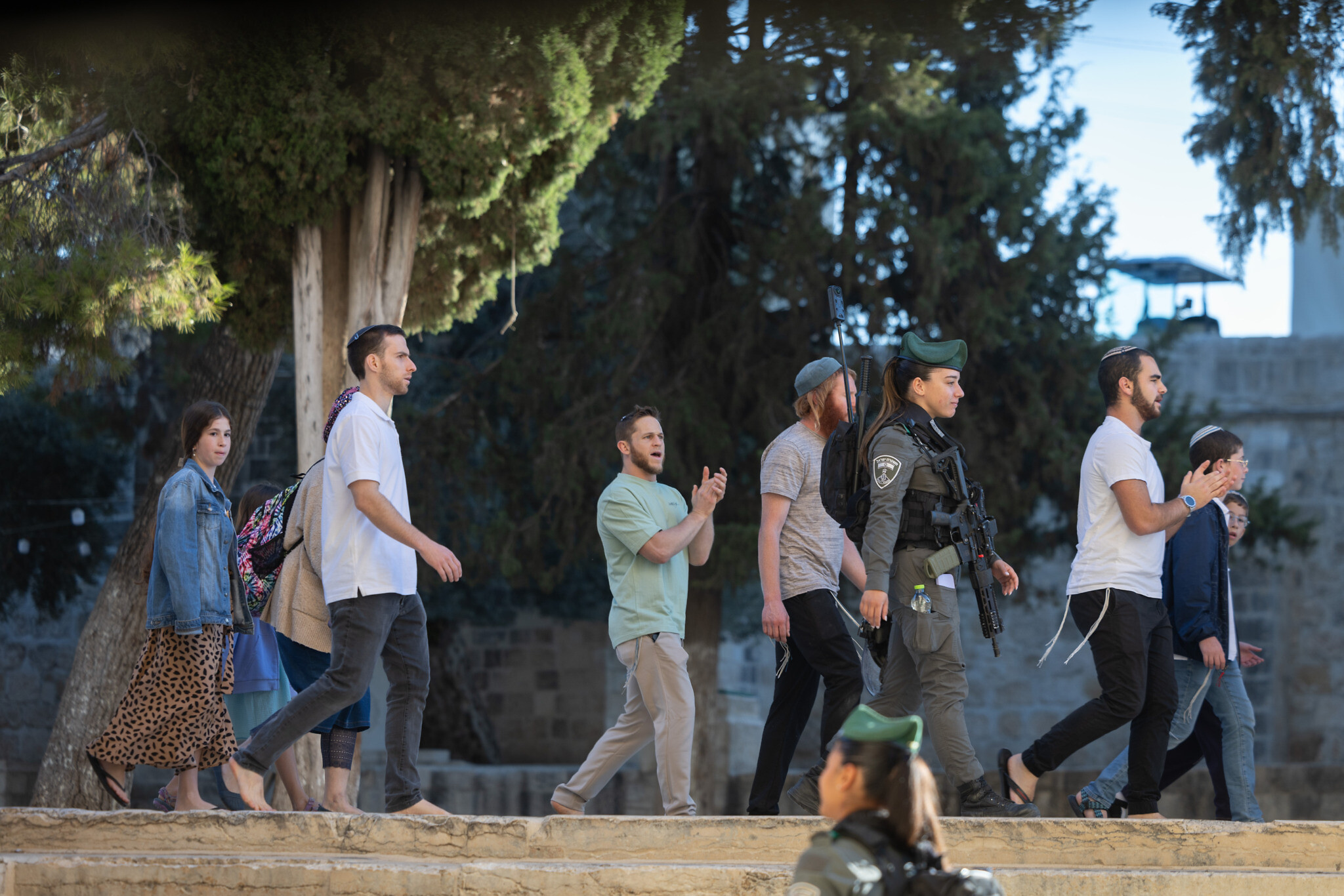
Among the thousands of Jewish worshipers bustling throughout Jerusalem’s Old City last Wednesday morning to celebrate the holiday of Sukkot, many could be seen carrying large blue flags emblazoned with an illustration of the biblical Temple.
These flags have come to dot the crowds during many Jewish holidays in the Old City, and represent a once-fringe aspiration held by a section of Israel’s national religious camp inching its way into the movement’s mainstream: rebuilding the Jewish Temple of antiquity to usher in the messianic era.
On the second day of Sukkot, groups of religious Zionist revelers paraded throughout the Old City selling these flags, encouraging coreligionists not just to mark the week-long festival by praying at the Western Wall, but also to visit the Temple Mount.
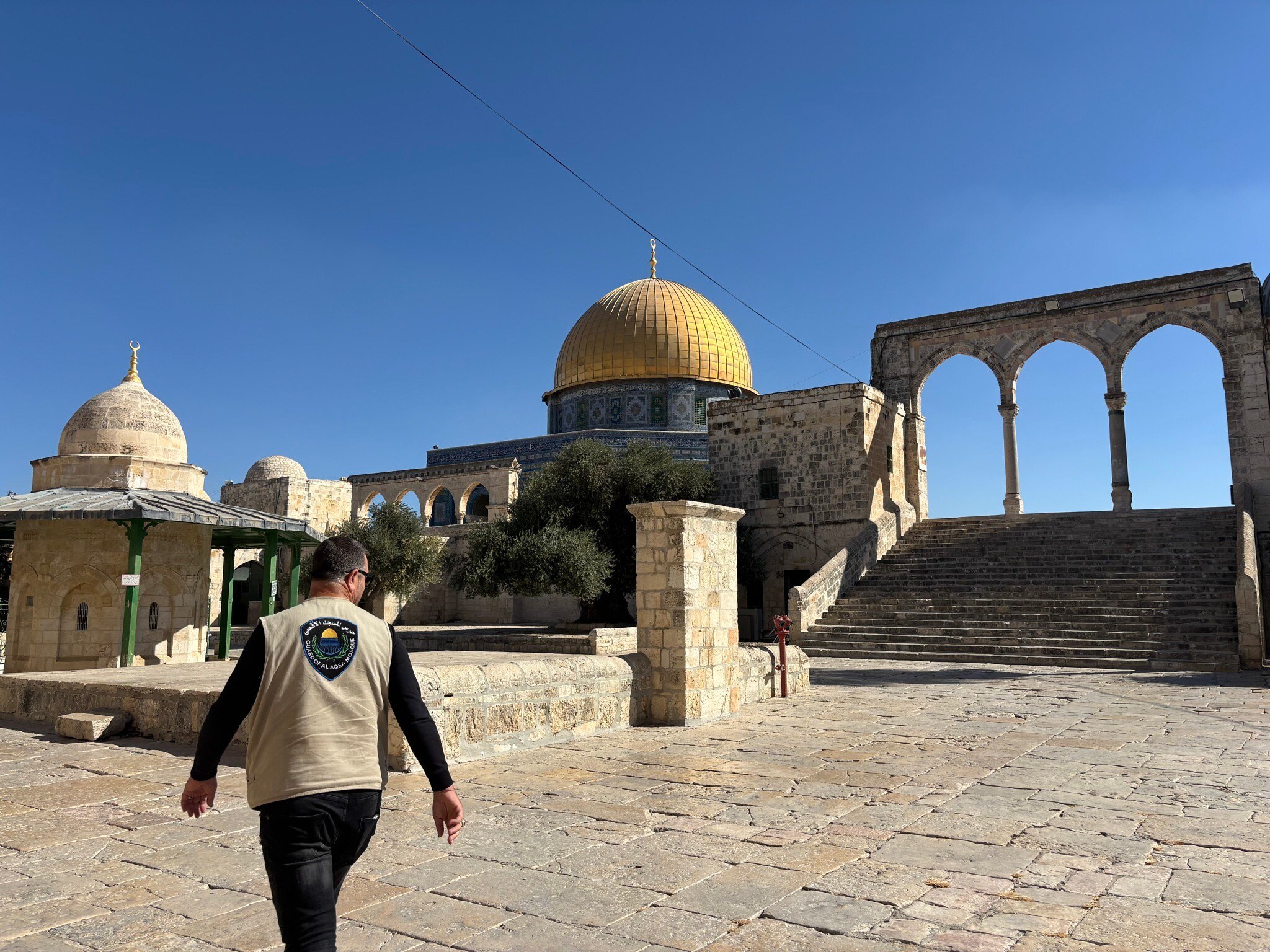
Venerated by both Jews and Muslims, the site today houses the Al-Aqsa Mosque and Dome of the Rock shrine, administered by a Jordanian-run Islamic trust called the waqf. Jewish ascent to the Temple Mount is an incendiary issue among Muslims, who view it as a major encroachment on one of their holiest sites.
“Sukkot is one of the shalosh regalim [three major festivals], in which we are commanded in the Torah to go up to the Temple and make sacrificial offerings,” said Avraham Yedidya Ben-Shlomo, a young man with a thick beard and long sidelocks selling flags to passersby headed to the Western Wall.
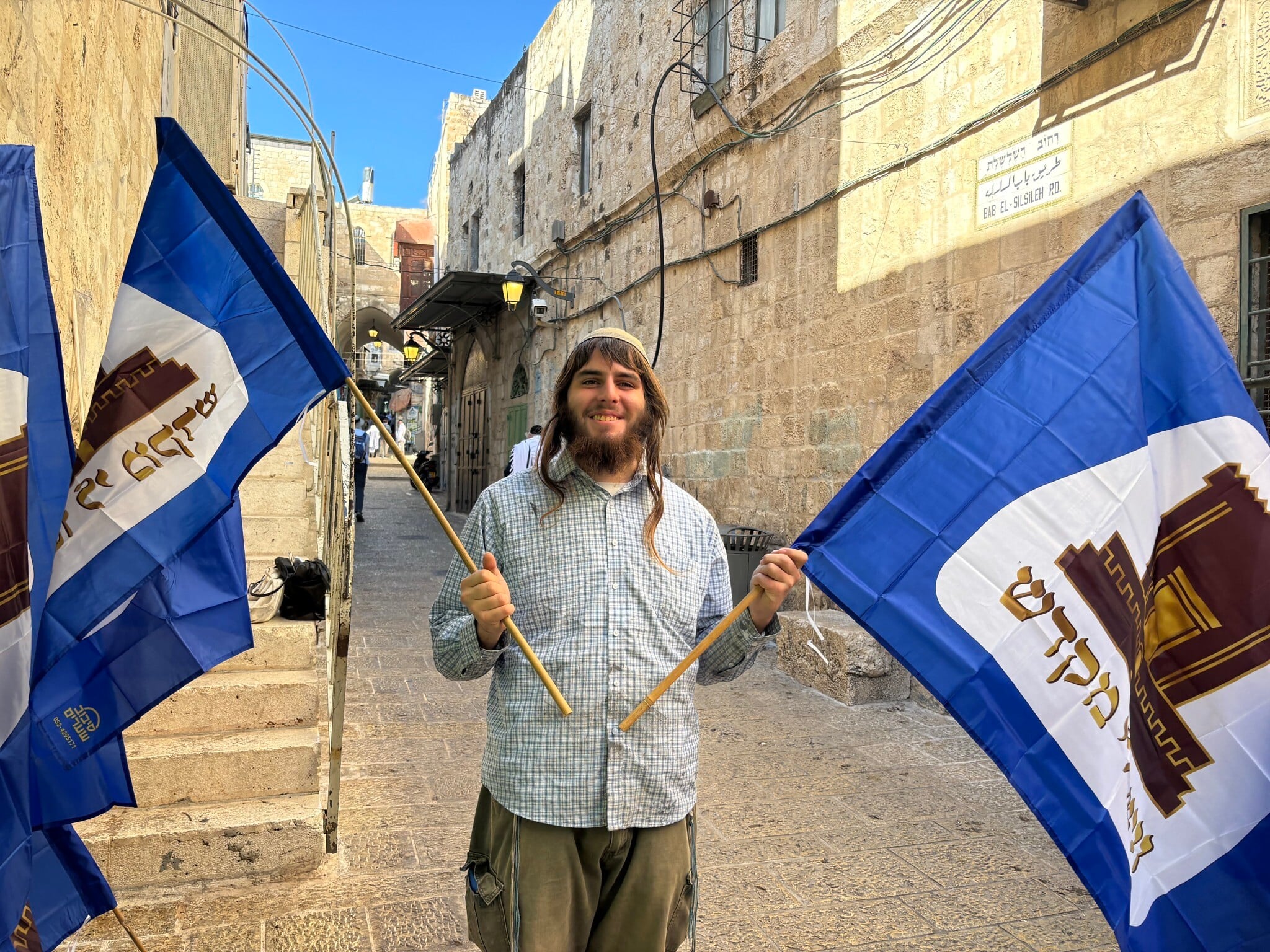
Ben-Shlomo, a religious Zionist from the West Bank settlement of Yitzhar, was one of thousands of Jews who visited the Temple Mount over the course of the holiday, though he has been plenty of times in the past, he told The Times of Israel.
But the Temple Mount’s hallowed status in Judaism presents a problem for many Orthodox Jews, particularly Haredim, who believe it is a grave sin for Jews to set foot where the Temple’s inner sanctuary once stood while in a state of ritual impurity — a status that can’t be changed until after the Temple is rebuilt and certain sacrifices can be brought to complete the purification process.
The exact location of the inner sanctuary is disputed, which led many rabbis to issue a blanket ban on visits to the Temple Mount.
After Israel conquered the Old City from Jordan in the Six Day War, the two countries came to an informal agreement that reentrusted daily operations of the Temple Mount to Jordan, which allows Jews and other non-Muslims to visit, but not pray at the site.
Israel’s Chief Rabbinate swiftly deemed Jewish visits to the site forbidden.
The so-called “status quo” agreement between Israel and Jordan has eroded over the past two decades as religious Zionist rabbis came to view visiting the Temple Mount as acceptable in the realm of Jewish law. What was accepted soon became even desirable, as more rabbis spoke of the need to cement Jewish control over the Holy Land.
“It started very quietly, then gradually increased. I think more and more people are aware of the Temple Mount, more and more people are coming,” said Yaffa Kenzin, who was passing out slips of paper to passersby at the Western Wall’s southern entrance, asking them if they intended to go up to the Temple Mount for the holiday.
Without the means to rebuild the Temple immediately, many attempt to defy authorities at the site by praying openly there. Some even try to bring offerings of bread and sacrificial goats up to the site.
‘Provokes the gentiles’
This Sukkot, over 4,000 Jewish visitors went up to the Temple Mount, including at least two who attempted to wave the four species at the site. They were both stopped and detained by police.
On the first of Sukkot’s intermediate days, 1,696 Jewish visitors ascended, compared to 747 visitors in 2021.
יהודי צדיק נטל לולב בהר הבית ומעוכב כעת. זיכה גם את השוטר בנטילת לולב pic.twitter.com/1fT5CNsE1O
— ארנון סגל (@arnonsegal1) October 12, 2025
Haredi opposition to the phenomenon hasn’t disappeared, though. As eager visitors lined up that morning outside a gate leading to the Temple Mount, a young man in a black hat shouted down a youth with a knitted kippah and sidelocks, warning him that he would incur karet for setting foot in the holy site — a form of divine punishment that entails spiritual excision from God and the Jewish people.
A crowd quickly gathered around the two, before the ultra-Orthodox man stormed off with his family. After the row fizzled out, a group of Haredim kept arguing with the religious Zionist youth, who had just come down from the Temple Mount.
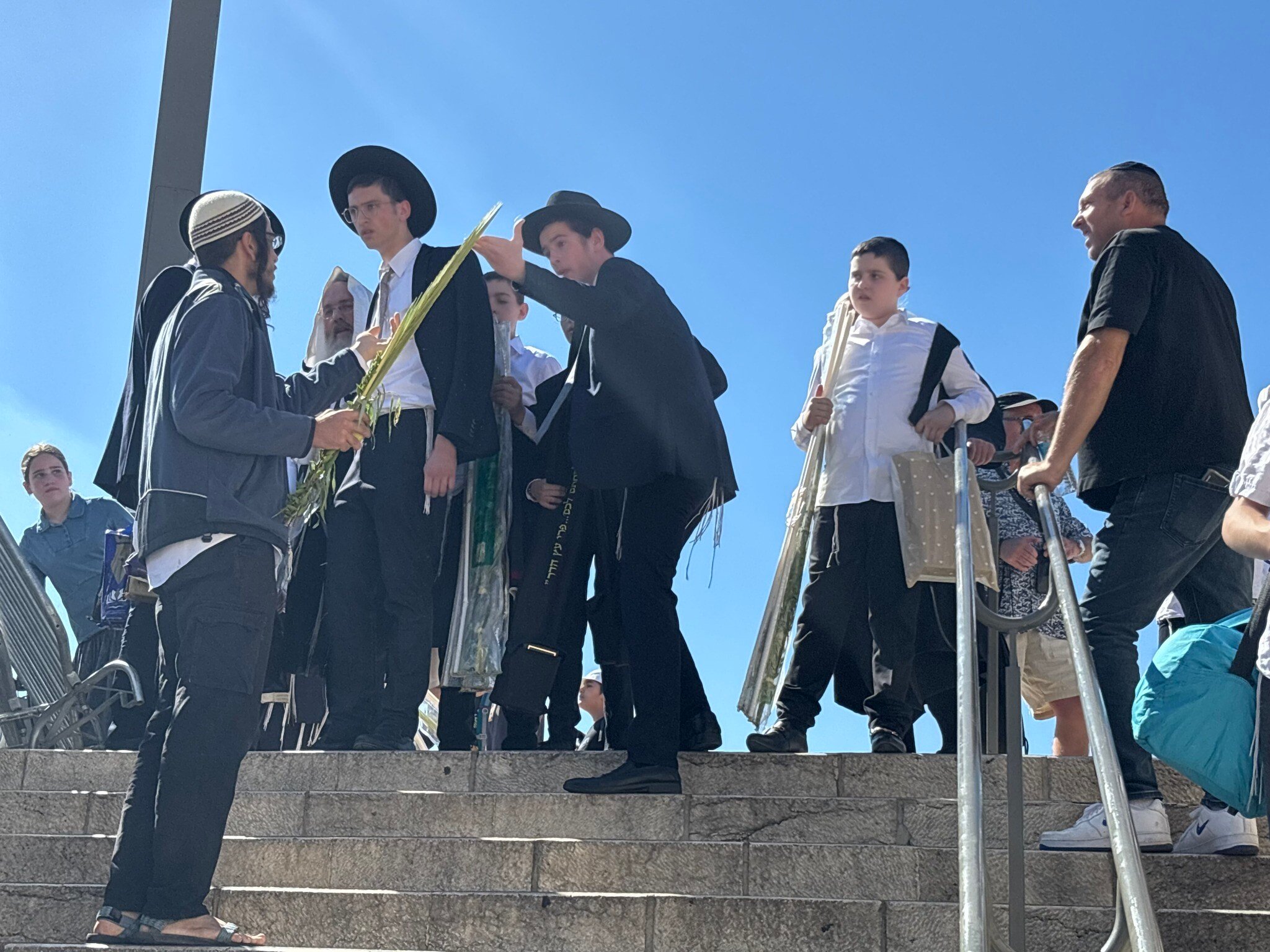
“We’re talking about karet, nobody should purposefully place themselves in this situation of taking a gamble on karet,” insisted Haim Toledano, a Haredi yeshiva student, between puffs of an e-cigarette.
“And aside from that, even more importantly, it provokes the gentiles,” Toledano said, invoking the classic injunction against rebelling against a host nation — a precept Haredim interpret as a de facto ban on Zionism. “It causes needless provocations, the Arabs will get ticked off, we’re entering their territory, it’s obvious that it just worsens tensions.”
Plus, he added, “We are in exile, it’s forbidden for us.”
Toledano’s religious Zionist sparring mate pushed back, maintaining it is permissible for Jews to ascend the mount as long as they stay away from the Dome of the Rock, which many believe to be the location of the sacred inner sanctuary.
“A few meters here, a few meters there and there, there are disagreements, but there is no one who disputes its location,” claimed Ariel Cohen. “Haredi rabbis only began to dispute the location in order to invent prohibitions against going up to the Temple Mount.”
Speaking to The Times of Israel, Cohen noted with pride that he had been one of the religious hardliners to partake in a sacrificial “two breads” offering on the Shavuot holiday this year, in which two loaves of leavened bread are waved by a kohen, or priest, before the altar and then consumed. He was detained, but not arrested, for the act.
Prohibition on Jewish prayer quickly falling away
Kenzin is no stranger to the changes that have taken place on the ground as of late. In the early 2000s, she recalled being able to “stand in more places, walk slowly, quickly, however we wished,” on the Temple Mount.
“But there was also a waqf guard standing right there, watching my mouth from a few centimeters from my face,” to ensure she was not praying, she said.
Nowadays, the Jordanian-employed guards are rarely seen near Jewish groups and tend to keep to themselves unless they see someone attempting to perform offerings at the site, in which case they take action.
Although the idea has been gaining traction within the religious Zionist world for the past two decades, the Temple Mount’s status quo deteriorated quickly under far-right religious Zionist minister Itamar Ben Gvir, whose policies as national security minister spurred a steep increase in the number of Jewish visitors to the site.
The years under Ben Gvir have seen a major shift in how police treat Jewish prayer atop the mount, with police permitting visitors to pray and even prostrate themselves in certain areas further from the Dome of the Rock. Ben Gvir has repeatedly stated that his policy is to allow Jewish prayer in the area.
The minister himself led Sukkot prayers near the eastern wall of the Temple Mount complex last week, marking the second time that he has done so.
Ben Gvir's office shares footage of him leading morning prayers for a group of Jewish worshipers atop Temple Mount, minister later boasts Israel "victorious" at flashpoint site pic.twitter.com/ZWa1wf3S6d
— charlie summers (@cbsu03) October 8, 2025
“We are now two years since the terrible massacre… Every house in Gaza has a picture of the Temple Mount and now, two years later, we are victorious on the Temple Mount,” said the ultranationalist leader from the site.
Although such statements have in the past prompted alarmed responses from Prime Minister Benjamin Netanyahu, usually quick to insist that the status quo has not changed, the premier chose not to disavow his coalition partner’s remarks from the Temple Mount on Sukkot.
Earlier this year, on the Jewish fast day of Tisha B’Av, Ben Gvir became the first government minister to pray at the site — sparking furious responses from Arab countries, as well as Haredi politicians.




The Times of Israel Community.