

On the brink of something bad: 9 things to know for December 11
Attacks in the West Bank are multiplying and may be getting more complex, and the northern border could be headed for its own violent flareup
 Add ToI as a Preferred Source on Google
Joshua Davidovich is The Times of Israel's Deputy Editor
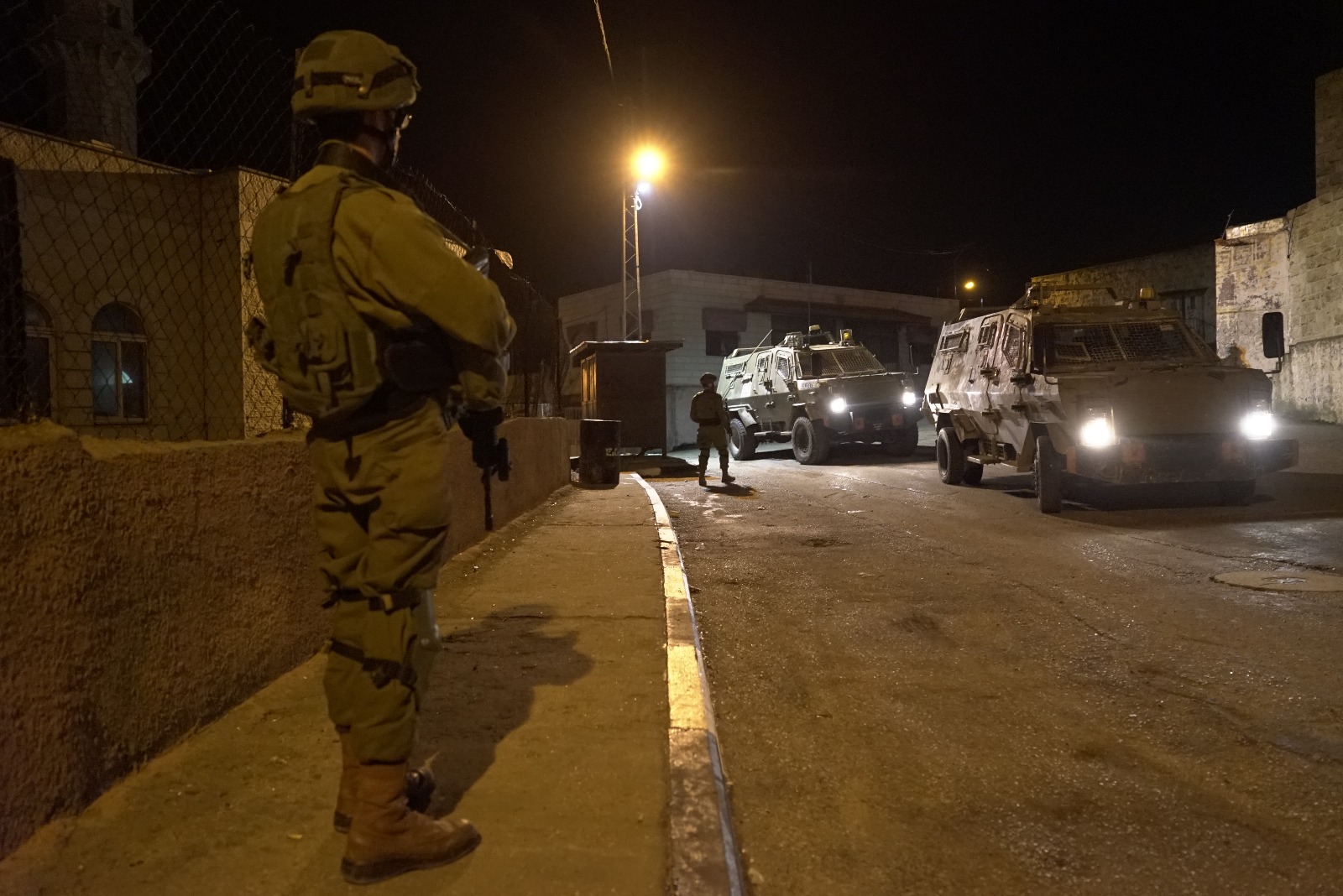
1. Searching for the shooters: A manhunt is continuing in the West Bank for the perpetrator or perpetrators behind a terror attack in the West Bank near the settlement of Ofra.
-
- On Monday, Israeli troops carried out arrest raids and made a rare daytime incursion into Ramallah, demanding security footage from store-owners and the PA’s Wafa news agency, which recorded the encounter with the troops.
- Troops clashed with Palestinian rioters only a few hundred meters from the home of PA President Mahmoud Abbas, leading Abbas to call up some foreign and Arab officials to complain.
- “For several years, the Palestinians have demanded that Israeli security forces cease entering Area A of the West Bank, which according to the Oslo Accords is under PA security and administrative control,” ToI’s Adam Rasgon notes. “Israeli security forces often enter Area A of the West Bank for arrest raids, but broad daylight operations in the hearts of Palestinian cities are rare.”
- An army spokesperson refuses to confirm whether the raid had anything to do with the Ofra attack, but on Tuesday morning there are even more checkpoints set up outside the city to limit movement in and out, leaving little doubt.
- Yedioth Ahronoth reports that the Israeli army believes the attackers are in Ramallah, hence the need for the security footage to see if they are spotted on any of it.
2. What West Bank calm? Despite what looked to be a period of relative calm in the West Bank, Haaretz reports that attempted attacks are on the rise, and they aren’t necessarily half-baked lone-wolf assaults either.
- “Hamas has plotted more attacks than before, and the organization’s plans ‘are more complex than lone-wolf attacks,'” Yaniv Kubovich writes, citing a senior defense official.
- Israel Hayom’s Yoav Limor writes that the West Bank has not been quiet at all, even if not everyone was paying attention: “The norm is day-to-day bloodshed. Attacks, rocks, Molotov cocktails without end.”
- Settlement security chiefs tells Yedioth that they fear there will be more attacks, with the army unable to find attackers from the last two major terror incidents.
- “Government policy and decision-makers need to be decisive, because without it, the next attack is just a matter of time,” one tells the paper. ‘The fact that terrorists know they are being filmed as they pass a bus stop, and still open fire and escape — shows more than anything that we’ve lost any deterrent.”
3. Thumbing and praying: The attack has also shone light on hitchhiking in the West Bank, a common practice among many settlers in an area not especially well served by public transportation, but one which also leaves people waiting at bus stops/hitchhiking posts (known as trempiadas, a bastardization of “tramp”) as sitting ducks.
- Israel Hayom writes that settlers are not afraid, citing anecdotal evidence from four teens who thumb rides: “This is our land — and we don’t need to be afraid anywhere. In fact, it’s the Arabs who should be afraid of us,” one is quoted as saying.
- Yedioth’s Shlomo Pyoterkovsky, who lives in Ofra, writes wistfully of the hitchhiking post where the attack took place, part of a “land of hitchhiking posts” on Route 60, which bisects the West Bank from north to south.
- “For a few years now, though, every hitchhiker standing at one of these spots has had some fear in their hearts. The knowledge that nestles somewhere in the subconscious that any of these nice trips can end in a single terrible murderous moment,” he writes.
- This piece from ToI’s Jessica Steinberg, while four years old (after another attack on hitchhikers), gives a good overview of the phenomenon.
4. Canadian victim: Montreal’s CTV news reports that one of the people injured in the attack is a Canadian citizen. Amichai Ish-Ran, whose mother is a former Montrealer, was slightly injured but his pregnant wife was shot in the abdomen and seriously hurt.
- “You feel very helpless here to know that your family in Israel can be subject to this kind of terror attack at any time and it actually happened,” Montreal lawyer Jordan Charness says of his nephew.
- The Canadian ambassador in Israel put out a condemnation of the attack, but did not mention that one of the victims was a Canadian citizen.
- Meanwhile, the couple’s baby, which doctors managed to deliver after the attack, is still hanging on, but the Jerusalem hospital where he is being treated describes his condition as “very serious.”
- Wife Shira Ish-Ran, who was initially thought to be worse off than the baby, woke up on Monday. At a press conference, her father, Haim Silverstein, said, “She got teary-eyed when she saw us. She got so emotional that we had to leave, because her pulse went up too much.”
5. Northern tensions are only growing: With an Israeli military delegation heading to Russia to discuss the tunnel-busting operation on the northern border, Hadashot news surmises that it may mean something is up, asking why they need to send people to Moscow.
- “The first answer is that it’s a general update. The second answer is that it’s laying the groundwork for something larger that can develop along the border,” the channel writes on its website.
- Haaretz’s Amos Harel writes that things along the border are on the edge of a precipice, with Israel operating in an area that is technically in Israel, but on the “Lebanese side” of a border fence.
- “Lebanese army patrols are now facing Israeli forces in those areas where Israel Defense Forces soldiers are digging near the border. In particular, the tension is rising – and with it the potential for a mistake that could develop into a confrontation,” he writes. “In these areas there is no wall or fence separating the Israeli and Lebanese forces. In some places, the IDF has stretched barbed wire to mark the exact location of the border. But the images being published on the Lebanese side, for example, from the village of Meiss al-Jabel, tell the main story of the last few days; you can see Israeli soldiers in them, equipped with rifles and anti-tank missiles, while an Israeli bulldozer is working on the other side of the rock.”
6. When the MEPP is the softball: In what may be the first time someone has ever brought up the intractable Israeli-Palestinian conflict in order to deflect from a tough question, White House adviser Jared Kushner did just that when asked by Fix’s Sean Hannity about how the Khashoggi case has affected attempts to build a coalition in the Mideast.
- “I think that our intelligence agencies are making assessments and we are hoping to make sure that there is justice brought to where that should be, we are focused on the broader region, which is figuring out how to hopefully bring a deal together between the Israelis and the Palestinians,” Kushner told Hannity in the interview that aired late Monday, shifting haltingly onto the “easier” subject.
7. Israelis caught in the lobbying jungle: The New York Times has a scoop emerging from a July party in Washington in which Rudy Giuliani was photographed with some Congolese officials, who then began speaking about how he was lobbying on their behalf to the Trump administration.
- According to the paper, the party was part of a scheme by an Israeli firm called Mer that was paid $8 million by the government of despot Joseph Kabila to get an in with the White House. The scheme included high dollar payouts to several people they thought might have access.
- “It is not clear whether the lobbying overseen by Mer had much effect, and several of Mer’s subcontracts with Trump-linked lobbyists have expired,” the paper reports.
- In a texting exchange, Giuliani says he would not lobby for the Congolese and would only do security consulting.
8. Sara’s private diplomacy: Sara Netanyahu, wife of Prime Minister Benjamin Netanyahu, is on a state trip to Guatemala by herself.
- The wife of a prime minister, who is a private citizen and has no special status like the US’s first lady, going on what is essentially a diplomatic trip is essentially unprecedented in the annals of Israel, and has raised some questions.
- After refusing to respond to Times of Israel queries about funding and the status of the trip for days, the Prime Minister’s Office finally said late Monday that accommodation and transportation in Guatemala would be paid by the Guatemalan government. Other expenses would be calculated at the end of the visit and “in line with regulations.”
- “Every year the Foreign Ministry and other ministries fund the trips of Israeli citizens, including artists, writers, and athletes, to represent Israel,” the PMO tells Raphael Ahren.
- According to Haaretz, the attorney general okayed the trip as that of “an ordinary citizen who accompanies a Foreign Ministry delegation.”
- Still, the paper’s Uri Misgav calls the trip “a new low in corrupt values,” comparing Mrs. Netanyahu to Marie Antoinette: “We’re talking about a week-long trip to a small, distant country that has no diplomatic influence, no economic relevance and no effect on Israel or Diaspora Jewry. The only reason for the disproportionately warm attitude towards Guatemala from the Balfour Street gentry is its decision to move its embassy to Jerusalem.”
9. The son also curses: Son Yair Netanyahu is also under fire after flipping protesters the bird as he arrived in court for a libel case against a left-wing activist. Earlier in the day, young Netanyahu accused left-wing politicians, the media, and left-wing groups of treason, saying he was giving voice to “what everyone in the nation thinks.”
- Apparently not everyone. The prime minister’s Facebook account later issued a statement according to which “Prime Minister Netanyahu rejects the use of the term ‘treason’ by any side of the political discourse.”
- Yedioth reports that things got even more heated in the courtroom, as Netanyahu took the stand and was questioned by the lawyer for Abie Binyamin, whom he is suing for libel.
- “If as soon as I leave here I write that I saw you raping a four-year-old girl, will it bother you?” Netanyahu challenged the defense attorney. “Lies that never happened and have no relation to reality don’t bother you?” Netanyahu said there was a difference between offering an opinion, which is freedom of speech, and stating that something is a fact.
- “If someone writes that you are a fornicator, is that an opinion or a fact?” attorney Ben Itzhak asked. “If someone writes that I went to Pussycat [Dolls], then fuck them,” Netanyahu replied, drawing a request from the judge that he not use such language. Netanyahu was referring to recordings published in January of a night of excess during which he visited a series of Tel Aviv strip clubs.






The Times of Israel Community.