

Optimism abounds at Gaza coordination center, but violence puts truce at risk
Officers and civilians from 20 nations work to push ceasefire to second phase, while another Hamas attack on IDF troops in Strip leads to a major Israeli response
 Add ToI as a Preferred Source on Google
Lazar Berman is The Times of Israel's diplomatic reporter
CMCC, Kiryat Gat — A truck laden with humanitarian aid winds slowly through a crowded street.
Above the black-and-white drone footage displayed on a massive screen, a color map shows a thin yellow line dividing Hamas-controlled Gaza from the IDF side.
The Hamas territory, 47% of the Strip, is marked in red, the universal military color for the enemy.
The screens showing maps, videos and charts for humanitarian aid and attacks are largely ignored by the hundreds of officers and civilians talking, typing and bustling about the synthetic grass-covered second floor of the Civil-Military Coordination Center (CMCC) in Kiryat Gat.
The US and Israeli-led mechanism monitors the Gaza ceasefire that went into effect on October 10, ending two years of bitter war that erupted with the Hamas invasion of Israel on October 7, 2023. Around 20 countries have soldiers or civilian personnel at the CMCC, joined by some 40 international organizations.
The CMCC was established on October 17 as a “main coordination hub” to “support stabilization efforts” in Gaza, following a declaration signed by Trump and his Turkish, Qatari and Egyptian counterparts in Sharm el Sheikh on October 13, according to the US military’s Central Command.
CENTCOM took Israeli reporters into the center on Wednesday.
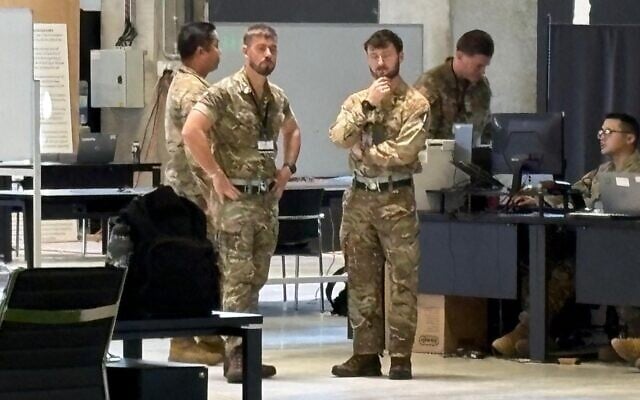
Many of the US officers at the CMCC have been in the military for two decades, including those who have been involved with complex reconstruction and humanitarian operations in Iraq and Afghanistan.
Despite their military experience, the US wants to shift control of the CMCC from the military to civilian agencies.
The humanitarian convoys entering Gaza are a large part of what the CMCC focuses on currently. An average of over 800 trucks drive into Gaza every day, according to officers at the CMCC.
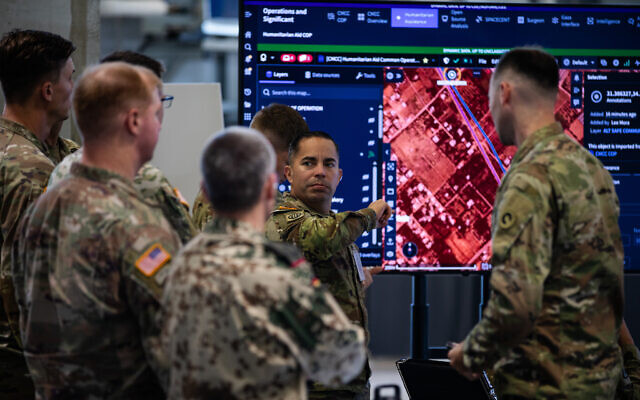
There are almost daily attempts by Hamas to commandeer some of the aid, according to staffers, but the number of incidents is declining.
The IDF told The Times of Israel on Wednesday that it has confronted “hundreds” of Hamas violations of the ceasefire since the agreement went into effect.
To the left of the main screens, whiteboards and screens divide the massive floor into multinational working groups. About a dozen soldiers worked in the Engineering space, while only two men, one of them French, spoke over their laptops at the security table.
Further inside the cavernous space, a presenter spoke to the civil governance team through a microphone.
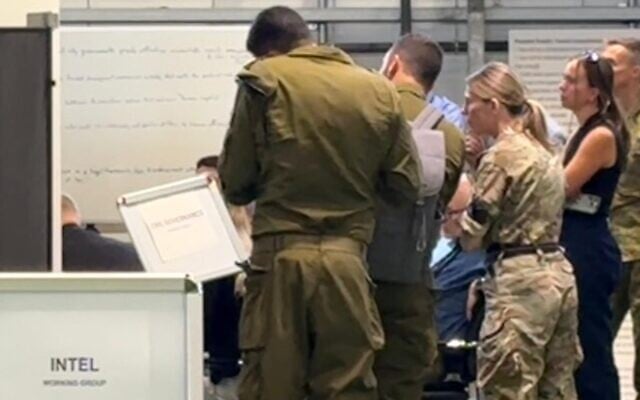
The CMCC uses the first three floors of the building. The second floor is where the various countries come together, while the first floor is reserved for Israel and the third for the US.
The UK and the United Arab Emirates both have dedicated rooms on the second floor.
There was a buzz of productive energy throughout the hall on Wednesday, as staffers typed away on laptops or engaged in focused conversations.
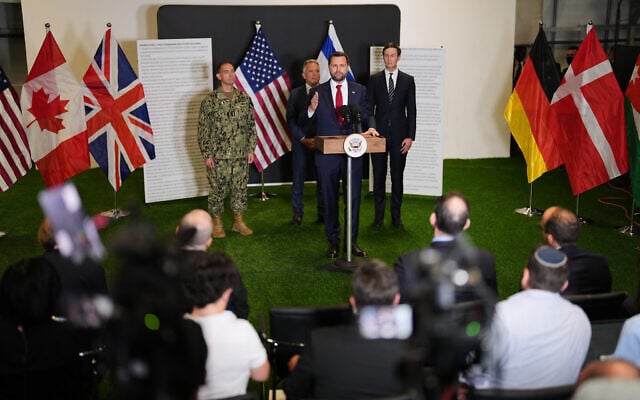
At the same time, the atmosphere in the CMCC was decidedly collegial. Officers and civilians from different countries, but mainly the US and Israel, stood in loose knots talking to each other.
Meal time, provided by what was described as a top-rate catering service, is an important opportunity for personnel from the various organizations and countries to converse and build rapport.
At central points throughout the hall, large posters list Trump’s 20-point comprehensive peace plan like Moses’s tablets.

The plan envisions — in its second phase — disarmament, reconstruction, economic investment, technocratic governance and even interfaith dialogue.
But the plan, endorsed by the UN Security Council this week, remains stuck in its first phase, as Hamas pledges to hold on to its weapons. According to an Israeli report, Hamas has begun amassing advanced weapons and stockpiling them abroad in hopes of smuggling them into Gaza in the future.
Above the CMCC hall, a black screen boasts “No SIGACTS within 48 hours,” referring to significant offensive actions by Hamas.
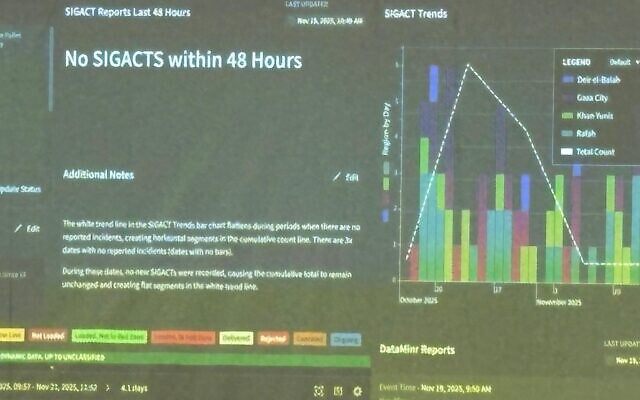
Hours later, terror operatives opened fire on IDF troops in the Khan Younis area in southern Gaza.
In response, the IDF launched a wave of airstrikes against Hamas targets across the Gaza Strip. At least 25 Palestinians were killed, according to Hamas-linked authorities, while the terror group called the strikes “a dangerous escalation.”
For the soldiers and civilians at the CMCC, their goal will be to do everything they can to make sure the ceasefire remains in effect and that progress continues to be made toward a Gaza free from Hamas.







The Times of Israel Community.