

Outnumbered and unprotected, Kibbutz Sufa was left to fight Hamas alone on Oct. 7
IDF investigation reveals nearly 50 terrorists attacked the southern community before reinforcements arrived, leaving one civilian and two local security squad members dead

 Add ToI as a Preferred Source on Google
The IDF failed in its mission to protect Kibbutz Sufa during Hamas’s October 7, 2023, invasion due to a collapse in command and control, a lack of preparedness, and delayed reinforcements, according to an Israel Defense Forces probe published Monday.
The report, which was presented to the families of the fallen and the kibbutz community, credited the bravery of local security personnel, Nahal Brigade troops, and elite units with preventing an even greater catastrophe.
The probe, led by Paran Regional Brigade commander Col. Shemer Raviv and approved by former Southern Command chief Maj. Gen. Yaron Finkelman, outlined how nearly 50 Hamas terrorists attacked the kibbutz, murdering three people — two members of the kibbutz’s standby security squad and one civilian resident — and causing widespread destruction before they were repelled.
The nearly year-long investigation, aimed at reconstructing the full scope of what unfolded in the Gaza-border community on October 7, concluded that “the IDF failed in its mission to defend Kibbutz Sufa.” Its findings were based on interviews with eyewitnesses, surveillance footage from the scene, videos taken by civilians and terrorists, and interrogations of captured Hamas operatives.
The probe also detailed how local security team members, of which there were only a handful, and limited military reinforcements, fought back under extreme pressure, killing dozens of terrorists and stopping what could have become a larger-scale massacre, despite what investigators described as “challenging initial conditions and numerical inferiority.”
Timeline of the attack
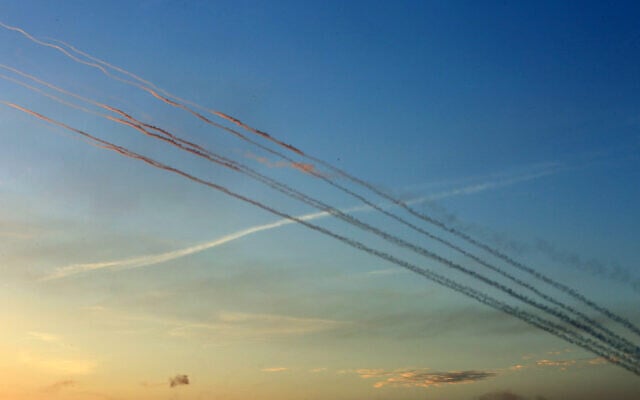
The assault on Kibbutz Sufa began at 6:29 a.m., as Hamas launched its coordinated rocket barrage across southern Israel. Within minutes, intelligence and surveillance units detected large-scale infiltrations by terrorists, including near the kibbutz and its adjacent military outpost.
Just 12 minutes later, at 6:41 a.m., a tank from the IDF’s “Sufa” company, positioned near the security fence, identified approaching Hamas gunmen — many riding motorcycles and pickup trucks — and opened fire. The tank, which held its position for three hours, was credited with killing dozens of attackers and slowing the initial wave.
At 6:45 a.m., the kibbutz’s security chief instructed the standby squad to gear up and prepare to defend the community, though he ordered them to remain indoors for the time being. By then, two trucks and several motorcycles carrying Nukhba terrorists were already en route to the kibbutz gate.
At 6:52 a.m., four terrorists reached the western entrance to the kibbutz. They opened fire and killed a security squad member, Ofir Erez, who had arrived in his car to confront them. Minutes later, the terrorists entered Sufa, splitting into two squads. According to the investigation, they began a systematic spree of house-to-house killings and destruction.
By 7:00 a.m., the nearby Sufa military outpost — just several hundred meters from the kibbutz — came under heavy fire. Hamas forces overran most of the base, sparing only the dining hall, where 30 soldiers had taken cover. Nine soldiers were killed and 30 were wounded in the fighting.

At the same time, another fierce battle was unfolding at the Dangur memorial near the kibbutz’s western gate, where Nahal reconnaissance fighters attempted to block Hamas reinforcements. Four soldiers, including a company commander and a platoon leader, were killed in the firefight, and seven were wounded. Additional clashes in the vicinity left six more IDF troops injured.
At 7:29 a.m., four Hamas operatives continued to move through the kibbutz. They reached a civilian home and fired into it from the outside, killing resident Bernard Cowan. Just five minutes later, at 7:34, the kibbutz’s security chief spotted two terrorists near his own home. He opened fire and killed both. Minutes later, he encountered and shot dead two more gunmen, ending the first wave of the attack.
Between 7:50 and 10:30 a.m., the standby squad reorganized to defend the kibbutz, and during this period, no additional casualties or kidnappings were recorded.
But at 10:30 a.m., a second wave of fighting began. Roughly 30 terrorists gathered in the orchards north of the kibbutz and opened fire on homes. Reinforcements were not yet on the ground. The standby squad and several armed civilians returned fire. During the exchange, Ido Hubara, a security team member, was critically injured and later died of his wounds.
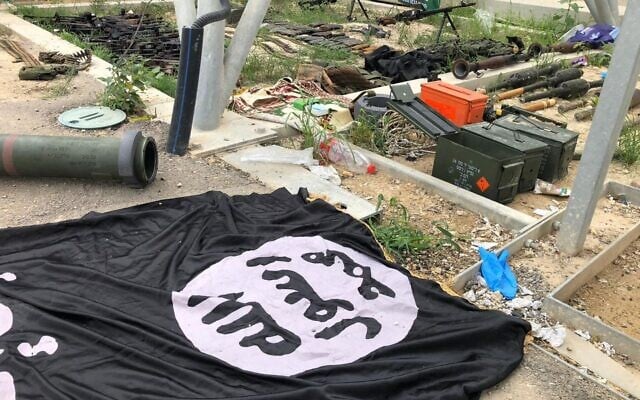
Several terrorists managed to breach the kibbutz again under cover of gunfire, hiding in improvised positions, but they were unable to reach homes. Gunfire from the orchards continued until IDF reinforcements arrived.
At 11:53 a.m., the first reinforcement team — led by the deputy commander of the IDF’s 80th Edom Regional Division and including fighters from the elite LOTAR Eilat counterterrorism unit — arrived at the kibbutz’s western gate. The six-man team, accompanied by three local fighters, entered Sufa and began sweeping house by house.
By 12:20 p.m., Sufa’s security coordinator had joined them. Together, they stormed a position housing six Hamas gunmen and killed all of them in close-range combat. Meanwhile, dozens of other terrorists continued to fire from the orchards surrounding the kibbutz.
Concurrently, the 80th Division’s deputy commander contacted the air force’s 190th Squadron, requesting a combat helicopter strike. The helicopter struck the orchards twice, killing many of the terrorists and halting further fire toward the kibbutz.
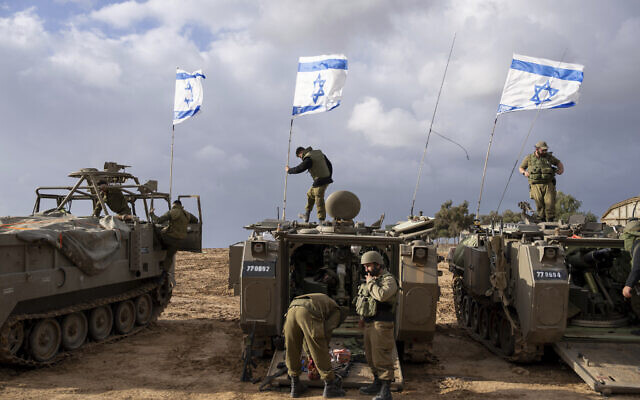
At approximately 2 p.m., additional reinforcements arrived from the elite Yahalom combat engineering unit and LOTAR Eilat, sent by the Southern Brigade. They entered the kibbutz and began a final clearing operation alongside earlier responders.
By 6:30 p.m., the IDF declared the area cleared of terrorists. Control over the kibbutz was transferred to a unit from the IDF’s School for Infantry Corps Professions and Squad Commanders in wartime.
At dawn the next day, October 8, the residents of Kibbutz Sufa were evacuated by local emergency teams. Over the following days, IDF troops — including infantry, armor, engineering, and aerial units — continued to sweep the orchards. Several terrorists were discovered hiding in the groves; some surrendered, others were killed or captured in combat.
Interrogations of captured terrorists later revealed that they had been ordered to abduct civilians from the kibbutz into Gaza — a plan ultimately foiled by sniper fire from the community’s security team.








The Times of Israel Community.