

Overconfidence jitters: 9 things to know for May 11
Israel may have won the battle, but most have no illusions about the future being so easy, and fears abound of a miscalculation setting off all-out war
 Add ToI as a Preferred Source on Google
Joshua Davidovich is The Times of Israel's Deputy Editor
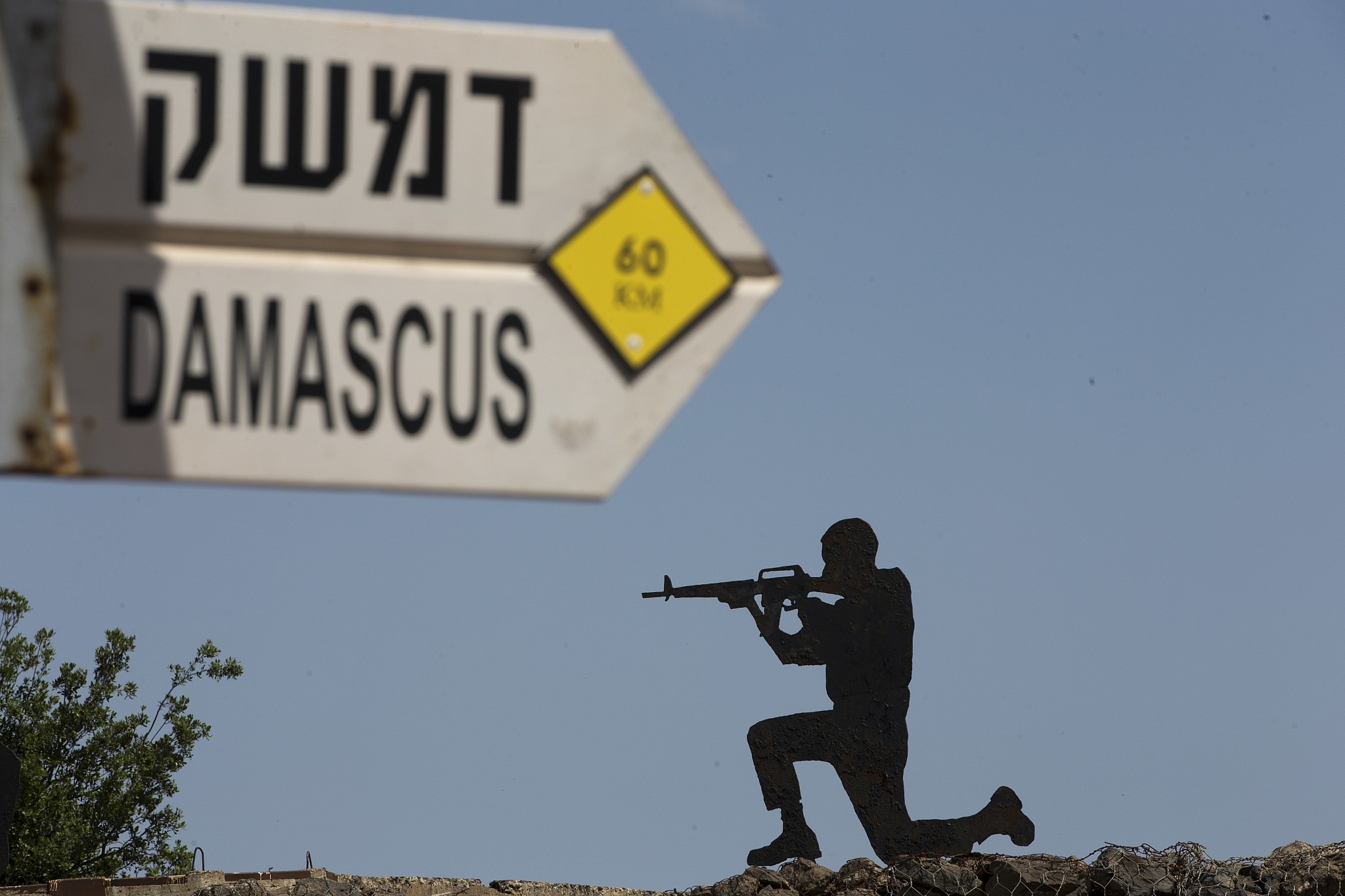
1. The battle is won, but the war is still long: With the dust still settling from Thursday’s cross-border exchange, that’s the general consensus to emerge in Israel, relying mostly on official IDF statements and straightforward analysis of the tensions that are far from resolved.
- Making like Alice Waters, the IDF has been slow-feeding the press and public tidbits from its operation, likely in a bid to get the greatest possible mileage out of the air campaign. On Thursday afternoon, it described some parts of the sortie, and on Friday morning it published pictures of several Iranian sites, including alleged intel facilities and a logistics compound, that it says it struck.
- Despite claiming to have obliterated Iran’s military forces in Syria and then some, the army is also hedging its bets, warning that Iranian forces in Syria are still in possession of surface-to-surface missiles that could again be fired at Israel.
- Haaretz reports that the high alert in the north is expected to continue for several days and embassies are beefing up security out of fear of a more classic Iranian-style attack.
2. Despite seeing Iran’s flaccid attempt to hit Israel as a failure, pundits are noting that Tehran might not always be some numbingly bad, and in any case, the fight isn’t over.
- “The Iranians are a bitter foe, stubborn and determined and most of all able to learn from the past. Assuming Iran has no intention to retreat from its plans to get a foothold in Syria [Quds Force commander Qassem] Soleimani will analyze his plans and get better next time around,” Yoav Limor writes in Israel Hayom.
- Haaretz’s lead editorial counsels taking a wait-and-see approach before embarking on any more strikes, though lawmakers may foil that plan: “The fear is that Israeli politicians will draw encouragement from the success of the latest military operation and push to continue attacks in Syria with no connection to Israel’s strategic goal. Their aggressive statements, their threats to assassinate Assad and the idea that airstrikes on Syria, which has no aerial defense umbrella, demonstrates our ability to attack Iran will only sabotage the army’s conduct and could detract from the legitimacy afforded to the latest strike.”
- “All one needs to remember in the moments of euphoria, of excitement, of security is that we’ve been here before. That these moments can be deceptive, blinding,” Sima Kadmon writes in Yedioth Ahronoth.
3. While both sides are seen as not wanting to go to war, fears are rampant that they may find themselves there anyway.
- “Both sides retain a keenly calibrated sense of each other’s boundaries.
Iran knows its growing presence has Israel rattled. But it has the strategic patience to bear the hits it is taking. Israel knows that although the Iranian barrage set an unwanted precedent, it was almost certainly payback, not necessarily the first salvo in an open war, which neither wants – for now,” Martin Chulow writes in the Guardian. - “There are enough different actors that there’s a lot of room for someone to say, ‘let’s go for it,’” Rachel Brandenburg, Director of the Middle East Security Initiative at the Atlantic Council, tells Axios.
4. Former National Security Adviser Yaakov Amidror notes in Israel Hayom that Israel had been biding its time and chomping at the bit to embark on a campaign of this breadth.
- “There was a desire to take advantage of the Iranian fire to damage a wide array of targets, some of which have been known about for some time, but until now there wasn’t an opportunity or diplomatic justification to attack them. The Iranians gave them the justification by shooting directly at Israel for the first time,” he writes.
5. Yedioth columnist Nahum Barnea sees both Israel and Iran trying to emulate historical precedents, neither of which is necessarily especially apt.
- For Israel, the goal is to turn Iran into the USSR, with crippling sanctions eventually leading to regime change: “What caused the collapse of the Soviet Union in the 90s will cause the collapse of the Islamic Republic. Reagan did it to the Soviets, Trump will do t to the Iranians. Trump loves the idea.”
- For Iran, the goal is to turn Syria into Yemen, according to Israeli military sources, with the ability to arm proxies to attack Israel, much as the Houthis do in launching rockets at Saudi Arabia, while claiming ignorance: “The Israeli campaign is meant to send a message to the world and the Iranian street: Iran is the address.”
- But former envoy Martin Indyk notes in the New York Times that it’s wrong to see the battle as anything but a direct confrontation: “It’s not a proxy war. It’s a direct war and that’s what makes it particularly dangerous,” he’s quoted saying. “Israel and Iran have been in a cold war for maybe 20 years now, but now it’s out in the open: direct, kinetic engagement between the forces, with Iranian casualties mounting. The potential for escalation is much greater now than before.”
6. Should a war indeed happen, a number of communities in northern Israel, especially non-Jewish ones, may find themselves especially vulnerable to rocket attacks, with few bomb shelters and little time to get inside, Jacob Magid reports in the Times of Israel.
- Whereas most new homes in Jewish kibbutzim are outfitted with shelters, allowing the residence to continue to project calm in the face of the escalating violence, Druze towns have few new homes with shelters and no room to put shelters, according to city officials in Ma’sa’ad, near the Syrian border.
- “There was nowhere for us to go, and the explosions lasted for five hours,” one municipal employee says.
7. On top of Israeli embassies, the Ynet website reports that Jewish schools, synagogues and other institutions around the world are beefing up security, fearing an attack of the type Iran proxy Hezbollah has carried out many times in the past, including in Buenos Aires and Burgas, Bulgaria.
- South America, Africa and some parts of Asia are considered especially dangerous, with the terror group already having some infrastructure there, the news site reports.
8. Yedioth writes that next week is expected to be “the stormiest in the country since the Six Day War and Yom Kippur War,” and a quick look at the calendar explains why.
- May 13 marks Jerusalem Day, a mostly overlooked holiday celebrating the capture of Jerusalem in 1967, but which also features an annual right-wing march through the Muslim quarter of the Old City. The parade is a constant powder keg, but given the next two days events, could be even worse this year.
- May 14 is the day the US Embassy will official move from Tel Aviv to Jerusalem. The historic transfer will be marked by an event attended by US and Israeli officials, but the move could also spark riots.
- May 15 is Nakba Day, with normally high tensions with Palestinians expected to ramp up to 11 in Gaza, where the March of Return is slated to climax and could see even bigger protests at the border than previously.
- While Hamas chief Yahya Sinwar said publicly that he hopes hundreds of thousands will try to break through the border fence during the supposedly peaceful demonstration, Israel’s Hadashot news reports that he also said he is “prepared and hoping to die as a martyr at the fence.”
9. Before the apocalypse, though, Saturday night will see Israeli Netta Barzilai compete for glory at the Eurovision song contest. After falling in polling behind Cyprus and Norway, a lackluster result by Norwegian Alexander Ryback Thursday night has Israel now running a close second behind the Cypriots, according to bookies.
- Israel will perform 22nd out of 26 in the contest Saturday night, three spots before Cyprus.
- But even if she doesn’t win, Barzilai’s “Toy,” is already being praised not for its chicken noises, but for capturing the #MeToo zeitgeist at the often silly song contest, AFP reports: “Her uptempo song … has grabbed the limelight, summing up the concerns of many women who have adopted the movement.”







The Times of Israel Community.