

Pakistani MPs elect World Cup cricket hero Imran Khan as next PM
Khan defends himself against widespread claims the army fixed the election in his favor. ‘I am standing here in this parliament on my own feet’
 Add ToI as a Preferred Source on Google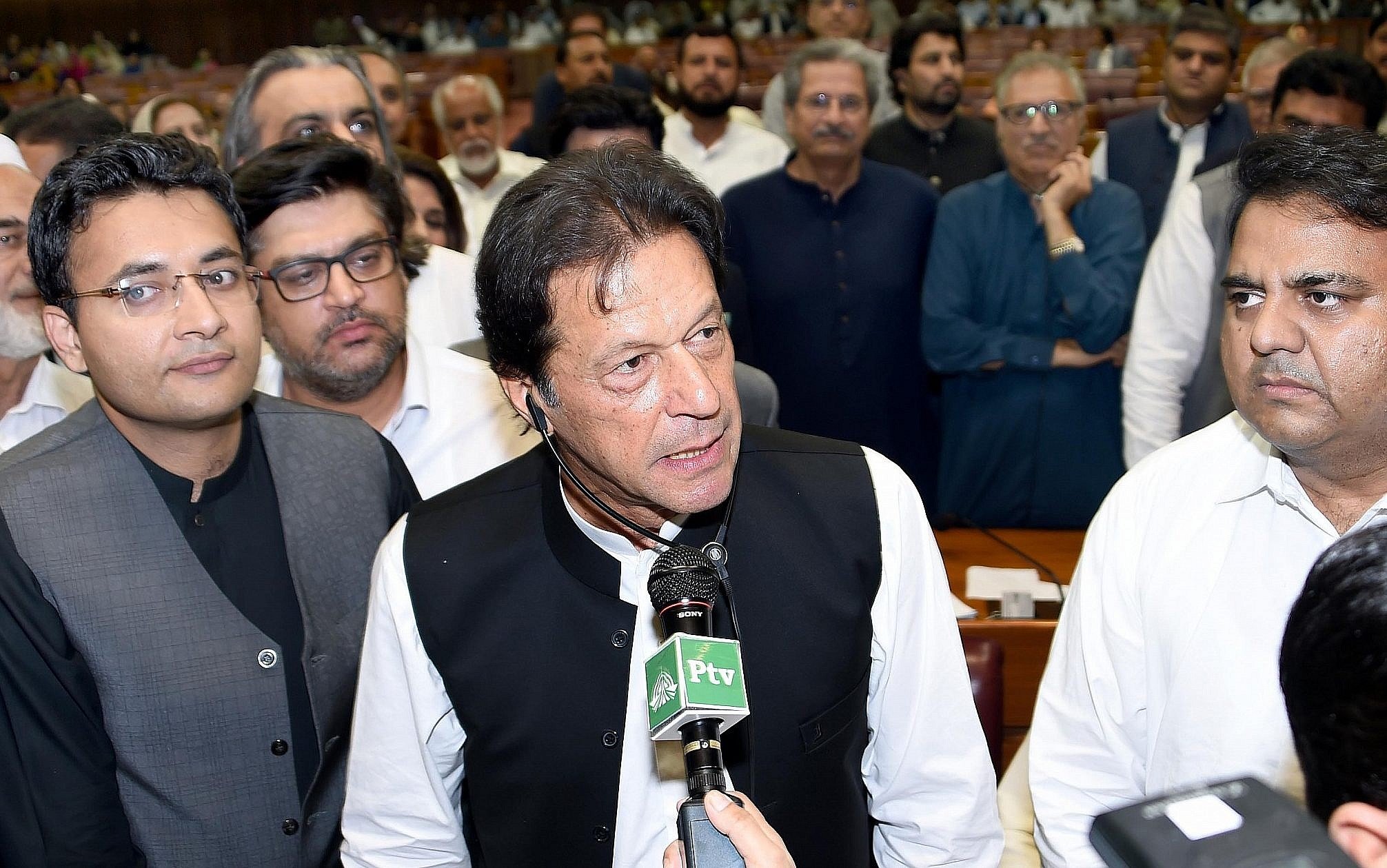
ISLAMABAD, Pakistan (AFP) — Pakistan’s World Cup cricket hero Imran Khan was formally elected prime minister of Pakistan Friday, promising a new era of responsibility and prosperity in a fighting speech in parliament.
Khan won a simple majority in a confidence vote held in the lower house of parliament, three weeks after an election tainted by claims of military meddling and ballot rigging.
“I am here after 22 years of struggle. No dictator has taken care of me. I am standing here in this parliament on my own feet,” he told the assembly after the vote, implicitly defending himself against widespread claims the generals had fixed the election in his favor.
Clad in a waistcoat and traditional white shalwar kameez garments, he smiled broadly and could be seen wiping tears from his eyes while clutching prayer beads as the count was announced.
The July 25 election was branded “Pakistan’s dirtiest,” after accusations through the campaign that the military was trying to tilt the playing field against the PML-N and in Khan’s favor.
The former cricketer, who captained Pakistan to World Cup victory in 1992, won the vote but fell short of an outright majority, forcing him to partner with smaller parties and independents in order to form a government.
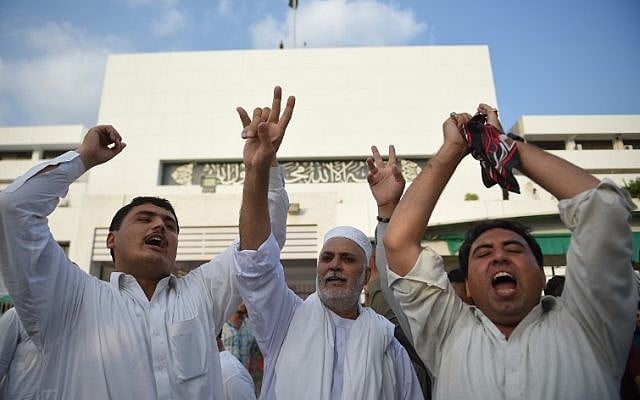
Rival parties have alleged “blatant” rigging, and Friday’s proceedings triggered raucous scenes as opposition parliamentarians shouted protest slogans in the assembly.
The army and Khan have denied the claims. In his speech, Khan urged the opposition to continue their protests.
National Assembly speaker Asad Qaiser said Khan had secured 176 votes.
He had needed 172 votes for a majority. His only rival, Shahbaz Sharif of the Pakistan Muslim League-Nawaz (PML-N), won 96 votes, Qaiser said, with some opposition parties including the third-largest Pakistan Peoples Party (PPP) abstaining from the vote.
The result brings Khan one step closer to ending decades of rotating leadership between the PML-N and the PPP, punctuated by periods of military rule.
He is due to be sworn in at a ceremony on Saturday.
The work begins
Khan and his Pakistan Tehreek-e-Insaf (PTI) party campaigned on promises to end widespread graft while building an “Islamic welfare state.”
“I promise that we will bring that change, for which this nation was starving,” he said in his address to the assembly.
“First of all, we will start strict accountability. I promise to my God that everyone who looted this country will be made accountable.”
The party has already formed a government in its stronghold of Khyber Pakhtunkhwa province, and an alliance with regional parties in the southwestern province of Balochistan.
It is expected to form a coalition government in powerful Punjab province, formerly a PML-N stronghold, in coming days. Sindh province remained in the hands of the PPP.
PTI candidates were also voted speaker and deputy speaker of the National Assembly this week, putting Khan in a strong position to carry forward his legislative agenda.
He will face myriad challenges including militant extremism, water shortages, and a booming population negating growth in the developing country, among others.
Most pressing will be a looming economic crisis, with speculation that Pakistan will have to seek a bailout from the International Monetary Fund.
He will also have to contend with the same issue as many of his predecessors: how to maintain a balance of power in civil-military relations.
In the West, Khan is often seen as a celebrity whose high-profile romances were tabloid fodder, but at home he cuts a more conservative persona as a devout Muslim who believes feminism has degraded motherhood.
Known in Pakistan as “Taliban Khan” for his calls to hold talks with insurgents, he increasingly catered to religious hardliners during the campaign, spurring fears his leadership could embolden extremists.





The Times of Israel Community.