

Poland says EU should respect sanctions while trying to save Iran deal
Jacek Czaputowicz makes remark as Mogherini insists Europe’s interest in preserving pact isn’t motivated by economic considerations
 Add ToI as a Preferred Source on Google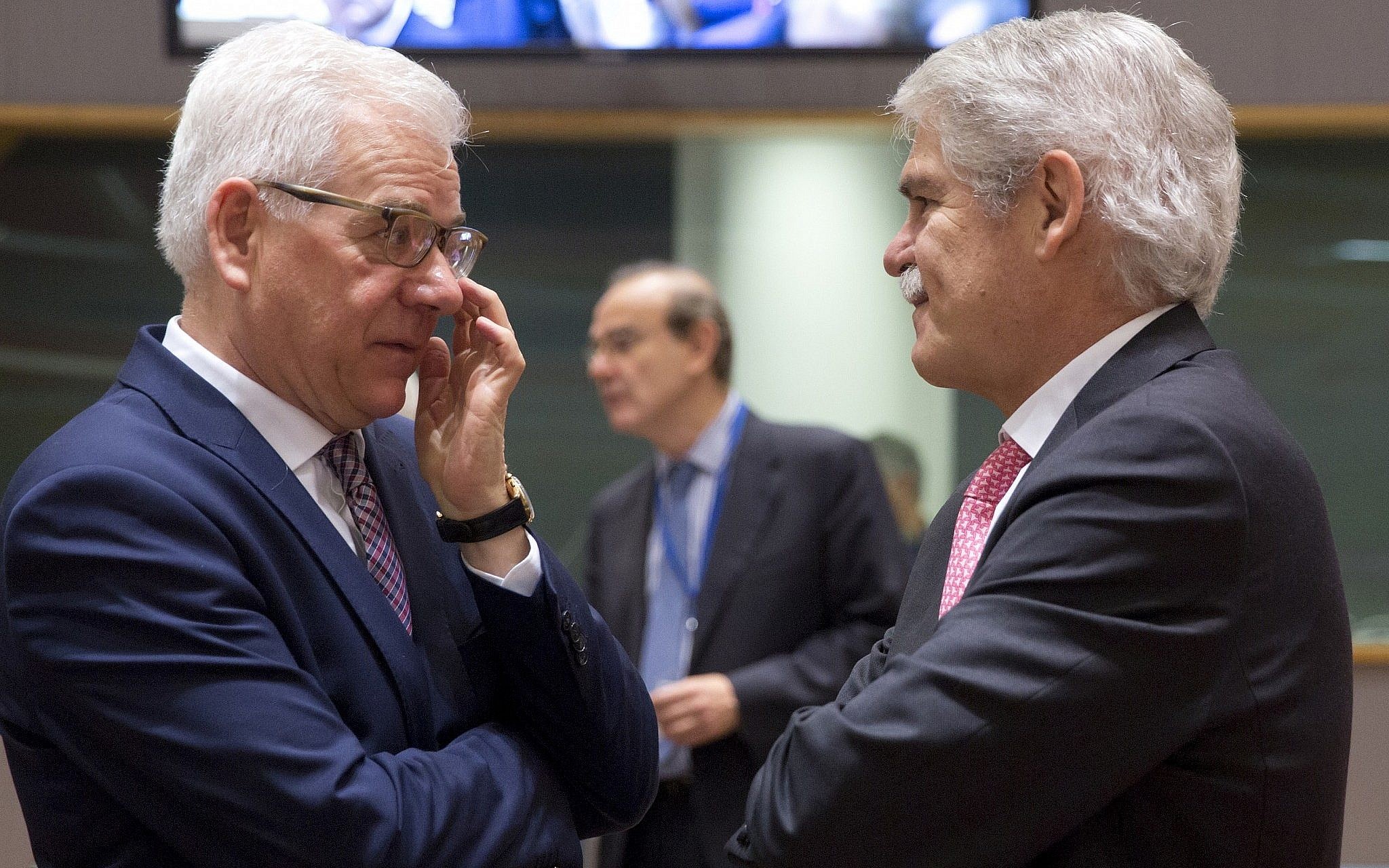
BRUSSELS (AP) — The European Union is seeking to shield the bloc’s strategic and economic interests in Iran in the wake of the US withdrawal from the international nuclear deal, as the EU foreign policy chief insisted Monday that the unity of the member states was unquestioned.
Federica Mogherini said after a meeting of EU foreign ministers that the member states were intensely coordinating their efforts “to protect the economic investments of European businesses that have legitimately invested and engaged in Iran” over the past three years since the nuclear deal was agreed.
Polish Foreign Minister Jacek Czaputowicz, however, said that Poland opposes any EU actions that would weaken US sanctions.
The US pulled out of the pact earlier this month, and wants to impose tough sanctions on Iran, which also might also have an impact on some European companies doing business with Tehran.
European powers say they are committed to keep working together to save the deal because they believe it is the best way to keep Tehran from developing a nuclear bomb.
Mogherini insisted the EU was not motivated by business profits in trying to keep the deal alive.
“For us, this is not about an economic interest. It is about a security interest,” she said.
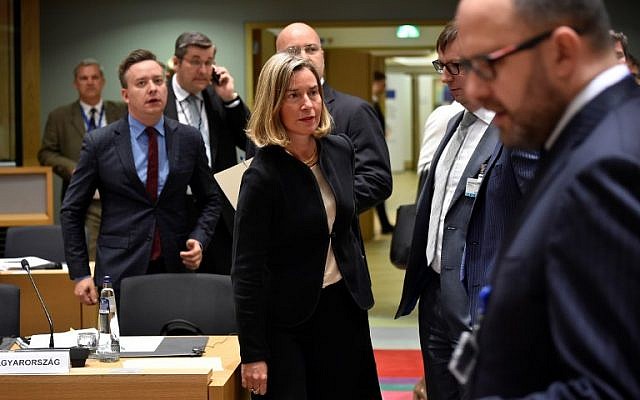
Mogherini also downplayed reports of friction between Poland and the rest of the EU over how to deal with US President Donald Trump and his hard-line stance toward Tehran.
Mogherini contended that the EU as a whole also shared some of Trump’s concerns when it comes to Iran’s role in the Middle East and its ballistic missile program.
Overall though, she said, “the first concern we share is one related to the possibility for Iran to develop a nuclear weapon” and sticking to the nuclear deal was the best way to prevent that.
Poland’s Czaputowicz said that if European companies operating in Iran were to suffer losses, a mechanism needed to be found to compensate them. He also said encouraging the continued operation of European companies in Iran could weaken US sanctions, and this could become be a big problem.
He said that those “states that tie their security to United States security” shared views similar to Poland’s given their interest in preserving their trans-Atlantic relationship.
Last week, the EU’s executive Commission announced that it will start revising a so-called blocking regulation that was drawn up in 1996 in response to the fallout from US sanctions on Cuba, and on Libya and Iran.
The measure has never been used, but in essence it bans companies from respecting American sanctions where those sanctions might damage EU interests, notably trade and the movement of capital.
For the blocking regulation to be used now, it would have to be updated to include US nuclear-related sanctions against Iran. This would take time and runs the risk that any one of the 28 EU member countries could block the move.
The EU is also ready to allow the European Investment Bank to help companies invest in Iran. On top of that, the EU’s energy commissioner is heading to Tehran for talks on boosting energy cooperation.






The Times of Israel Community.