

Prigozhin’s death leaves many unknowns and one ‘most obvious’ assumption
Kremlin does nothing to deny widespread assessment that Wagner leader’s plane crash was an act of revenge by Putin for leading an aborted uprising
 Add ToI as a Preferred Source on Google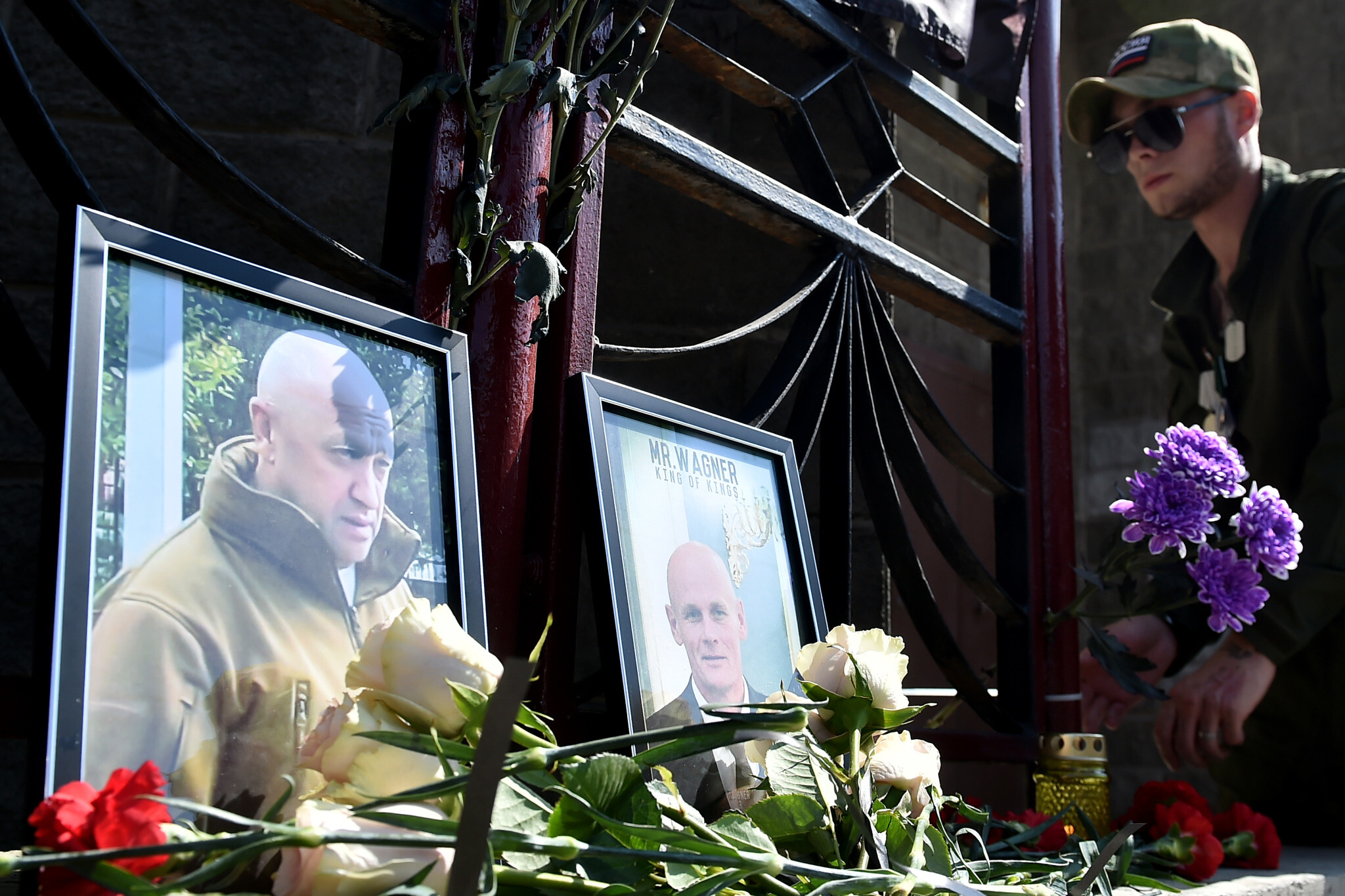
PARIS (AFP) — The exact circumstances of the death of Wagner chief Yevgeny Prigozhin remained unclear Thursday, although most experts believe it marks President Vladimir Putin’s vengeance for his short-lived rebellion in June.
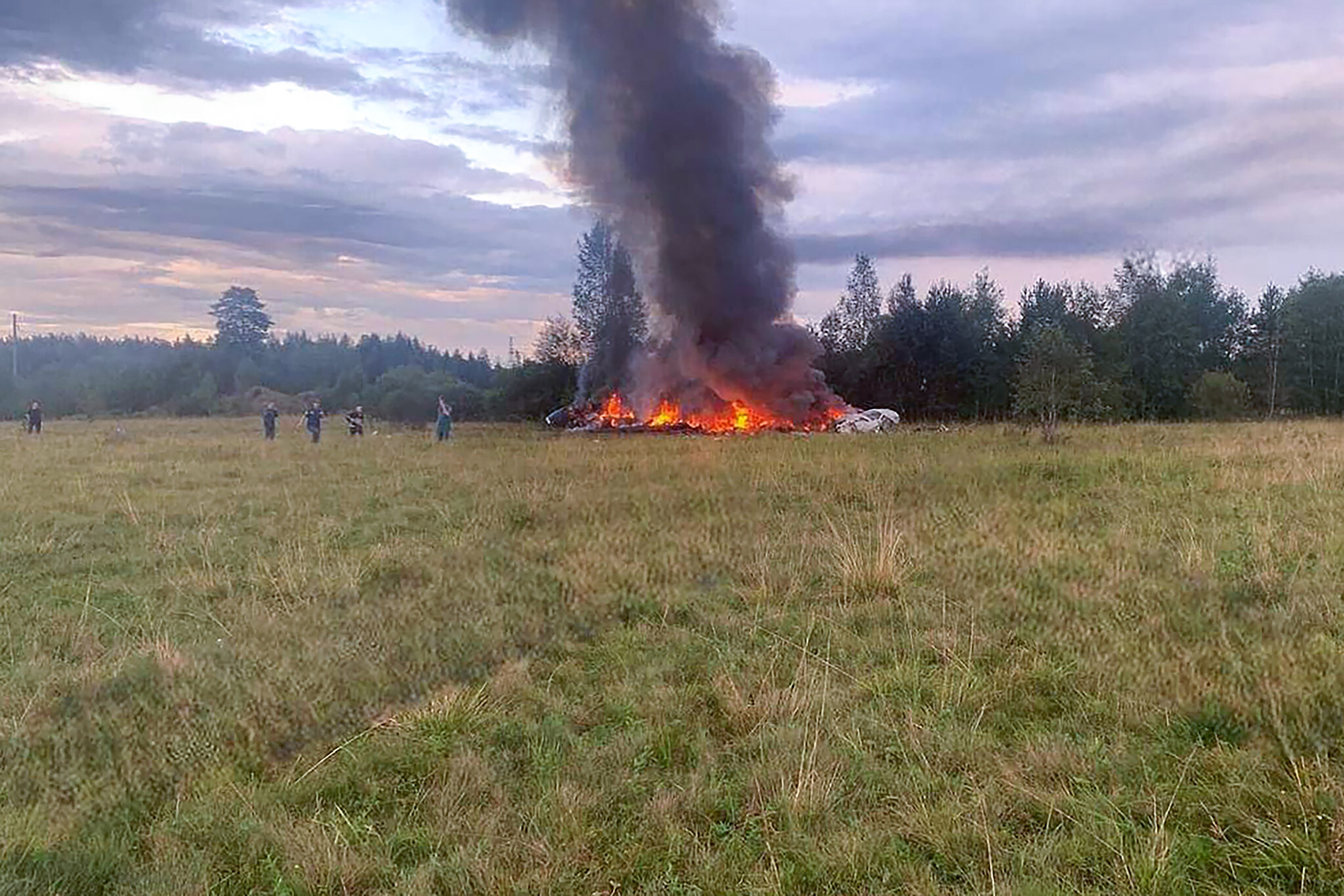
The head of the mercenary group, which in June attempted to topple Russia’s military leadership, was on board a plane that crashed on Wednesday, with all passengers killed, Russian officials said.
Russian social media accounts linked to the opposition or Wagner itself were echoing the analysis of Western think tanks, seeing Prigozhin living on borrowed time since his aborted march on Moscow two months ago.
“No matter the cause of the plane crash, everyone will see this as an act of retaliation and retribution, and the Kremlin won’t particularly counteract this view,” said Tatiana Stanovaya, founder of the R.Politik consultancy.
Russian authorities have not put forward any cause for the crash, leaving the field open for a mass of questions and assumptions.
Why did the plane crash?
Personnel from Russia’s powerful Investigative Committee, which probes serious crimes, were on the scene less than 24 hours after the crash.
Although neither the Kremlin nor the defense ministry have made a statement, an investigation has been opened for breach of air safety rules.
Wagner’s official accounts have been dark since June 26, when Prigozhin published a last audio message.
But accounts close to the group made so-far unproven claims that the plane was brought down by an S-300 surface-to-air missile system.
The theory began spreading immediately after the crash became known, with the Grey_Zone Telegram account describing “characteristic air defense white trails in the sky” on an amateur video supposedly of the crash — which AFP was unable to verify.
Other unverified images show a plane, allegedly the Embraer 135 carrying Prigozhin, spiraling down to the ground.
Even Margarita Simonian, the head of RT — formerly Russia Today — publicly appeared to endorse the assassination theory as she dismissed the idea that Prigozhin had staged his own death.
“Personally I lean towards the most obvious” theory, she wrote.
Other victims
An official manifest shows ten passengers on board the plane that crashed in the Tver region northwest of Moscow.
“Everyone on board was killed,” Russia’s emergency ministry said.
Short biographies were published by Dossier, a site belonging to exiled businessman and opposition figure Mikhail Khodorkovsky.
Among them was Dmitry Utkin, Prigozhin’s heavyset, shaven-headed right-hand man who was known to have neo-Nazi sympathies.
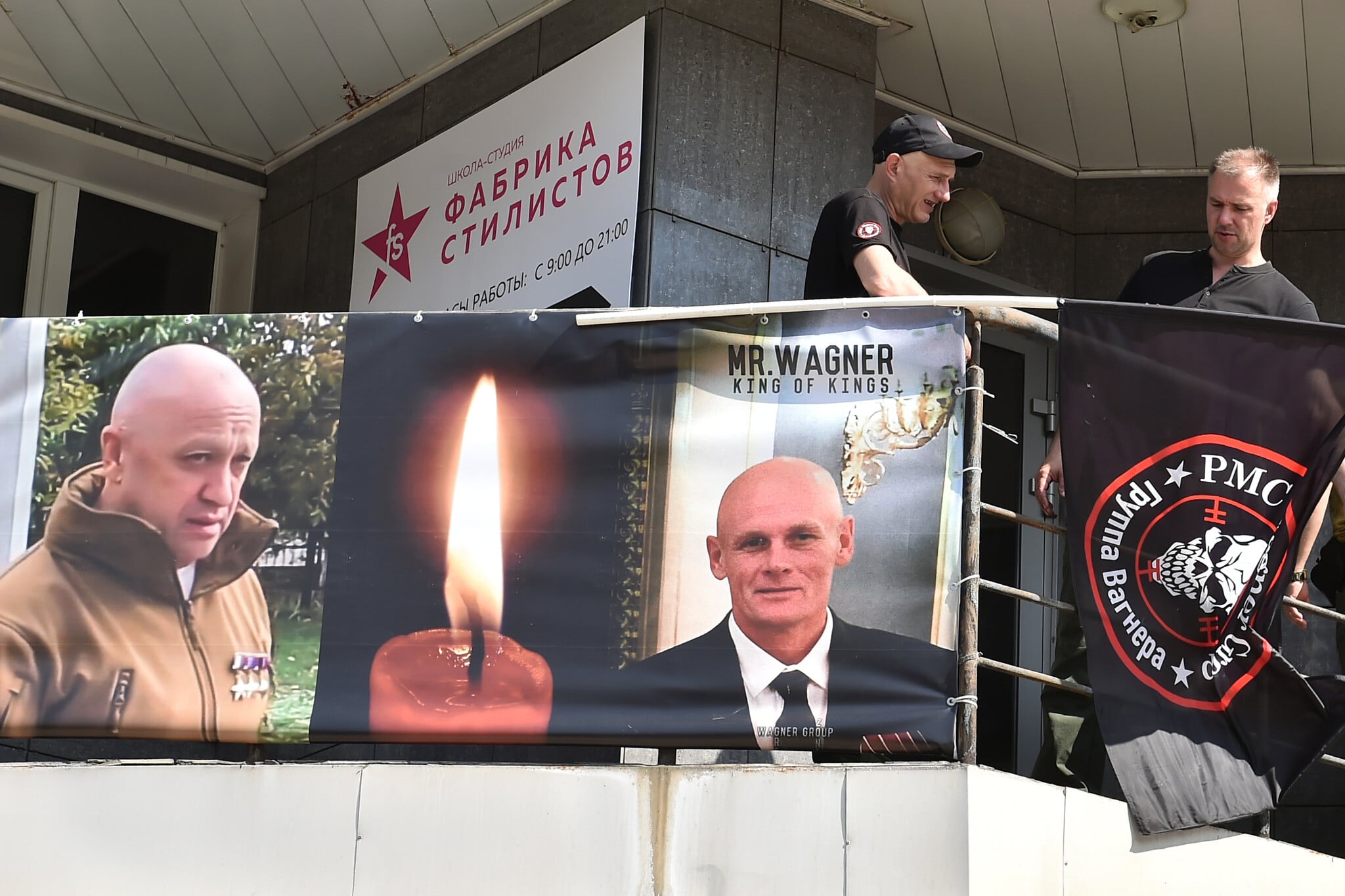
Utkin “was in charge of command and combat training,” Dossier wrote, and “signed orders with ‘Sieg'” — the German word for “victory” used in the Nazi “Sieg Heil” greeting.
He referred to Prigozhin himself as “Heil Petrovich,” Dossier added.
Valery Chekalov, another passenger, was one of the directors of Prigozhin’s Concord company and had worked for him since the 2000s.
He supervised all the Wagner boss’s civilian projects abroad, “whether geological prospecting, oil production or agriculture” as well as the mercenary firm’s logistics, Dossier said.
The overriding assumption
Putin’s rage at Wagner’s mutiny, his history of eliminating opponents and the tightening of his regime’s control since its invasion of Ukraine have all been highlighted by observers pinning Prigozhin’s death on the Kremlin.
“If Russia was a normal state, then his mutiny would have led to a trial… Whatever we may think of Prigozhin, it is unconscionable to kill someone without a trial, especially when he was not in hiding,” Khodorkovsky posted on X (formerly known as Twitter).
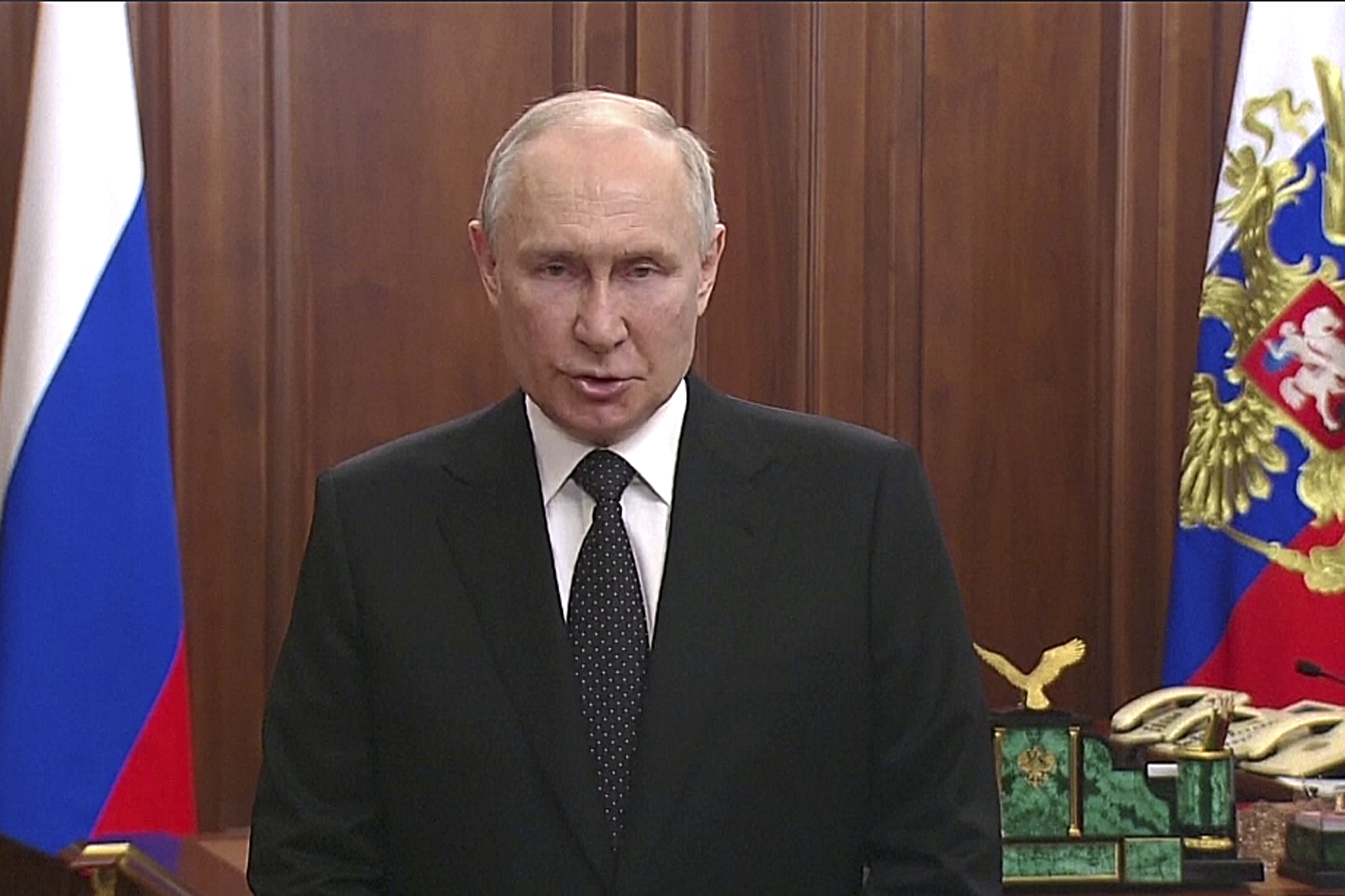
“But in the world where Putin operates — that of gangsters — that’s the only way things can be done. After all, who knows what he might have said in court?” Khodorkovsky added.
“Putin has a habit of belated revenge,” said Samuel Ramani of British think-tank RUSI, recalling that Alexander Litvinenko and Anna Politkovskaya were killed in 2006 after criticizing the Chechen war in the early 2000s.
“Prigozhin’s death unfolded much more quickly than usual,” he added.
Further questions were asked by figures including former US ambassador to Russia Michael McFaul.
“Why did Putin choose to kill Prigozhin in such a dramatic way? Why did he allow Prigozhin to meet with African leaders during his St. Petersbourg summit?” last July, he wrote on X.
What’s more, why are Wagner loyalists “allowed to pop off about revenge on social media now?” he wondered.







The Times of Israel Community.