

Sinking Iran’s proxies, Sinwar’s Al-Aqsa Flood left Khamenei high and dry
Iran’s supreme leader pushed to restore ties with Hamas, whose October 7 attack spurred an Israeli response that washed away the Iranian axis, leaving the regime exposed
 Add ToI as a Preferred Source on Google
Lazar Berman is The Times of Israel's diplomatic reporter
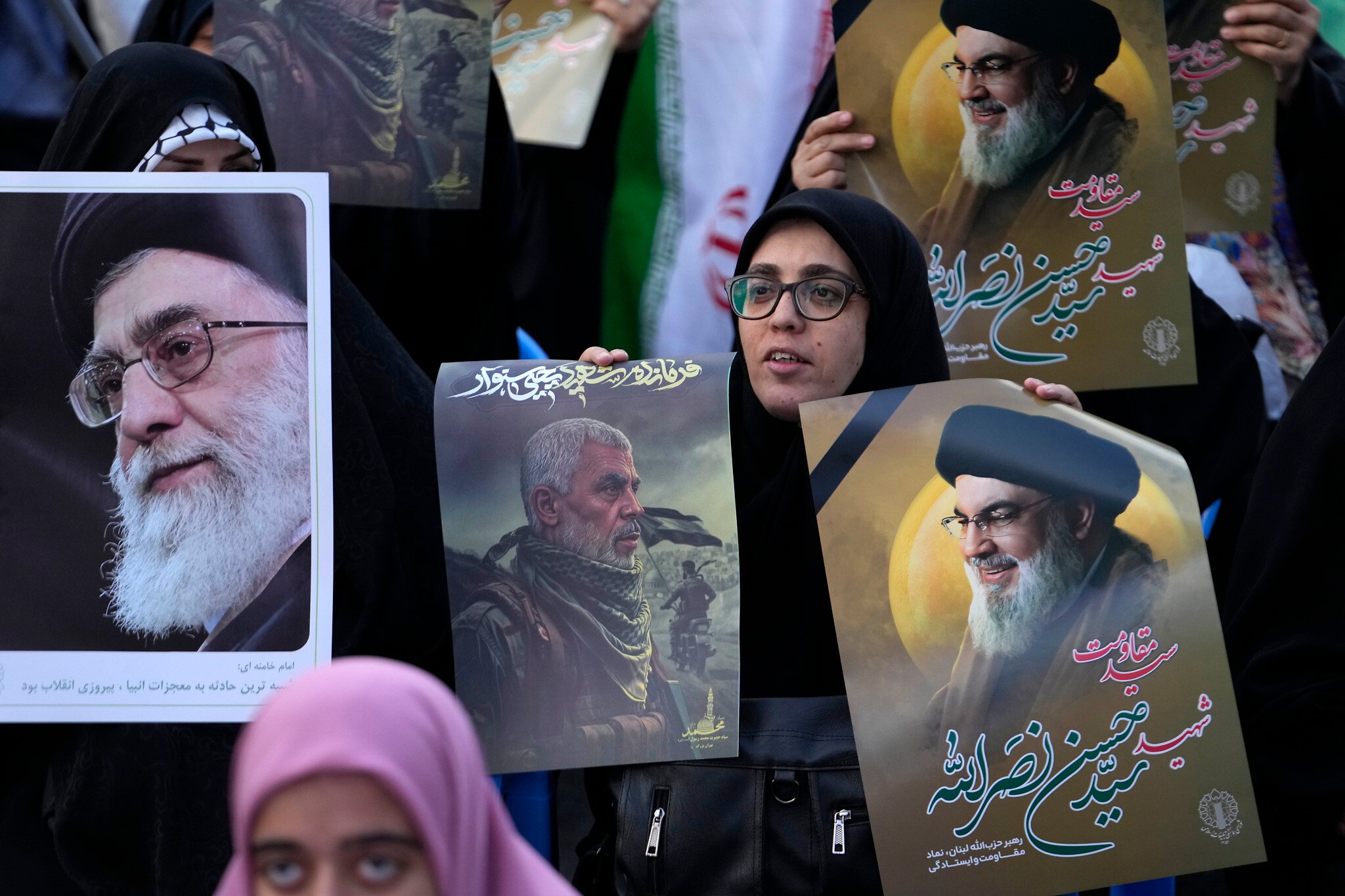
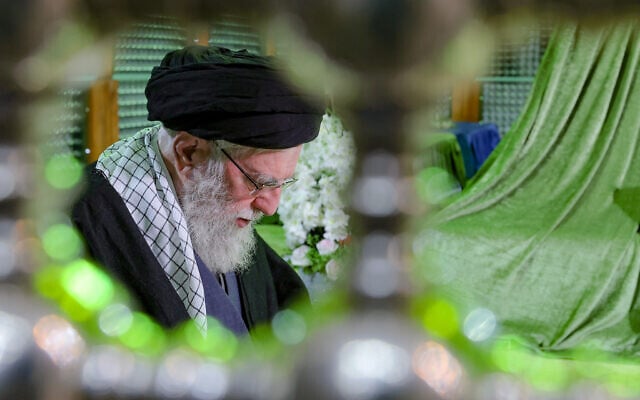
Iran’s supreme leader Ayatollah Ali Khamenei drew his last, likely choked, breath on Saturday, but the seeds of his demise in a joint Israeli-American strike were planted years earlier and far from his Tehran headquarters.
The processes that led to his violent death can be traced back to October 7, 2023, when the Hamas terror group set off a chain of events that would, through a series of twists and turns, lead to Israel and the US launching a war aimed at eliminating the Iranian regime he led for decades.
One can also peer back further, to a decision made by Khamenei nearly a decade ago to embrace Hamas and boost its capabilities. That decision, part of his decades-long project to build up a network of well-armed proxy forces across the Middle East, might well have been the beginning of the end of the Islamic Republic.
At the time, Khamenei boasted a web of Shiite groups in Iraq, Lebanon, and beyond that tended to act as unswervingly loyal foot soldiers to the cause he had led since 1989.
But Sunni Hamas had been asserting its independence.
Relations with Hamas had been strained since at least 2012, when the terror group backed the Sunni opposition to the Bashar al-Assad regime that Tehran was propping up in Syria.
But in 2017, Khamenei identified an important change. Six years into the bloody civil war in Syria, Hamas selected two new leaders seen as more friendly toward Iran — Ismail Haniyeh as the movement’s overall leader based in Qatar, and Yahya Sinwar, the powerful new commander in Gaza.
With the new leadership in place, Khamenei engineered a reconciliation between Assad and Hamas.
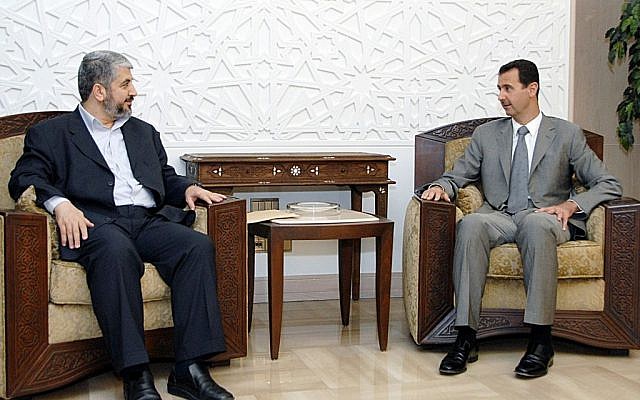
Key players lauded the restored ties, which brought Hamas back into Iran’s network.
Tehran, said Sinwar, was Hamas’s “largest backer financially and militarily.”
“The Iranian military support to Hamas and al-Qassam is strategic,” he added, saying the relationship had “become fantastic and returned to its former era.”
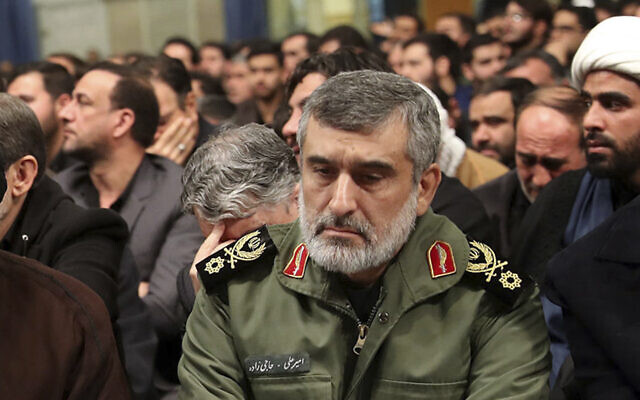
“All the missiles you might see in Gaza and Lebanon were created with Iran’s support,” boasted the Aerospace Force commander of Iran’s Islamic Revolutionary Guard Corps, Amir Ali Hajizadeh.
With Israel clearly averse to any sort of ground invasion of Gaza that could put his rule at risk, and now with Iranian — and eventually Qatari — backing, Sinwar felt increasingly emboldened.
He continued to build up Hamas’s military capabilities, and believed that if he sparked a war with Israel, Iran would order its proxy network into battle, bringing Israel to its knees.
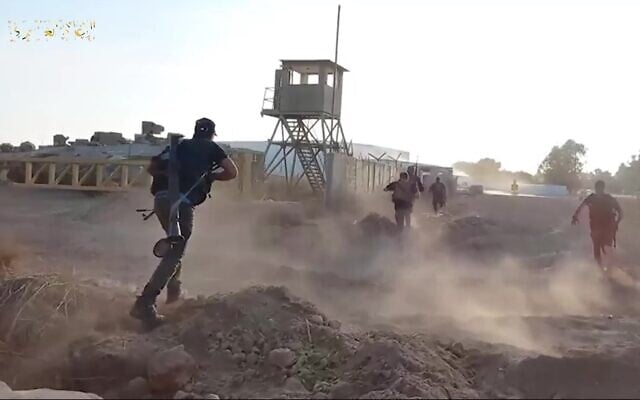
On October 7, 2023, he put that plan into action. Hamas launched its surprise attack, slaughtering 1,200 people in southern Israel and dragging 251 hostages into Gaza.
Sinwar’s attack was the high-water mark of the Iranian axis.
Al-Aqsa Flood did create a tsunami, but it washed Iran’s proxies away from Israel’s borders, and ended up drowning Khamenei — and possibly the regime itself.
Hamas’s fanatical leader in Gaza was convinced that the attack he named the “Al-Aqsa Flood ” — after the mosque atop the Temple Mount in Jerusalem’s Old City — would set off an influx of similar attacks from the rest of Iran’s network, inundating Israel’s vaunted defenses.
That didn’t happen. Al-Aqsa Flood did create a tsunami, but instead of washing Israel away, it engulfed the proxy network that was meant to act as a shield for Iran and ended up drowning Khamenei — and possibly the regime itself.
The dominos fall
Hamas had its day in the sun. For several hours on October 7, its fighters rampaged through kibbutzim, military outposts, and a dance party, killing, raping, and kidnapping its way through Israel’s border communities.
Terrorists reveled in the gore, and their supporters around the world eagerly expressed their fervent support for the horror.
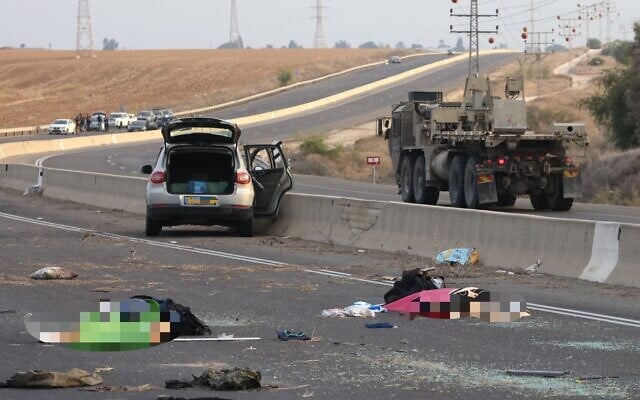
By the end of the day, Israel had largely regained control of the situation, and within weeks it shifted to the offensive. Israel’s ground operation was slow and at times disjointed, but the IDF systematically ground Hamas down, killing almost all of its commanders in Gaza — including Sinwar himself.
Iran-backed groups in Iraq and Yemen did attack Israel in support of Hamas, but were too weak or too distant to have much impact. That left Hezbollah, the Shiite group in Lebanon that Khamenei turned into a powerful army.
According to reports, Hezbollah was reluctant to join the fight, unhappy that Hamas had preempted its own planned invasion. It decided to wade in one day after the Hamas invasion, but made no attempt to seriously challenge the IDF beyond pinning down some troops along the Lebanese border.
For nearly a year, it subjected Israel to a steady but manageable flow of rocket, missile and drone fire. In September 2024, Israel decided it had had enough and moved to the offensive on its northern border.
Starting with the sensational exploding beeper and walkie-talkie operation, Israel systematically eliminated the Lebanese group’s commanders, including its long-serving leader Hassan Nasrallah.
It then moved ground forces across the border, destroying Hezbollah’s infrastructure south of the Litani River. After losing thousands of fighters, most of its rockets, and much of its command, Hezbollah threw in the towel, agreeing to a ceasefire that left what remained of Hamas on its own against Israel.
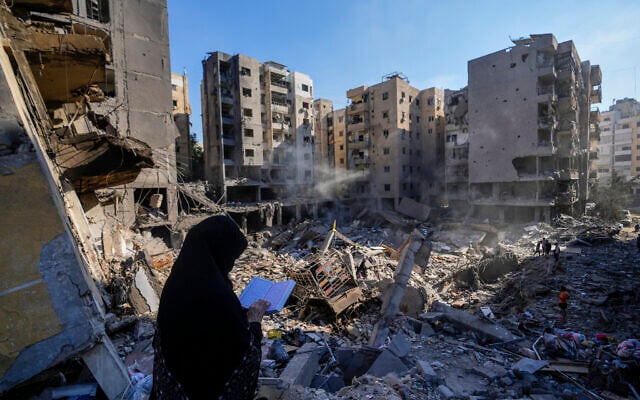
From the November 2024 ceasefire to the end of February 2026, Israel killed over 400 Hezbollah fighters, but received nary a response. When Israel pounded Iran for 12 days, the Lebanese proxy refused to come to Iran’s defense. When Israel launched the opening salvo against Iran on Saturday, once-prevalent concerns of Hezbollah reprisals were barely a factor.
A little over a year ago, Israel had a front-row seat to a display of what happens in the Middle East when a regime reliant on Hezbollah and an overstretched Russia loses that support.
Days after the ceasefire in Lebanon, Syrian rebels poured out of their statelet in the country’s northwest, driving south until they took the capital. Assad fled the country, and a firmly anti-Iran, anti-Hezbollah, and — for now — pro-Western regime took its place.
For Israel, a path was opening up to take on “the head of the octopus” itself — the Islamic Republic. Now it was Prime Minister Benjamin Netanyahu’s turn to seize an opportunity.
October 7 reaches Khamenei
Iran invested so heavily in Hezbollah in large part to protect its nuclear program — if Israel ever considered attacking, it would have to take into account the thousands of missiles that Hezbollah could rain on Israeli cities and strategic sites.
But now the Shiite group had all the fight beaten out of it. Moreover, the advanced Syrian air defense array ceased to be a factor once Assad’s regime fell and Israel destroyed most of what was left of his military, clearing the skies for Israeli planes making their way to Iran.
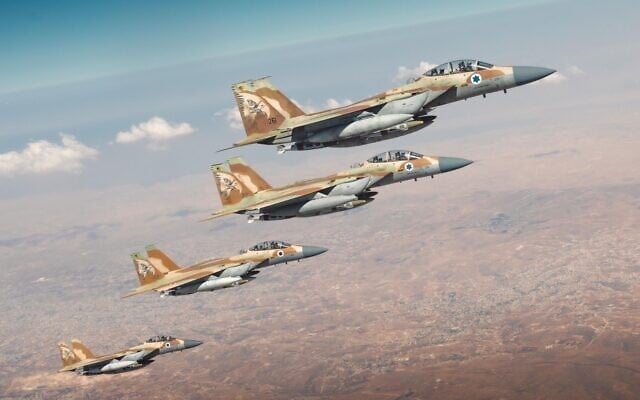
Israel struck in June 2025, taking out some 30 top Iranian military commanders — including the three most senior generals — on the first day and disrupting Iran’s command and control. Hajizadeh, who had boasted about Iran’s support for Hamas, was one of those taken out in Operation Red Wedding.
The air force also killed senior nuclear scientists, destroyed many of Iran’s air defenses, gained air superiority, and struck ballistic missile launchers. Over the ensuing days the IDF targeted additional Iranian nuclear facilities, eliminated more military commanders and nuclear scientists, and continued to work to thwart Iran’s attacks on Israel. Ten days in, the United States launched strikes on Iran’s nuclear sites, particularly the underground Fordo facility.

But it didn’t finish the work. US President Donald Trump pushed Israel to end the campaign earlier than it would have liked.
The Iranian regime remained intact and the next round seemed only a matter of time.
Widespread Iranian protests in December and January put the gears in motion for the second US-Israeli attack on Iran.
Trump initially threatened to strike Iran to protect the protesters. “I have let them know that if they start killing people, which they tend to do during their riots… we’re going to hit them very hard,” Trump said in an interview with conservative radio host Hugh Hewitt.
American threats and military buildup galvanized Arab partners to appeal to Trump to give diplomacy a chance with Iran.

Trump’s threats shifted primarily to Iran’s nuclear program, and when three rounds of talks didn’t produce sufficient Iranian concessions, the US and Israel initiated their massive bombing campaign.
Unlike the last operation, on Saturday the two countries started by decapitating the regime, laying the groundwork for it to be toppled.
The man at the head of the Islamic Republic since 1989 was gone, with no obvious successor waiting in the wings.
It’s possible that Israel and Iran would have found themselves at war regardless of what happened on October 7, 2023. But it’s also likely that such a war would have concentrated on more modest goals than regime change had Iran not been left so exposed.
For well over a decade before October 7, Netanyahu warned about the Iranian threat and did not act, neither against its nuclear program nor against its regime.
Were Hamas and Hezbollah intact and uncowed, Israel would be contending now not only with Iran’s powerful ballistic arsenal, but with tens of thousands more missiles and armies of well-armed terrorists on its borders.
In such a scenario, Netanyahu would likely have faced domestic criticism from many Israelis who would see an operation initiated by Israel as unnecessarily inviting attacks from Iran and its proxies, perhaps for his own political reasons.
Sinwar’s October 7 attack indeed changed the face of the Middle East. But rather than bring about Israel’s annihilation, it was the spark that set in motion the ongoing disintegration of Iran’s proxy network, the death of the mastermind of the axis, and potentially the end of the Iranian regime itself.





The Times of Israel Community.