

Study: During heatwaves, chronic disease sufferers visit hospitals more, stay longer
Pointing to the need for high staffing and more beds during hot summers, Taub Center research finds that more men and more affluent people rush to hospitals for heat stress
 Add ToI as a Preferred Source on Google
Sue Surkes is The Times of Israel's environment reporter

Israelis suffering from respiratory, cardiovascular, and kidney diseases, as well as diabetes, visit hospital emergency rooms more often and require longer hospital stays during summer heatwaves compared with periods of pleasant weather, according to a new study.
Between 2014 and 2025, this cost the state an estimated NIS 380 million ($127 million).
Researchers from the Taub Center for Social Policy Studies say that based on their data, policymakers should plan for additional staffing and hospital beds during heatwaves, given Israel’s already high bed occupancy compared with other developed countries.
“We are used to peaks in the winter because of influenza, rather than in the summer,” said Maya Sadeh, who led the study.
The ministry should also expand community medicine to help people cope with the heat and avoid heat stress, the report added.
“We don’t really talk about the importance of things like opening windows occasionally when the air conditioning is on all the time, or not letting the air conditioning make people too cold,” Sadeh said.
Israel is a climate change hotspot, where temperatures are rising faster than the global average.
Reviewing 14 years of data on temperatures, humidity levels, and hospital visits from 2010 to 2023, and focusing on people with diseases that are particularly aggravated by heat stress, the research team found that 41% more people with lung disease visited the ER during especially hot periods. The corresponding figures for those with kidney and cardiovascular disease were 28% and 27%, respectively.
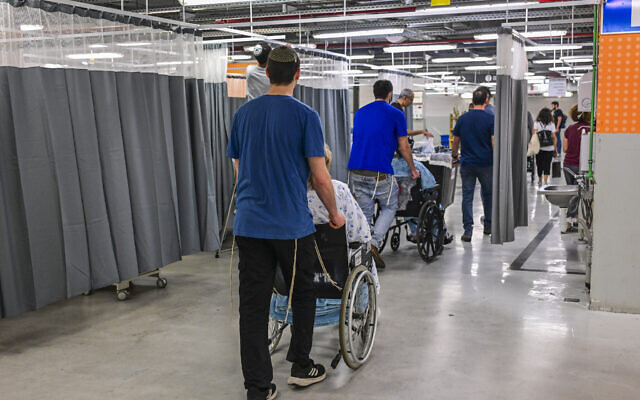
The team also found that as heat stress rises, the length of hospitalization increases.
Scientists measure heat stress and human discomfort in units. These are based on an arithmetical calculation that combines temperature with humidity and reflects human discomfort.
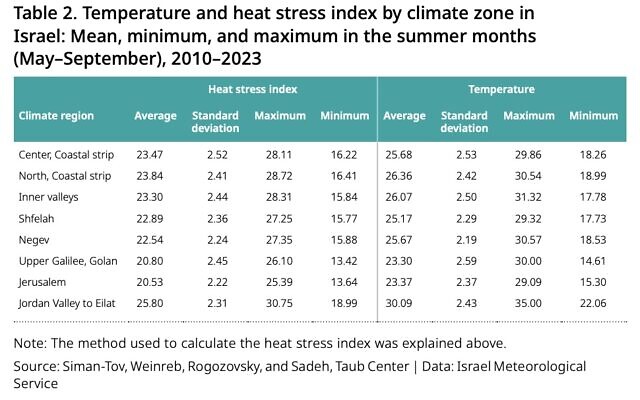
The Taub Center team estimated that an increase of one unit of heat stress led to an additional 5,500 hospitalization days per year for the diseases tested in the study.
It also found that women with heat stress stayed longer in the hospital than men across all disease categories under review.
Asked why, Sadeh told The Times of Israel that her previous research indicated that men were quicker to rush to the hospital. Women waited longer and were sicker when they finally arrived.
At the same time, researchers found that within hospitals, fewer than two deaths annually out of 40,000-53,000 deaths in these disease categories could be attributed to heat stress.
However, the study did not consider heat-related mortality outside of hospitals.
Several years ago, the Environmental Protection Ministry estimated that as many as 45 people had died from heat stress during an extreme heatwave.

Another finding was that wealthier people with chronic diseases and those living in central Israel were more likely to seek hospital care during heatwaves than those from lower socioeconomic backgrounds living in more peripheral areas.
The researchers surmised that this may be because patients in the center of the country, where most of the population lives, have access to more medical facilities than those in the north and south.
They also suggested that wealthier people might be more accustomed to having the air conditioning on most of the time, and are less able to cope with exposure to heat.
“It’s important to understand who doesn’t get to the hospital and dies outside it,” said Sadeh. “We see that there are people who perhaps don’t have access to hospitals, and may be the most vulnerable.”
Or Siman-Tov, Prof. Alex Weinreb, and Irene Rogoza also took part in the study.










The Times of Israel Community.