

Study suggests 4th-century prayer site may be one of Spain’s earliest synagogues
Oil lamps decorated with menorahs and architectural evidence uncovered in the Roman city of Castulo suggest that the building was not a church, but served as Jews’ place of worship
 Add ToI as a Preferred Source on Google
Rossella Tercatin is The Times of Israel's archaeology and religions reporter.
A 4th-century building in the Ibero-Roman city of Cástulo in south-central Spain, traditionally interpreted by experts as an early Christian church, might have instead been a synagogue, a group of Spanish archaeologists has argued.
In a paper published last month in the journal Vegueta, the scholars explained that some of the structure’s characteristics are unusual for a church and pointed to the presence of Jewish artifacts in its vicinity.
“Situated on the right bank of the Guadalimar River, Cástulo was one of the most important centers in the southern Iberian Peninsula during Antiquity, both for the size of its walled enclosure (50 hectares) and for its strategic position,” Bautista Ceprián del Castillo, one of the paper’s authors, told The Times of Israel via email.
The city stood at the crossroads of many significant commercial routes and had access to critical natural resources, including iron, silver, and copper.
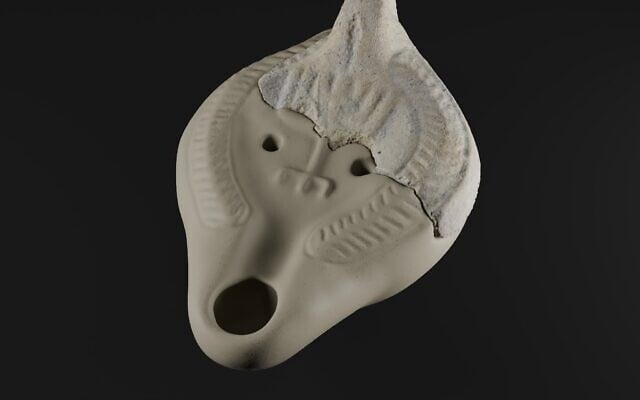
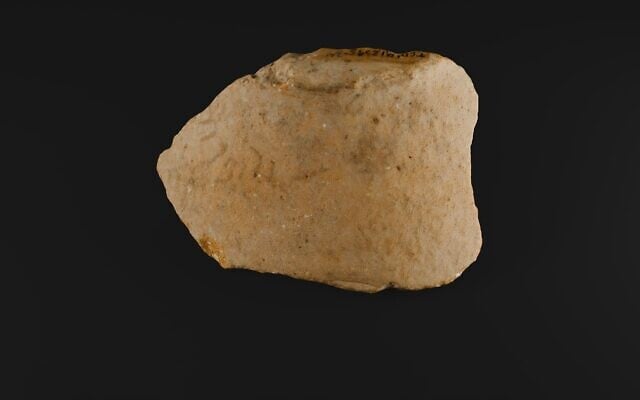
Researchers first began investigating the possibility of a Jewish presence in Cástulo about 15 years ago, Ceprián said, after a handful of telling artifacts were found near the structure in previous years: three broken oil lamps bearing images of a seven-branched menorah, a tile fragment with a five-branched menorah, and a Hebrew inscription inked on the lid of a storage jar.
“The artifacts found at the site — and the broader material culture documented — are typical of the Roman city of Cástulo in the 4th and 5th centuries,” he wrote.
“The three oil lamps, each bearing the unmistakable symbol of Judaism, the seven-branched menorah, provide compelling evidence of a Jewish presence — especially given that only three other lamps of this kind have been discovered across the entire Iberian Peninsula,” he added. “Then there’s the Hebrew inscription, which stands as one of the clearest indicators of a distinct Jewish identity.”
Due to the inscription’s poor preservation — and what the paper describes as the scribe’s “limited writing skills” — experts have been unable to conclusively decipher its meaning. Some suggest it reads “of forgiveness,” others interpret it as “light of forgiveness,” while a few believe it says “Song to David.”
In the past few years, archaeologists have set out to learn more about the Jewish community that may have lived in Cástulo.
“In 2019, we expanded the excavation site, though the main objective then was to study an earlier structure — specifically, an imperial temple with a square portico,” Ceprián said. “Nonetheless, we continued gathering information about the Jewish community that lived in this central area during the 4th and 5th centuries.”
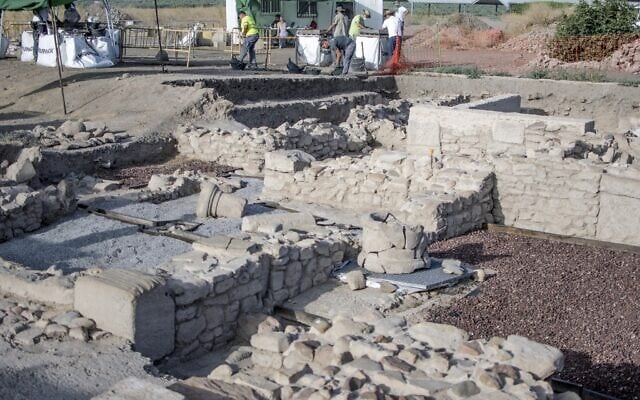
“In 2023 and 2024, we resumed the original project under the new name ‘Cástulo, Sefarad: First Light,” he added. “This phase involved the excavation of roughly 600 square meters, focused specifically on 4th- and 5th-century layers with the support of the Ministry of Culture and Sports of the Andalusian Regional Government.”
The new excavation enabled the archaeologists to uncover additional architectural evidence supporting the hypothesis that the structure previously identified as a church served as a synagogue.
In the most recent study, Ceprián and his colleagues, David Expósito Mangas and José Carlos Ortega Díez, focused on the characteristics and the position of the building.
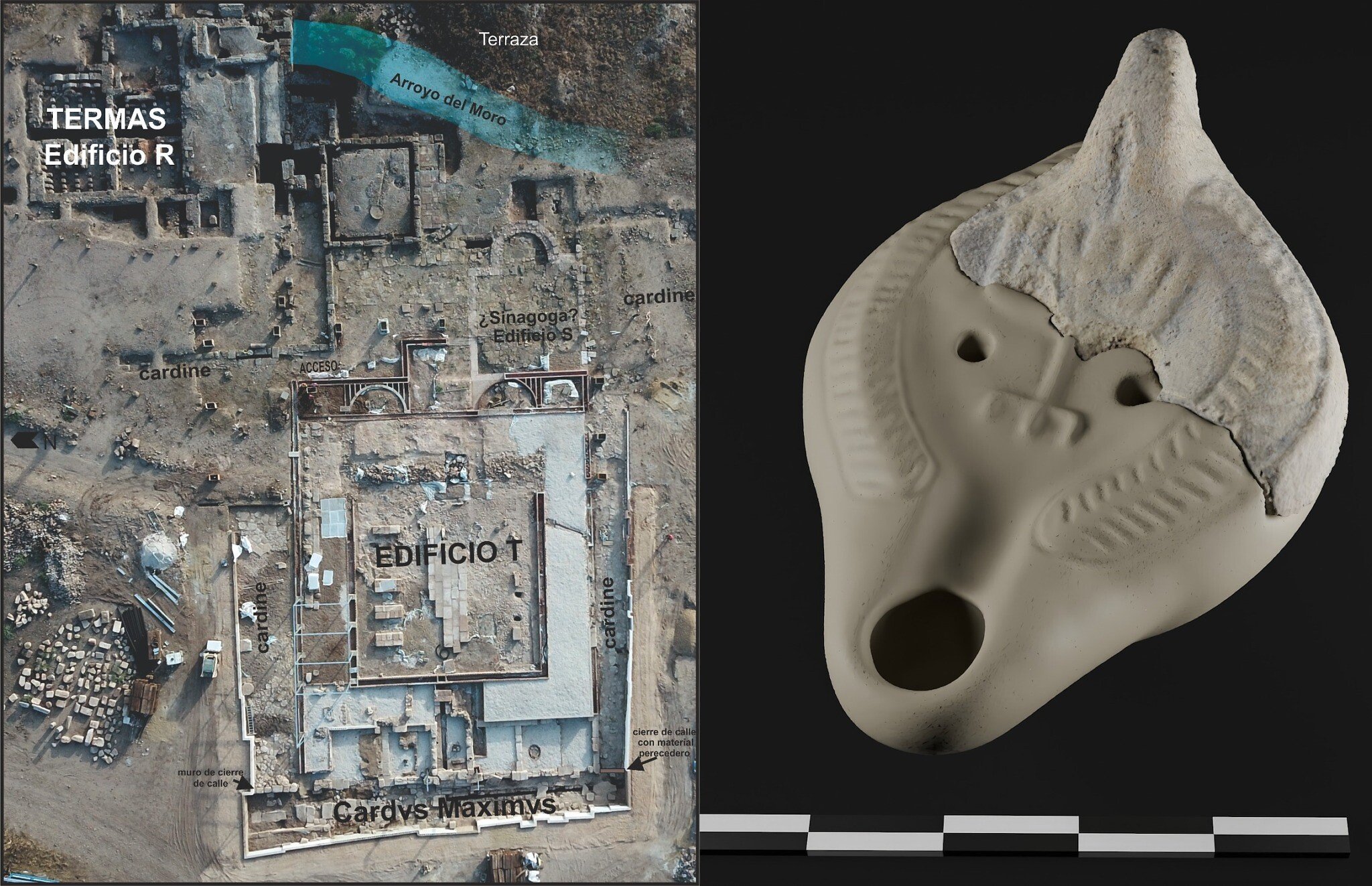
“The structure features an almost square floor plan with an apse facing east and doors on both the north and south sides,” Ceprián said.
According to the archaeologists, there are several reasons to believe the building served the city’s Jewish community rather than its Christian one.
Its near-square layout mirrors that of other Late Antique synagogues found in Galilee and elsewhere in the Land of Israel.
The structure also appears to have included a bimah — a central raised platform typical of synagogues — and a base where a menorah may once have stood.
No Christian artifacts have been uncovered in or around the building, and — unlike most Christian worship sites from the period — it also does not include graves. By contrast, a clearly identified Christian baptistry found elsewhere in Cástulo contains several graves.
Synagogues from this period never included graves, which were required to be situated at a certain distance from residential areas.
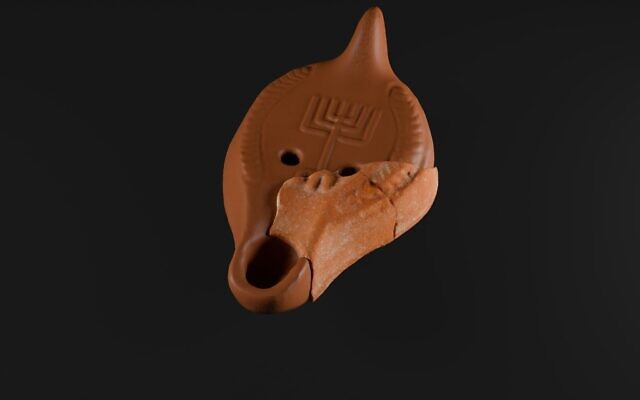
Additionally, the building’s location — in a secluded part of the city, next to a bathhouse and other pagan structures viewed as immoral by early Christians — suggests it would have been an unlikely choice for the Christian community, which by the late 4th century was already well-established and thriving.
“Finally, the archaeological record from the excavation dates the building’s abandonment to the 6th century CE,” Ceprian and his colleagues wrote in the paper. “This coincides with the apparent disappearance of the Jewish community that may have inhabited Cástulo at the time, as suggested by the 612 CE anti-Jewish law issued by the Visigothic king Sisebut.”
Cástulo was fully abandoned only in the 14th century.
The archaeologists emphasized that there is still no definitive proof that the building functioned as a synagogue, though they remain hopeful that future excavations will uncover evidence to support the hypothesis.
“Our understanding of the Jewish settlement [in Cástulo] is far from complete,” Ceprián wrote. “For example, no work has yet been done to determine the full extent of the Jewish quarter within the city. And beyond the Jewish presence, many other important questions remain to be explored throughout the broader archaeological site of Cástulo.”
If confirmed as a synagogue, the structure at Cástulo would rank among the oldest in Spain.
According to the Historic Synagogues of Europe database, a project by the Foundation for Jewish Heritage and the Center for Jewish Art at the Hebrew University of Jerusalem, to date, only two other synagogues from Late Antiquity are known in the country — one in Barcelona and another in Elche.







The Times of Israel Community.