

Syrian migrants bring traditional Arab dance to Berlin
Two asylum-seekers say that after spending a couple of years in Germany, it is their duty to ‘give some of our culture to Berlin’
 Add ToI as a Preferred Source on Google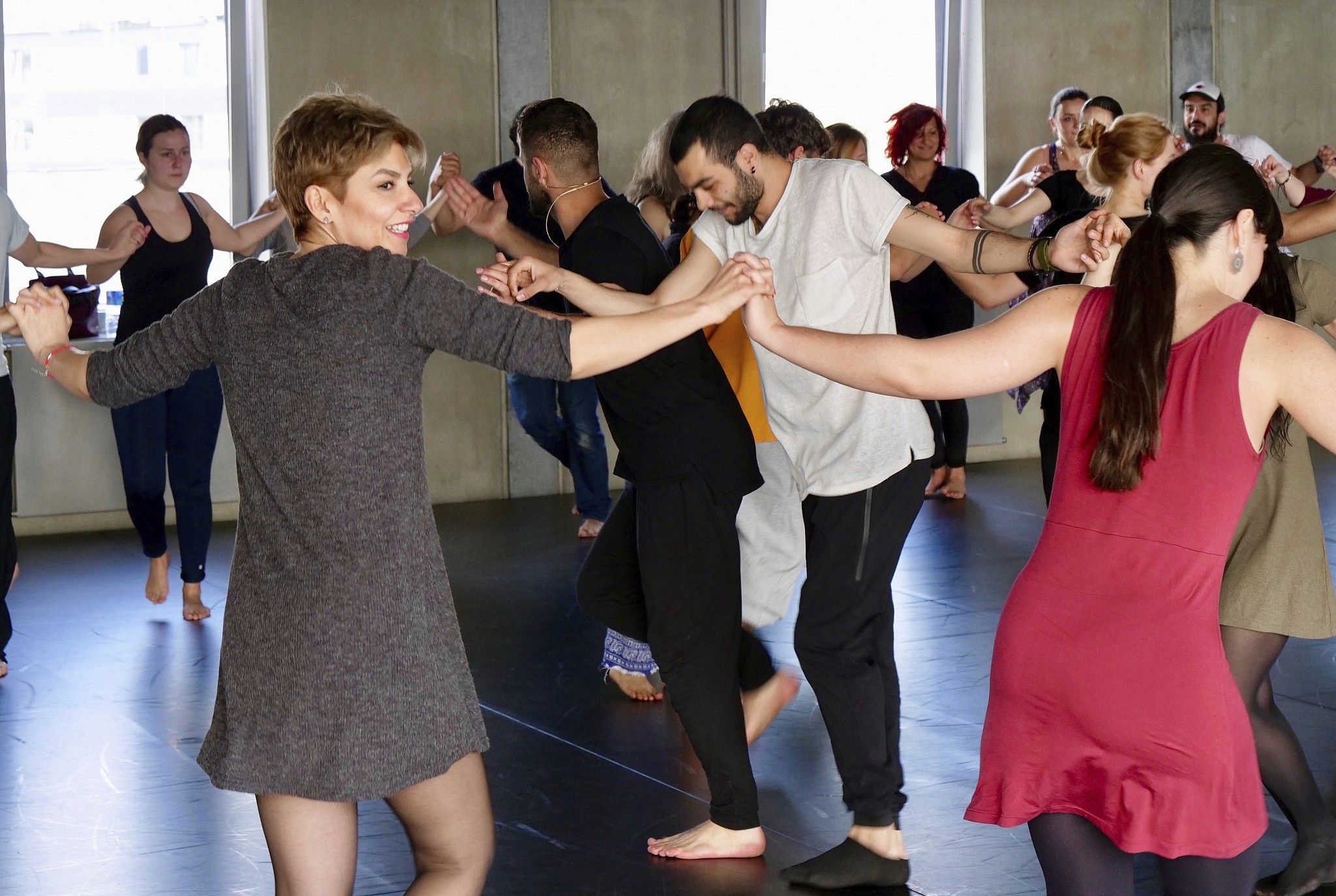
BERLIN, Germany (AP) — With stomping feet, swinging hips, a drumbeat and lots of laughter, two Syrian migrants lead a group of Germans and others in traditional Arab dance at a Berlin studio to share part of their culture with the country that took them in.
The dance workshops were initiated by Medhat Aldaabal and Ali Hasan, both Syrians who came to Germany as part of a huge wave of asylum-seekers.
“We can say that we are Berliners now,” Hasan said. “We have been here for two or three years and we know people and even the language. So we think it is almost a duty now to give something back. Give some of our culture to Berlin.”
The influx of more than 1 million asylum-seekers in 2015-2016 created fears among some Germans about whether they could be integrated into society and the country’s workforce. Those feelings were harnessed by the nationalist party Alternative for Germany to help them win seats in federal parliament for the first time last year.
At the same time, in addition to official integration efforts, dozens of informal projects have sprouted up around the country run by migrants like Aldaabal and Hasan wanting to share their culture, and by Germans trying to break down barriers with new arrivals and help them feel welcome.
“I think it is very important,” said Andrea Wylewka, a first time participant in the dance program who volunteers to help migrants through her neighborhood church group. “They come to our culture and learn about us, but we should also learn about them since we all live as neighbors.”
Aldaabal and Hasan lived on the same street in Damascus, but didn’t know each other until they met in Berlin. They are now involved in several cultural projects across Germany.
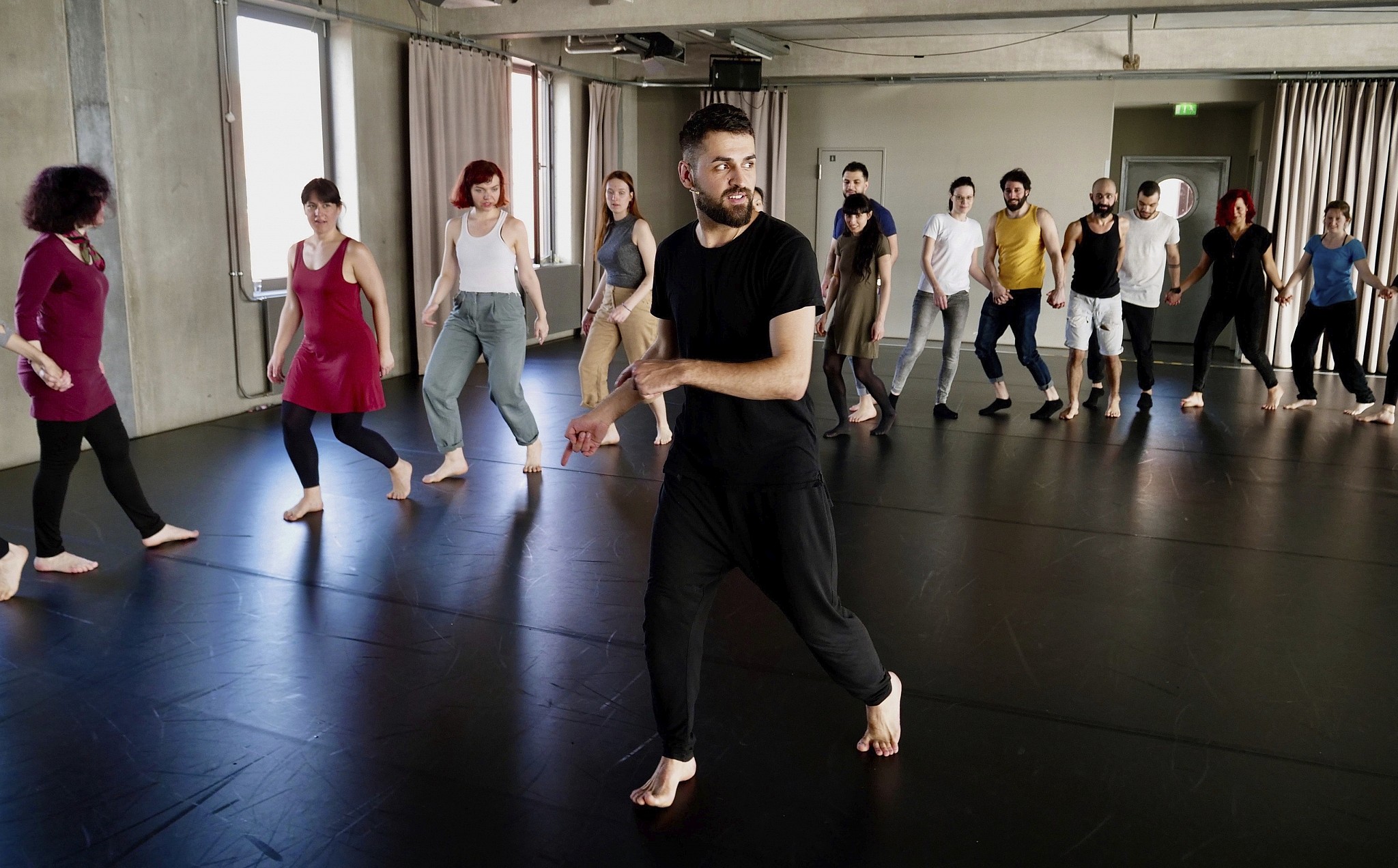
So far, they’ve held two of the dance workshops at the Sasha Waltz & Guests dance company, located on the top floor of an industrial building that was previously a sewage pumping station. A third is planned in June.
The company financially supports the two Syrians as resident artists, helping them create workshops and shows. It’s also helping them with a contact network.
“Our company tours the world and everywhere we go we experience hospitality,” Anja Schmalfuss, project leader at Sasha Waltz & Guests. “So in return we wanted to show some hospitality here in our hometown.”
At the most recent gathering, Aldaabal, who studied classical dance in Damascus before fleeing the war, showed the basic moves of the traditional Arab dabke folk dance to a group of about 40 Berliners and others.
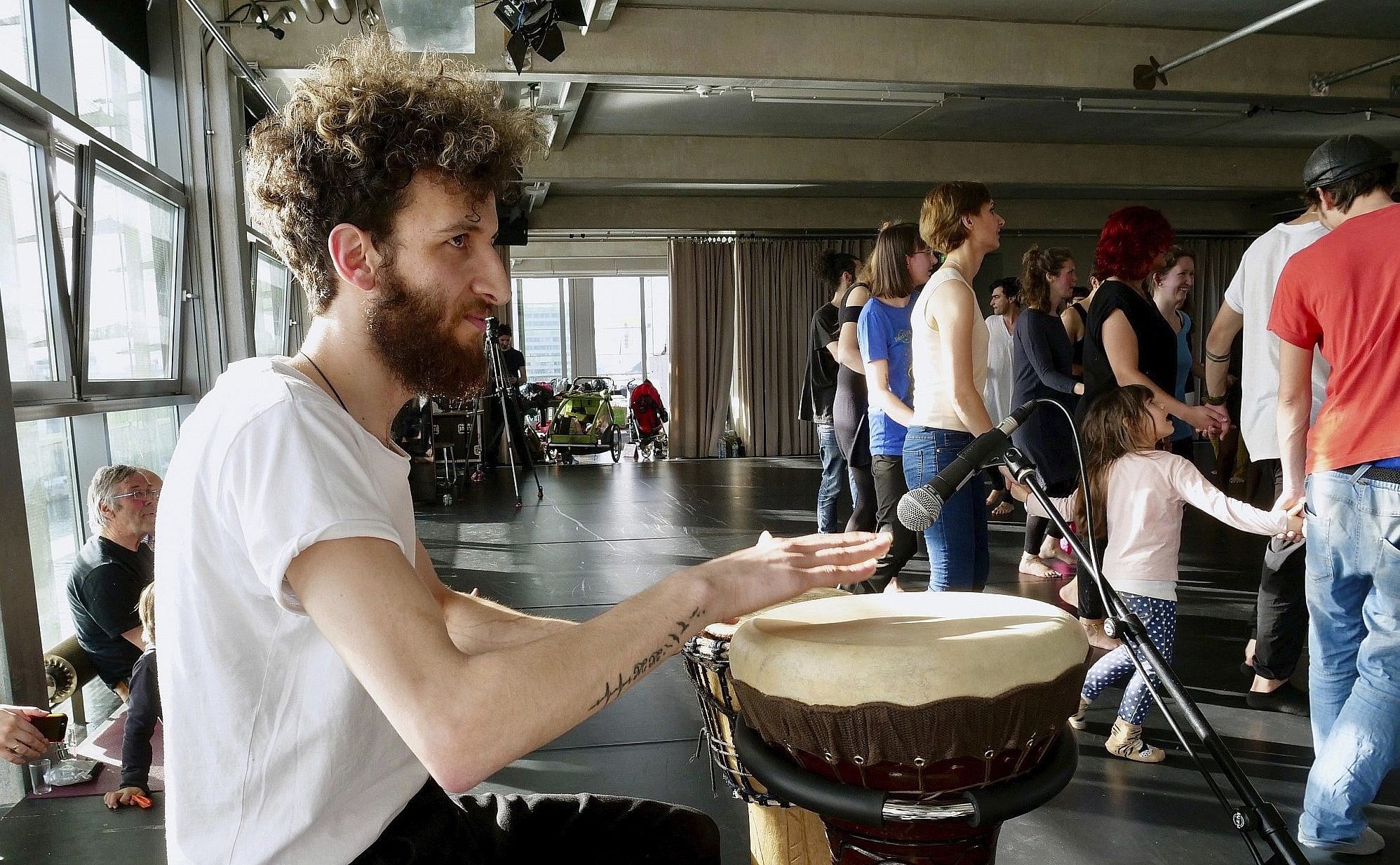
The group joined hands and started a circular walk, punctuated by a hard stomp on the ground every fifth step as Hasan, a percussionist, maintained a steady beat.
Dabke is a traditional folk dance and different variations are widespread through the Middle East, where it’s often performed at weddings and celebrations.
As Hasan started beating the drums faster and harder the participants, mostly German but also Spanish, American, and Polish, began easing into the dance.
“You could all join an Arab wedding,” yelled Aldaabal in encouragement.
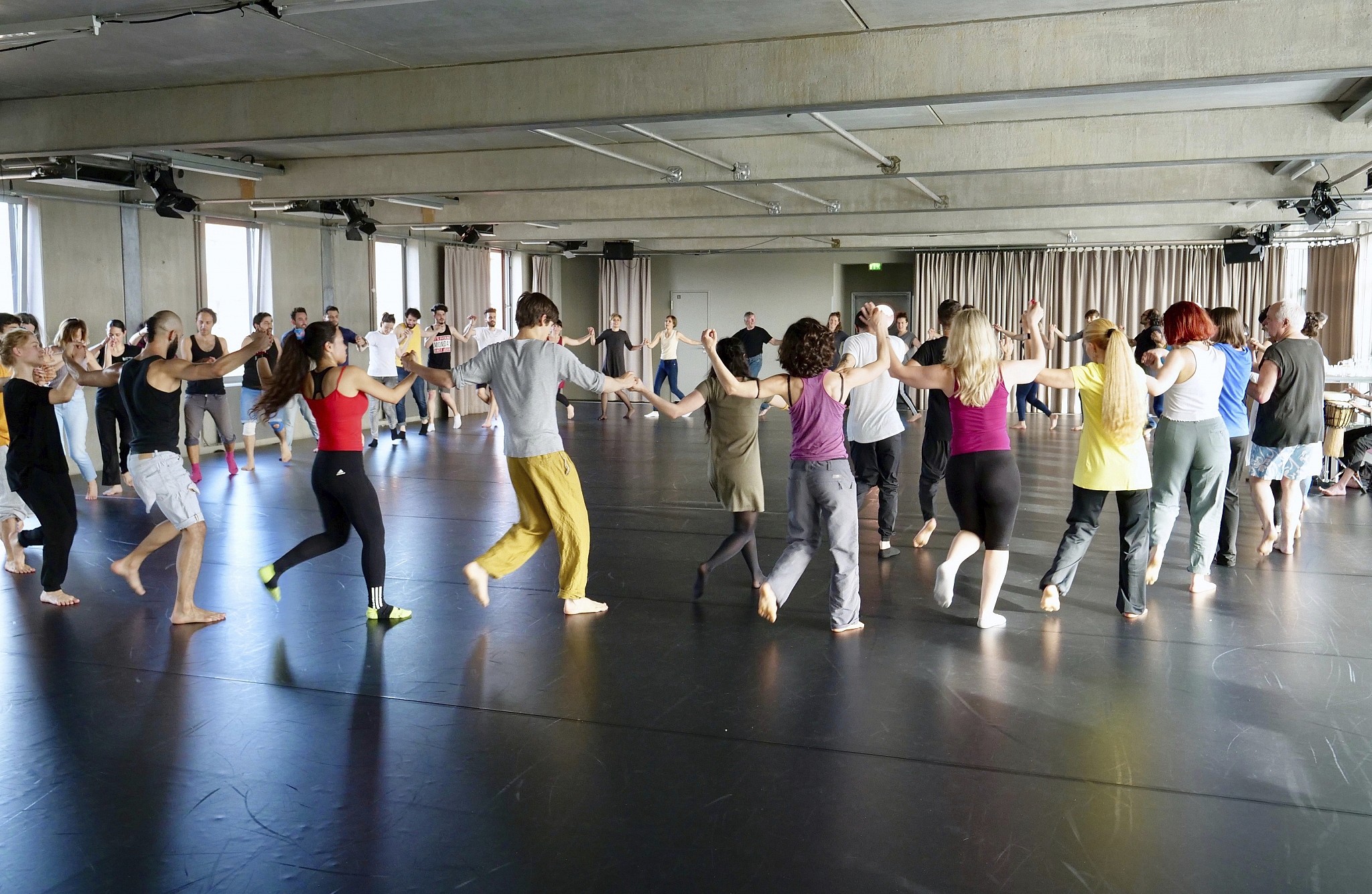
“It was a lot of fun,” said Moritz van Gunsteren, a sound technician who lives in Berlin and attended the workshop with his two young children. He said the dance reminded him of the traditional Schuhplattler folk dance from the region around his hometown.
After the workshop, Aldaabal said that bringing together people of different cultures gave him a sense of accomplishment, and made him feel like Berlin has become his home.
“All of them were smiling and that was the most beautiful thing,” he said. “When I see that people are happy, enthusiastic and smiling, then I feel that I’m becoming a part of this country, and this country is becoming a part of me.”
Maria Maxbauer, a 24-year-old pre-school teacher, traveled more than five hours from her hometown of Neuburg to take part in the workshop. She had previously attended one of Aldaabal’s classes in the central town of Weimar, but she wanted to learn more so she could teach the dance in her kindergarten.
“I want to bring this back to the children and show them something from the Syrian culture,” she said.







The Times of Israel Community.