

Three unarmed Palestinians nabbed crossing from Gaza into Israel
Infiltrators detained shortly after passing border fence in southern area of Strip, detained for questioning
 Add ToI as a Preferred Source on Google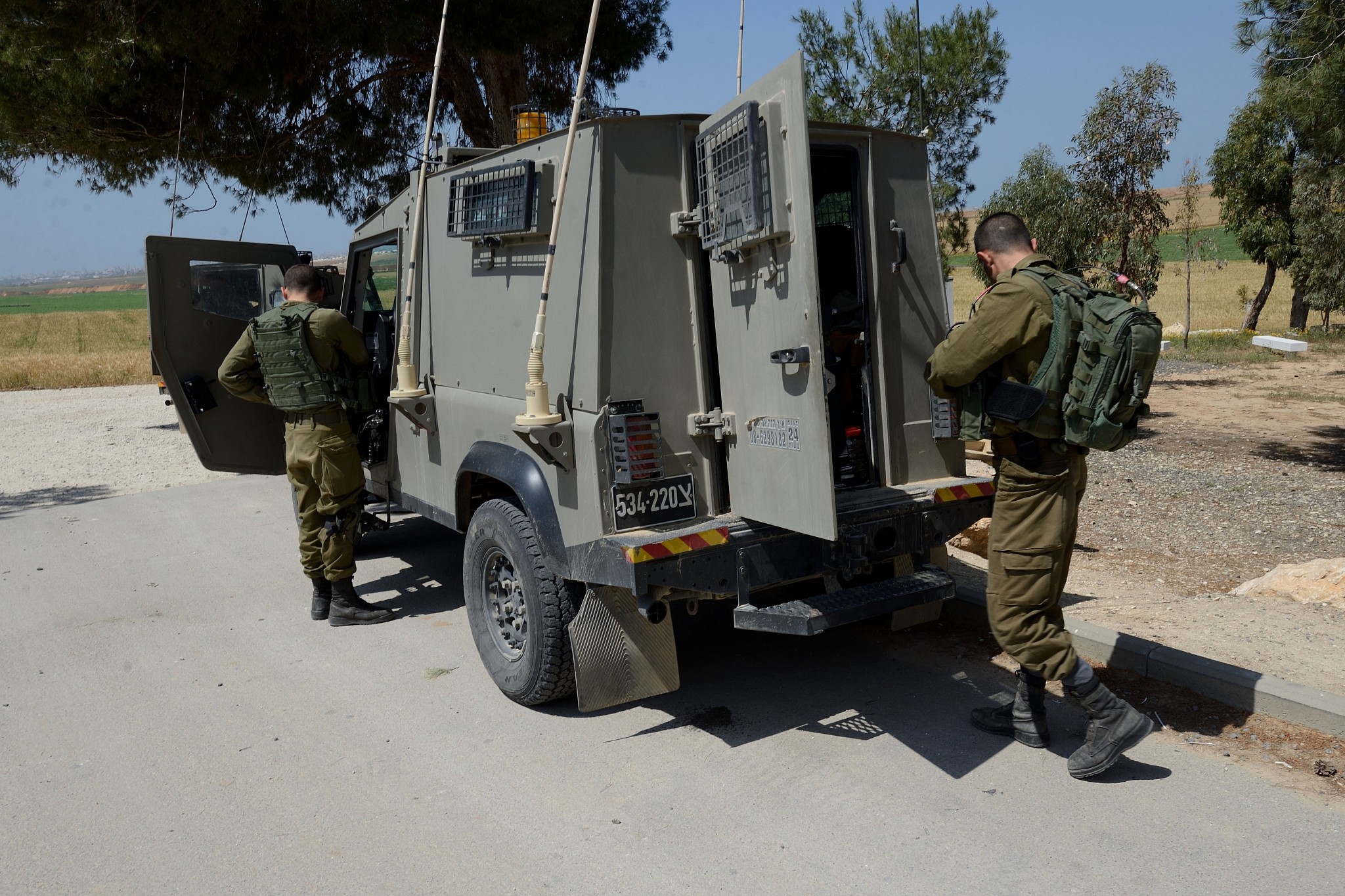
Israeli security forces arrested three unarmed Palestinians who crossed the border from the Gaza Strip into Israel on Sunday evening, amid heightened tensions in the area over recent deadly clashes between the IDF and Gazan protesters.
The suspects were picked up just after they got past the fence in the southern Gaza Strip, the army said. “No weapon was found in their possession.”
They were handed over to the Shin Bet security service for questioning, an army spokesperson said.
There has been a series of infiltrations in recent weeks, with most stopped at the border. However, in the most serious incident on Tuesday, a group of three armed Palestinian men infiltrated into Israeli territory from Gaza, walking more than 20 kilometers (12 miles) into the country, over the course of several hours, before they were arrested outside the Tzeelim army base. They were found to be in possession of grenades and knives.
The army’s failure to immediately realize that there’d been a breach — signs of the infiltration were only found hours after it had happened — prompted Defense Minister Avigdor Liberman to call for a full investigation of the incident.
The infiltration came amid soaring tension on the border, with tens of thousands of Palestinians marching to the border area on Friday, and 15 Palestinians killed by Israeli troops in riots.
Gaza’s Hamas-run health ministry said that at least 11 Palestinians were shot and wounded by Israeli troops during fresh violent protests along the border fence during Sunday. The IDF confirmed that live rounds were fired at some of the protesters, who it said had approached the border fence.
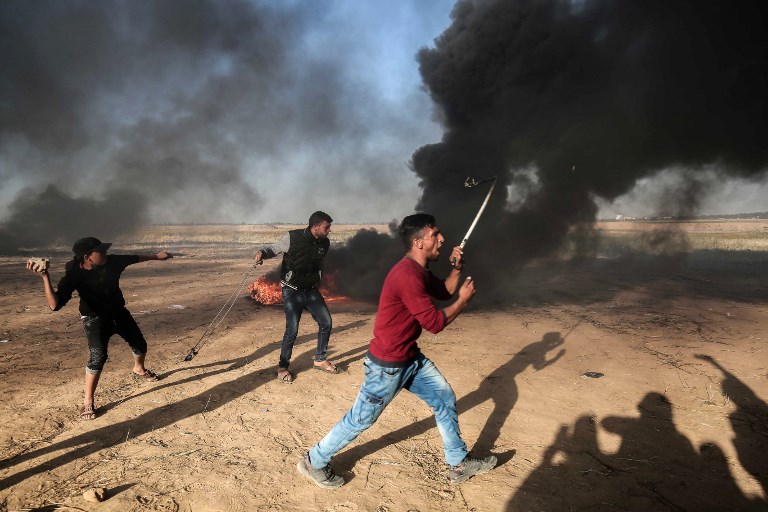
According to the army, some 350 Palestinians took part in Sunday’s demonstrations throughout the coastal enclave. On Friday, 30,000 joined a Hamas-backed mass march, and further mass protests against Israel are planned for this Friday and future weeks until mid-May, when Israel’s marks its 70th Independence Day and the Palestinians what they call Nakba Day — the “catastrophe” caused by Israel’s creation.
The Israel Defense Forces said Saturday that at least 10 of those killed on Friday — the Gazans reported a death toll of 15 — were members of Palestinian terror groups, including Hamas, and gave details of their roles.
As of Saturday evening, Hamas, a terrorist group that openly seeks to destroy Israel, itself acknowledged that five of the dead in the so-called “March of Return” were its own gunmen.
The Palestinians’ march to Gaza’s border with Israel on Friday was the largest such demonstration in recent memory. It marked “Land Day,” which commemorates the mass expropriation of Arab land in the Galilee by the Israeli government and the ensuing protests in which six Arab Israelis were killed.
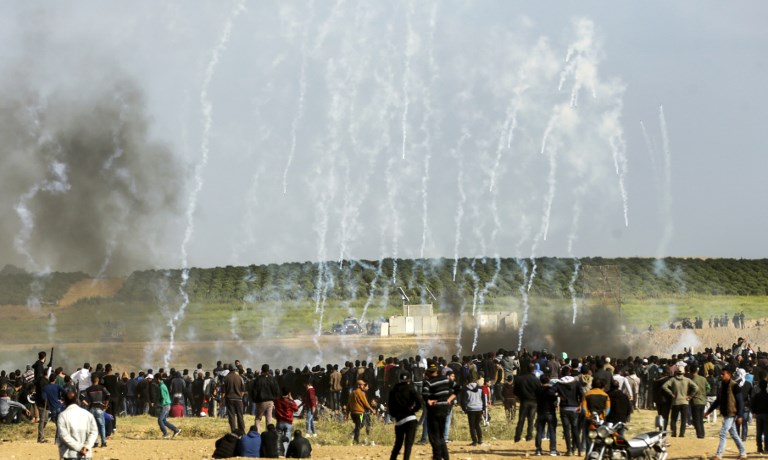
It was the first part of a six-week-long “March of Return,” in which Palestinians call to be allowed to “return” to land that their ancestors fled in the 1948 War of Independence.
At previous peace talks, the Palestinians have always demanded, along with sovereignty in the West Bank, Gaza, East Jerusalem, and the Old City, a “right of return” to Israel for Palestinian refugees who left or were forced out of Israel when it was established. The Palestinians demand this right not only for those of the hundreds of thousands of refugees who are still alive — a figure estimated in the low tens of thousands — but also for their descendants, who number in the millions.
No Israeli government would ever be likely to accept this demand, since it would spell the end of Israel as a Jewish-majority state. Israel’s position is that Palestinian refugees and their descendants would become citizens of a Palestinian state at the culmination of the peace process, just as Jews who fled or were forced out of Middle Eastern countries by hostile governments became citizens of Israel.







The Times of Israel Community.