

Three young women killed in overnight collision near Yavne
Accident brings number of road victims in 2024 to 405, the highest toll since 2008
 Add ToI as a Preferred Source on Google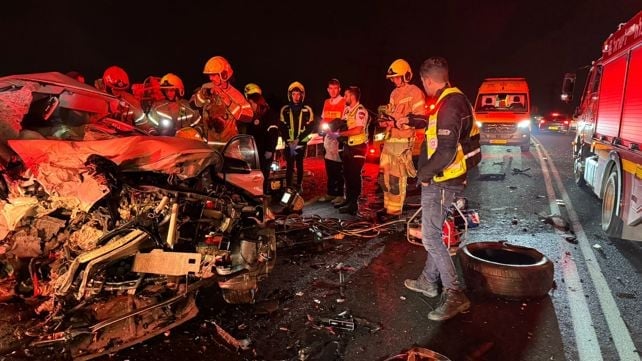
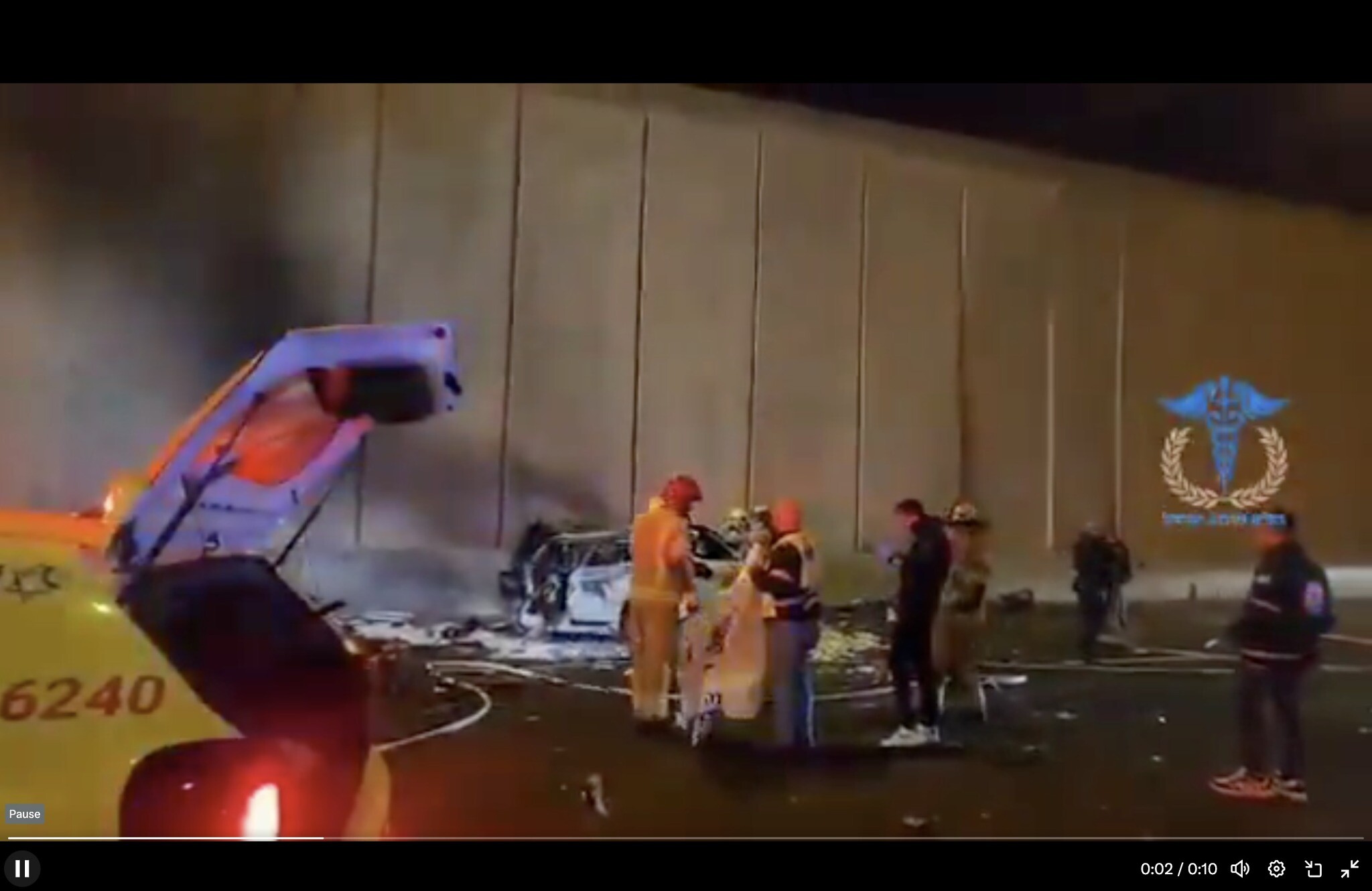
Three women in their 20s were killed in a collision between two vehicles near Yavne on Wednesday night, according to the Magen David Adom ambulance service, which treated the three and an injured man in his 40s.
“We saw three women in their 20s trapped in their car, unconscious and suffering from severe injuries all over their bodies,” MDA medics told media on Thursday morning.
“We carried out complex rescue operations alongside medical evaluations, but they showed no signs of life, and all we could do was declare their deaths at the scene.”
Ynet reported that while the man was initially deemed lightly injured, the police later said his condition had deteriorated and he was considered severely injured.
So far this year, 405 people have been killed in traffic accidents, according to the Or Yarok road safety watchdog. That compares with 361 for all of 2023 and marks the first time since 2008 that the number of people killed in traffic accidents has surpassed 400.
Or Yarok’s director, Yaniv Yaakov, told Ynet on Sunday that the rise in deaths from traffic accidents is “a very serious failure on the part of the Transportation Ministry, which is responsible for the issue in the government.
“While countries in Europe are succeeding in lowering the number of traffic accident victims year after year, Israel has been taken almost 20 years back,” he said.
He added that the increase was due to budget cuts, a lack of police on the roads, and “mainly governmental and public indifference.”
He added that “2024 is a lost year, but 2025, which is about to begin, can be a year of change if the transportation minister rethinks and approves the national multi-year plan that is sitting on her desk,” he said.








The Times of Israel Community.