

US Jewish security group warns firearms in synagogues need strict oversight
Secure Community Network issues report saying that if a congregation allows guns for security, there must be an organized program with law enforcement coordination
 Add ToI as a Preferred Source on Google
Luke Tress is The Times of Israel's New York correspondent.
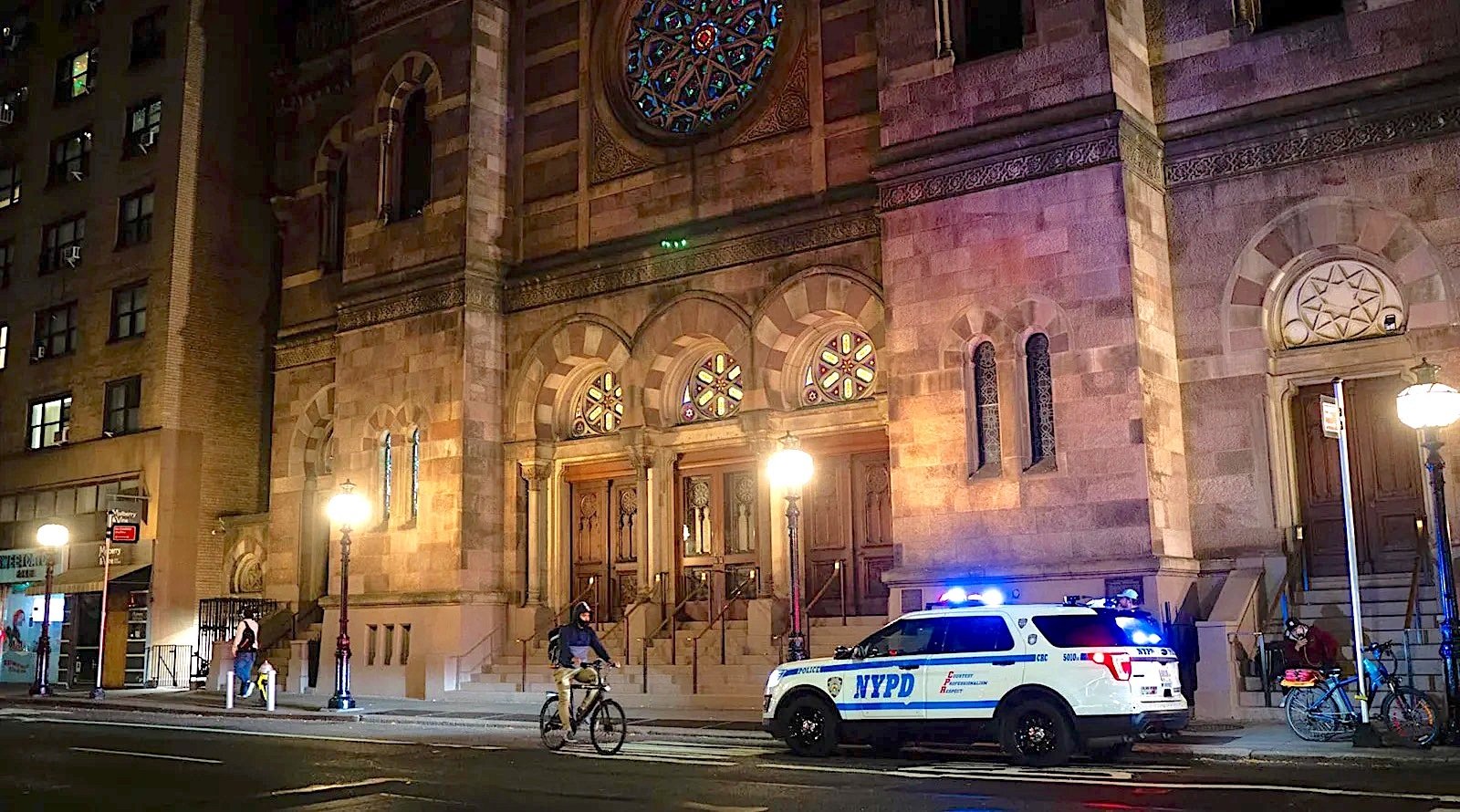
A US Jewish security group said in a Tuesday report that if synagogues allow firearms inside their doors for security, the weapons should only be permitted in an organized, structured program, with strict oversight and coordination with law enforcement.
The Secure Community Network (SCN), a leading Jewish security group in North America, released the report, titled “Weapons at Worship,” amid an increase in antisemitism and security fears among US Jewish communities.
Synagogues and other Jewish groups have employed a range of security measures in response, from volunteer guards to krav maga training. Some Jews have pushed for more firearms for protection, but the efficacy and wisdom of carrying guns is disputed.
To compile the report, SCN convened a group of experts from law enforcement and other security bodies, and received feedback from Jewish community groups.
The report’s central finding was that any firearms in synagogues should be under the aegis of a structured security team formally established by the synagogue’s leadership and supervised by a designated team leader. The team should employ policies on member selection, training, protocols for weapons use, and coordination with law enforcement.
All policies need to adhere to local firearms laws, which vary widely in different locations, and be regularly reviewed by the synagogue’s leaders, insurance providers and lawyers, the report said.
SCN has previously said that if a synagogue seeks armed security, the best approach is to hire an on-duty, off-duty or recently retired police officer.
The report warned that congregations should not allow in firearms on an informal basis.
“Allowing individuals to carry weapons without coordination, policy, or oversight poses grave risks — to safety, to legal liability, and to communal trust. Individual carry in an unstructured context is not a viable or responsible option,” the report said.
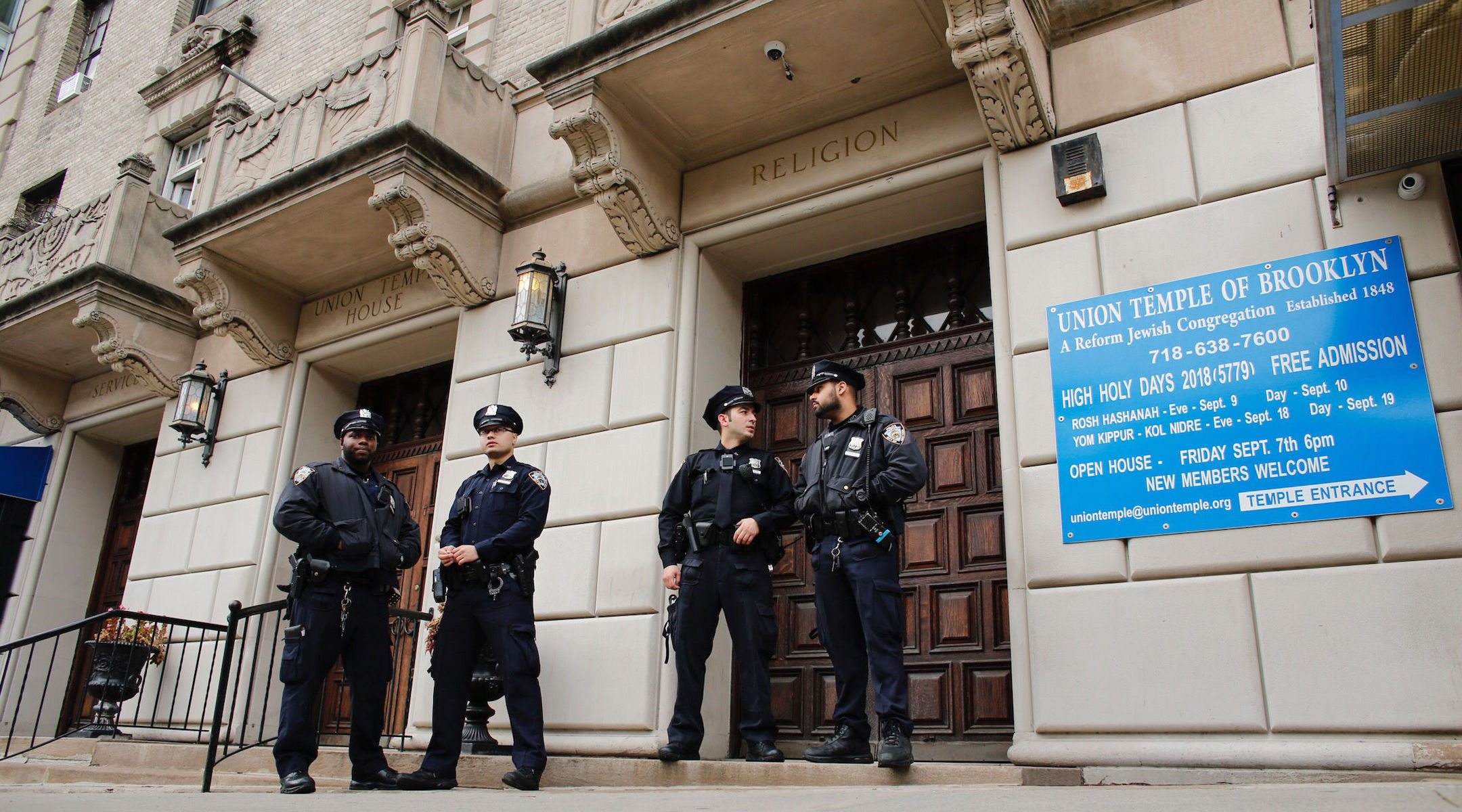
The report urged synagogues to consider non-lethal defensive weapons such as chemical sprays and tasers, and said that even those measures should be accompanied by strict training and guidelines.
“Not allowing firearms at all is a perfectly viable policy,” the report said, adding that not every synagogue needs to establish an armed security team, and that such a team should only be one part of a broader security plan that also includes risk assessments, coordination with law enforcement, congregant training and surveillance systems.
“Such teams should be purpose-built with clear roles and responsibilities, trained for threat recognition and response, coordinated with local law enforcement, and governed by policies that ensure legal and ethical accountability,” the report said.
Establishing an armed security team is complicated and requires substantial investment. Each member of the team should have a clear role for emergencies and the team should drill for specific incidents, such as bomb threats or suspicious individuals. The team members should wear identifiable markers, such as hats or vests, so that police can identify them during an incident. The team should also be carefully vetted, partake in an ongoing training program, and be equipped with gear such as protective, first aid and communications equipment, the report said.
If a synagogue establishes an armed team, the first step should be securing legal counsel to ensure that the firearms comply with local laws. Decisions regarding firearms should be made after dialogue with congregants and local law enforcement. Synagogues with armed congregants should also obtain liability insurance and establish a clear weapons policy that is shared with members, visitors and law enforcement, the report said.
The report warned against a “Don’t ask, don’t tell” policy, which could cause safety risks, confusion and legal liability. The report also discouraged openly carrying firearms because displaying guns can cause concern, especially for children, except when the firearms are in the hands of police.
A security team should have a clear framework for operations that includes rules of engagement, seeking to de-escalate first in the event of an incident, a “use of force” policy, and should seek to evaluate and engage threats outside the building, the report said.
The report highlighted Magen Am, a nonprofit Jewish security group in Los Angeles that includes armed volunteers who go through more than 100 hours of training when joining and refresher training sessions later on.
“If implemented correctly, an armed volunteer security team can enhance the safety of a congregation. Nonetheless, it is important to remember that there are means and measures for congregations to remain safe without armed security,” the report said.
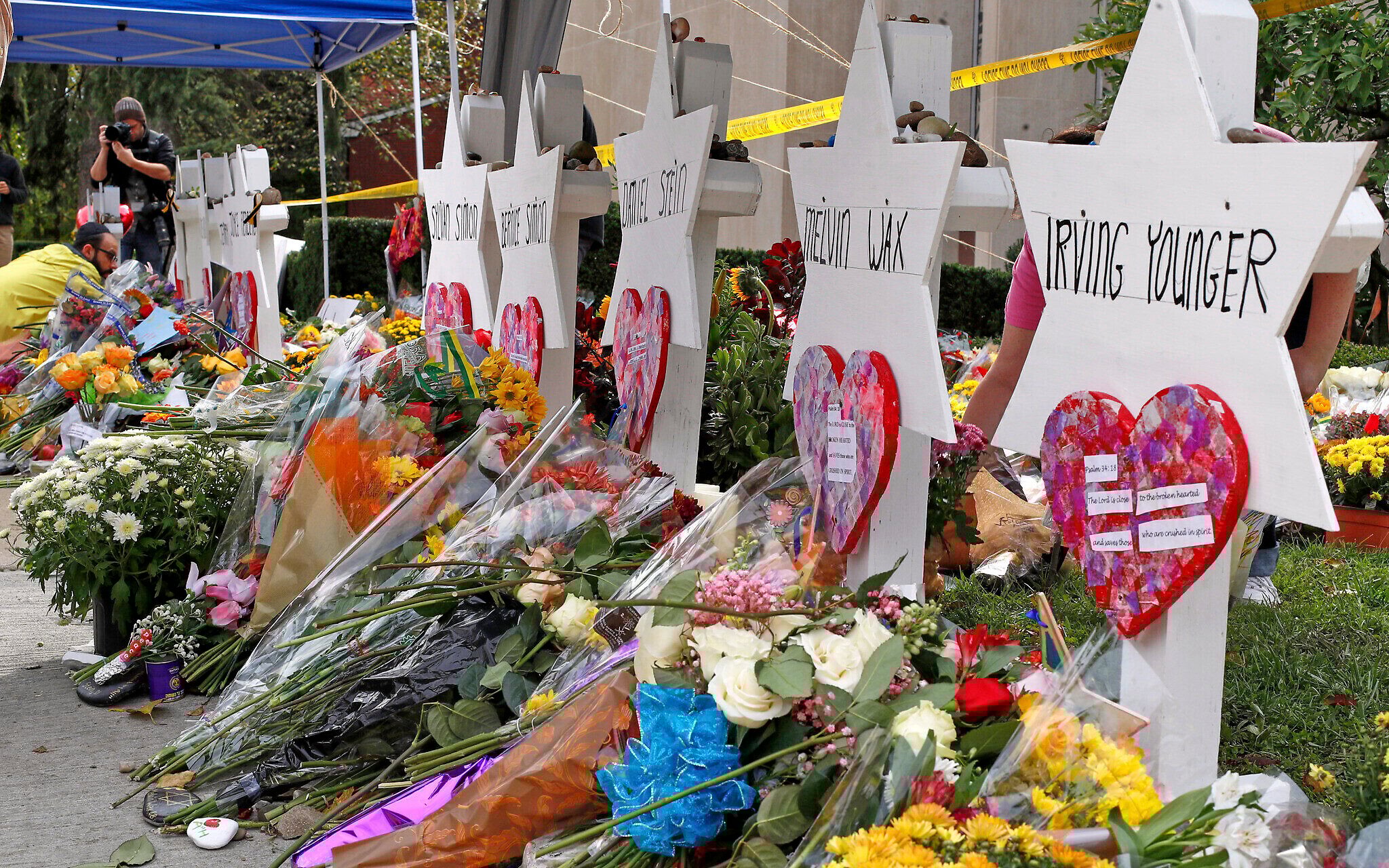
Security has been a central concern for synagogues since the Tree of Life massacre in Pittsburgh in 2018. The communal precautions have gained steam since Hamas’s October 2023 onslaught in southern Israel and the ensuing surge in antisemitism in the US amid the war in Gaza. Those measures range from training volunteer guards to concealing event locations and buying highly trained guard dogs. Security experts have said that the simplest precautions, such as a locked, reinforced front door, are often the most effective.
The Community Security Service, a group that trains synagogue members to act as volunteer guards, does not comment on whether members use firearms or not.
Several recent attacks against Jewish targets in the US have sparked fresh safety concerns. In April, an arsonist targeted the home of Jewish Pennsylvania governor Josh Shapiro; weeks later, an attacker killed two Israeli embassy staffers as they exited an even at a Jewish museum in Washington, DC; and in June, an assailant firebombed a rally for Israeli hostages in Boulder, Colorado, killing one person. The suspects in all three attacks said they were motivated by anti-Israel animus.
Those incidents followed a series of attempted violent attacks against Jewish targets in the US.










The Times of Israel Community.