

What hath God wrought? After Oct. 7, many Israelis respond with turn to spirituality
Data shows that as many as half of Israelis may have reexamined their bond with religion, with some finding new meaning in Jewish beliefs and others turning away
 Add ToI as a Preferred Source on Google
Rossella Tercatin is The Times of Israel's archaeology and religions reporter.
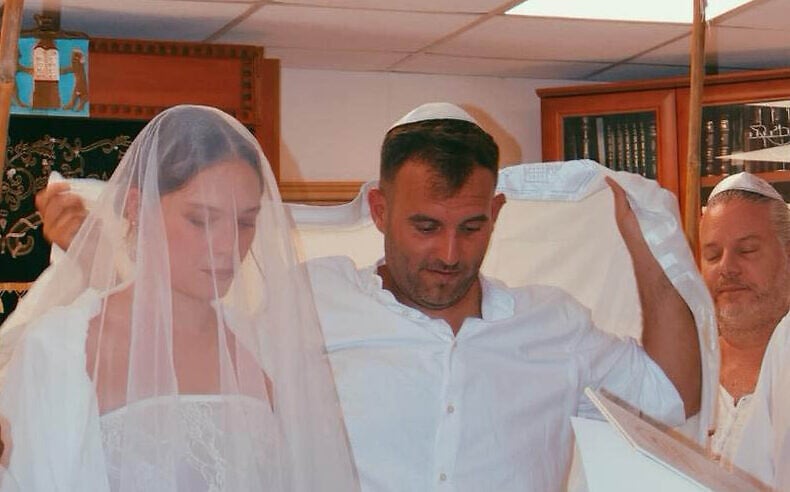
On August 23, 2024, Mika Majzner and Elad Dubnov got married in Be’eri, the first wedding in the kibbutz synagogue since the October 7, 2023, Hamas atrocities that ravaged the community and the rest of the Gaza border region.
The ceremony marked the couple’s second wedding. The couple had gotten married nearly two years earlier on a farm near Be’eri, where Mika was born and raised before moving to Tal Shahar in central Israel. The wedding was conducted by a member of Harabanut Hahilonit, literally “the secular rabbinate,” an organization that serves the secular public by performing Jewish ceremonies — which are not recognized by the State of Israel.
“Our original wedding was on October 7, 2022, and a year later, we woke up to our anniversary with the world imploding on us,” Majzner told The Times of Israel by phone recently.
Majzner said that despite coming from a secular family, she had felt an affinity to God and religion even before October 7. But she opposed the ultra Orthodox-controlled Chief Rabbinate, which in Israel is the only institution officially allowed to perform and register Jewish weddings.
After tragedy struck, the couple decided to get married again — “I was not willing to have my wedding anniversary to be forever on the worst day of my life,” Majzner said — but this time they decided to go through the Rabbinate, a reflection of a religious awakening experienced in the wake of the death and destruction of that day.
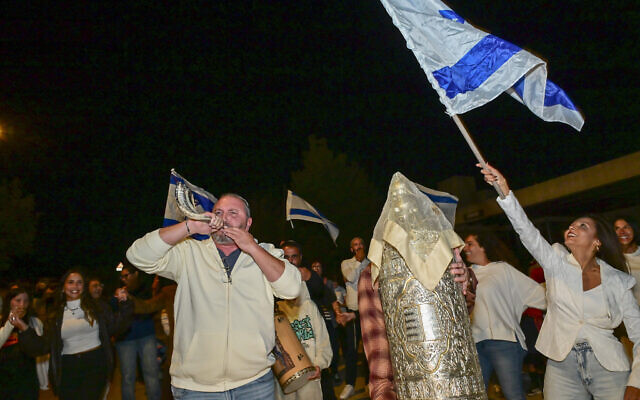
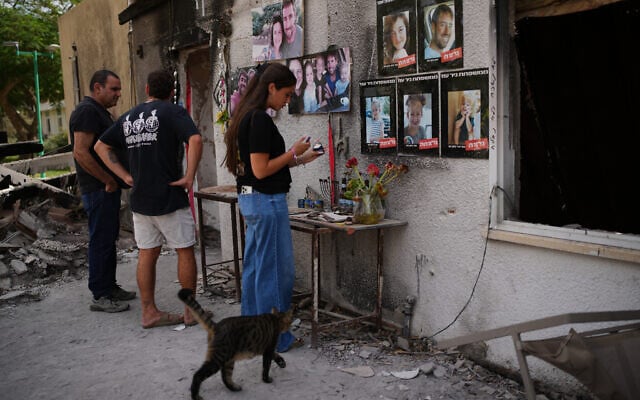
Two years after the Hamas attack that left some 1,200 Israelis dead, 251 kidnapped, and thousands wounded, data suggests that the massacre and ensuing war have impacted many Israelis’ relationship with Judaism, God, and spirituality in general. Often, as in the case of Majzner, the events have drawn people closer to religion and spirituality.
“I believe there are people who, as a result of the tragedy, distanced themselves from religion, and there are those who got closer to religion, or to God,” Majzner noted. “I personally feel that this has brought me closer to God.”
According to data released by the Central Bureau of Statistics last month, approximately 43 percent of Jewish adults in Israel describe themselves as secular, while 23% call themselves religious, which in Israel generally means Orthodox. A little less than half of those in the religious camp say they are Haredi, or ultra-Orthodox.
Another 22% of the total Jewish population self-describes as traditional but not so religious, while 12% call themselves traditional and to some degree religious.
Earlier this year, the religious rights group Hiddush, which advocates for the separation of religion and state, polled a representative sample of 800 Jewish Israelis ages 18 and older on whether “the October 7 massacre and the fighting on all fronts that followed affected your belief in God.”
A full quarter of respondents answered that the attack and its aftermath had strengthened their faith, compared to 7% that said it weakened their faith. At the same time, 55% reported no impact on belief, while some 13% responded they did not have an opinion on the matter. Pollsters set the margin of error at 3.5%.
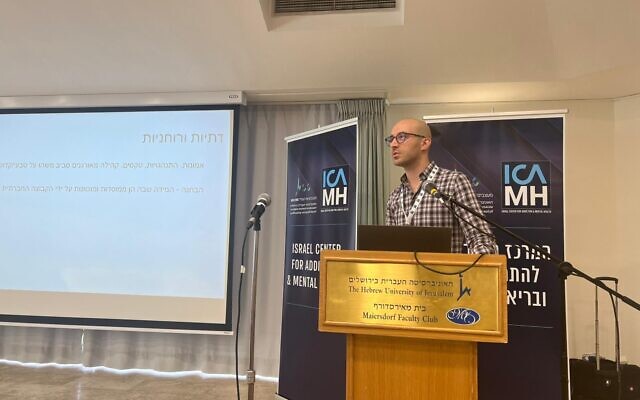
A separate study conducted by scholars from the Hebrew University of Jerusalem of some 1,200 students found that in the first six months after October 7 just over half of the respondents (50.9%) reported a change in either religiosity, spirituality, or both.
While religiosity and spirituality often overlap, the former generally refers to the adherence to more organized and formal practices, while the latter refers to more personal and informal beliefs, said Yaakov Greenwald, one of the authors of the paper.
One-third of respondents reported an increase in spirituality, compared to 9% who said it went down. Asked separately about religiosity, one quarter said it had gone up and nearly 14% reported a decrease.
“Half of the participants said they changed in some way; it is a lot of people,” said Greenwald, one of the authors of the paper. “Another notable result is that increases were much more common than decreases.”
The study, published last month in the International Journal for the Psychology of Religion, did not use a representative sample: half of the participants identified as secular (50.9%), followed by religious (25.3%), traditional (16.9%), and ultra-Orthodox (2.5%).
Greenwald noted that it was difficult to draw clear conclusions from the survey due to the lack of comparable studies, including from other parts of the world, or anything resembling a control sample of Israel “in normal times.”
“I am not exactly sure what a normal time in this country is, but I would contend that probably, we wouldn’t find such high rates of change outside of the war context,” he said.
The study also found that people were more likely to report a change to their beliefs the more the war impacted them personally.
“We found a correlation between participants’ direct exposure to the war and the extent to which [their connection to religion or spirituality] increased,” Greenwald said.
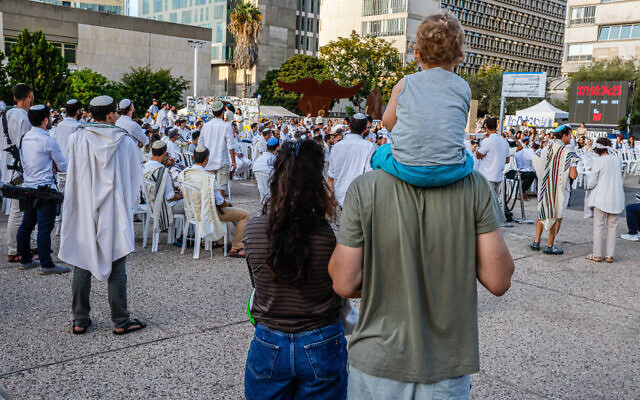
Data shared with The Times of Israel from the moderate Orthodox organization Tzohar also showed possible evidence of a spiritual revival in the wake of the October 7 attack.
According to the data from the end of September, Tzohar held or was set to hold 1,218 bar mitzvahs this year, compared to 999 in 2024 and 747 in 2023. Its rabbis officiated 4,021 weddings, compared to 4,050 in 2024 and 3,372 in 2023, and a spokesperson said that the number of weddings for 2025 could still grow as more couples approached the group.
On Yom Kippur, the group ran 426 prayer centers this year, compared to 406 in 2024 and 359 in 2023.
“Something very deep is occurring to us as a society,” Tzohar’s chairman Rabbi David Stav told The Times of Israel in a phone conversation. “People are looking for something meaningful.”
Stav also mentioned several anecdotal examples, from a new documentary series just released by the Israeli Broadcasting Company Kan, “God will keep [us]” to conversations he had with a friend who teaches Bible in a secular high school and whose students had shown increased interest in the subject since October 7.
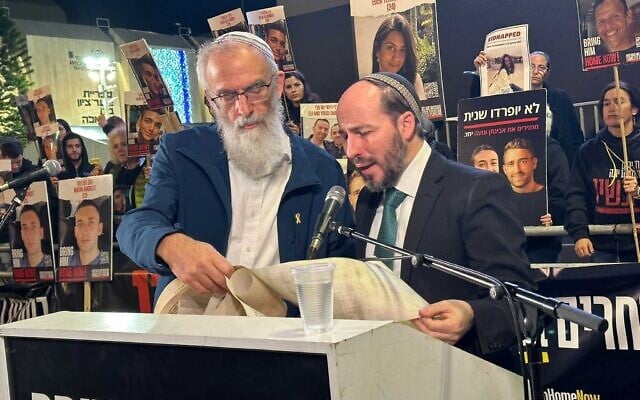
The rabbi stressed that Tzohar primarily serves secular families in Israel.
“By definition, we do not turn to the observant, to the ultra-Orthodox or Orthodox populations, and even to the more traditional people, who usually have their own rabbis and communities,” he said.
“Our public is mostly secular, which means that they have no prior connection to religion,” he added.
He noted that many families approaching the organization to celebrate the bar mitzvahs of their sons had never set foot in a synagogue.
“Now they want their boy to read from the Torah,” he said. “It is happening at an unprecedented rate.”
A ‘group’ effect?
Still, data from both the Hiddush and Hebrew University studies indicated that most of those experiencing a heightened connection to religion or spirituality were already coming from a place of faith.
“We see that people who describe themselves as secular stay secular, and people who describe themselves as religious stay religious,” said Yifat Solel, deputy director and legal adviser of Hiddush. “Maybe religious people are seeking more religion, but it is not as if we see anything that says that secular people are becoming religious.”
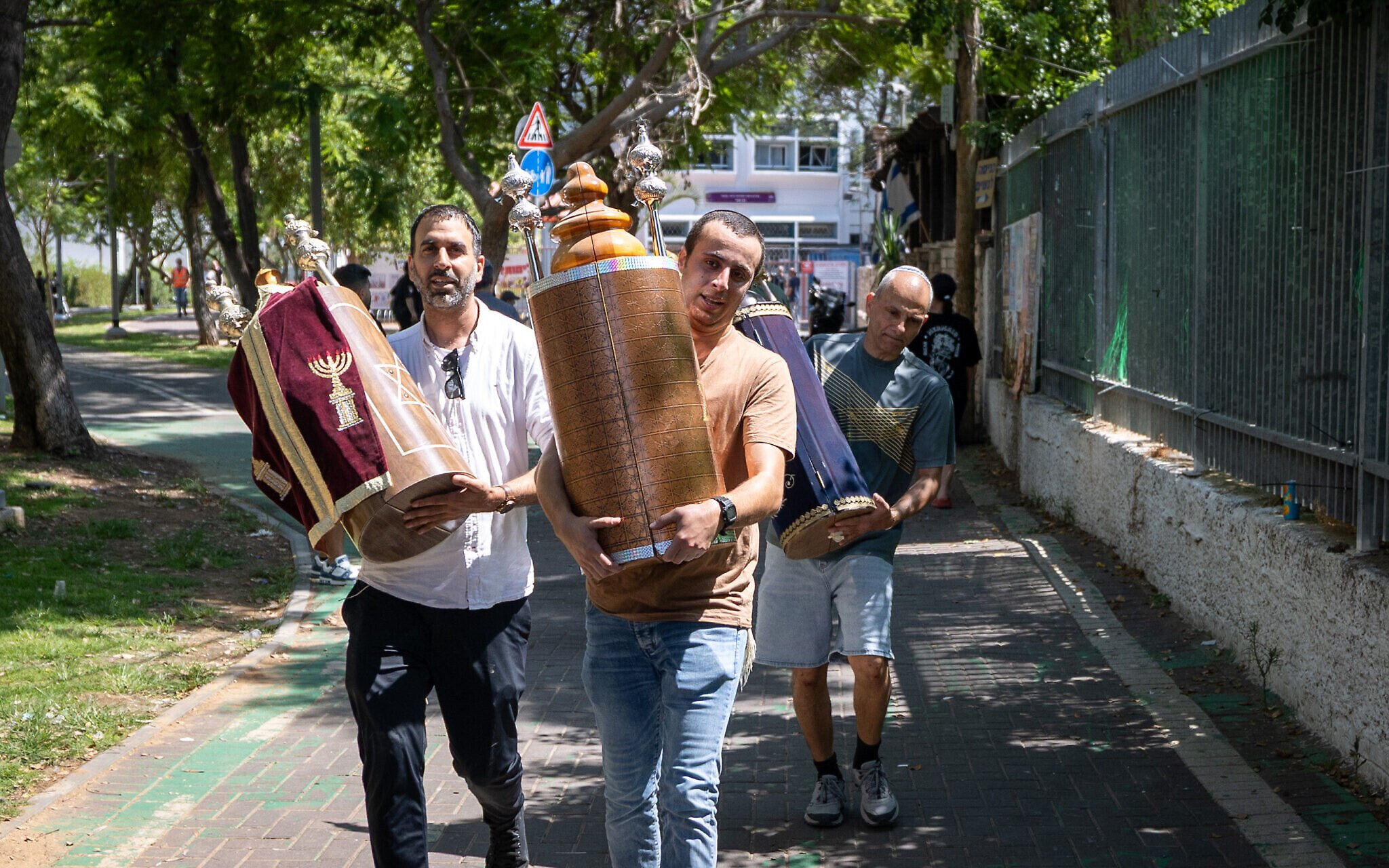
In the Hiddush survey, nearly half of the respondents from the ultra-Orthodox, religious and traditional camps reported that their faith had been strengthened, while the percentages saying that their beliefs had weakened was in the single digits.
Among those who said they were “traditional but not close to religion,” one-third said their faith had been bolstered, while few said it had decreased. Among secular respondents, 11% reported higher levels of religiosity and 10% went in the opposite direction.
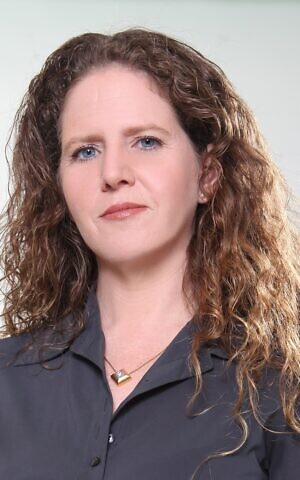
The Hebrew University survey also registered a similar phenomenon, finding that 12.4% of secular respondents reported an increase in religiosity, while 16.2% reported a decrease. However, one in four of the secular respondents did say their spirituality went up, more than double the number who said it had dissipated.
According to Greenwald, a “group effect” was likely responsible for drawing more people closer to spirituality.
“When people are faced with death, one of the things they try to do is to be a part of something greater than themselves,” he noted.
While spirituality represents one of the frameworks through which some seek this type of connection, an additional option can be the striving to be “a valued member of a society or a culture,” Greenwald noted.
“People want to be valued members of their group, so they become more embedded in what they already are,” he said. “If they belong to a religious group, they are more likely to become more religious; if they are secular, they are more likely to become more secular, embracing secular values, or more spiritual, which is also important in that group.”
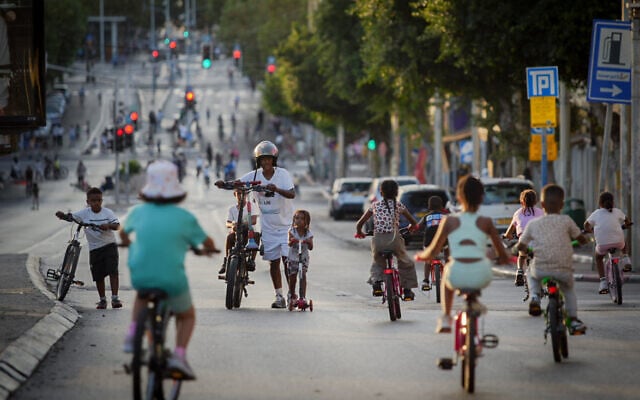
Stav also perceived what Tzohar is witnessing as a quest for spirituality rather than an adherence to formal religious commandments.
“People will not become observant,” he said. “They look for a connection with God, and they believe that the connection with God comes through prayers, comes through behaviors, not necessarily through religion in the traditional sense. They want to be connected to God and at the same time to keep their regular lifestyle.”
Where was God on October 7?
For some, witnessing the horrors that unfolded on October 7 and the following two years has created a crisis of faith.
“Since October 7, I have no longer been able to say blessings,” said Daniela Fubini.
“I freeze at the word Adonai,” she told The Times of Israel, referring to a Hebrew word for God. “I say it with a heavy heart, no longer believing that the blessing really goes anywhere.”
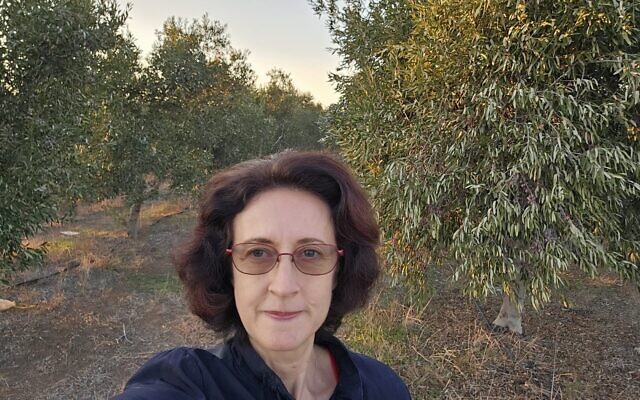
Born and raised in Italy, Fubini, 53, moved to Israel in 2007. After a decade in Tel Aviv, she moved to her husband’s hometown of Kochav Michael in southern Israel, where they currently live there with their son, 4.
“I was never fully religious, but I had always been traditional,” she said. “I always considered the religious side of Judaism as a system of rules to keep, share with families and friends, and transmit to the new generation, as a real gift.”
Fubini shared that on October 7, “something broke,” and she stopped feeling the direct connection between Jews and God, which she used to feel so proud of.
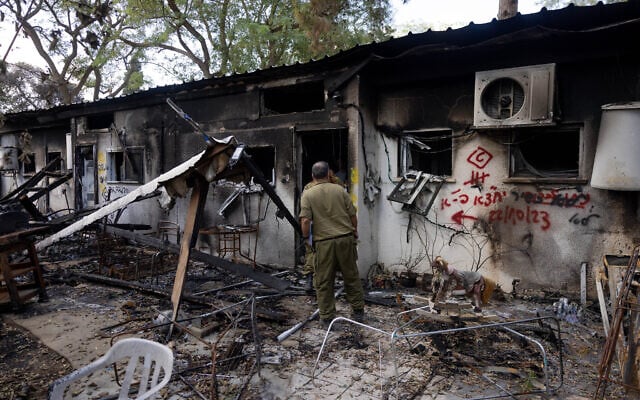
“We had friends who were killed by Hamas terrorists, and it took days for their bodies to be retrieved and buried,” she recalled. “And then the horrors of the pogrom, brutalized children, burned bodies… I was not alive during the Holocaust, but I have not been able to find an answer to the question of where God was on October 7.”
She said that she still tries to recite blessings or keep other commandments for the sake of her son, so as not to deprive him of the experience, but it feels “empty.”
For decades after the Holocaust, Jews and others wrestled with the question of “where was God,” a query that for many maintains its potency as they look back on the events of October 7.
In 1974, at a New York symposium exploring the idea of God after Auschwitz, a professor recalled a case in which one synagogue put God on trial and found Him guilty.
Yet at the same symposium, the writer Alfred Kazin challenged the audience by asking how Jews could live without faith.
“In some way our long strange consistency through the ages argues that there is a greater meaning to our existence as Jews than we know,” he said, according to a contemporaneous New York Times account. “God lives.”
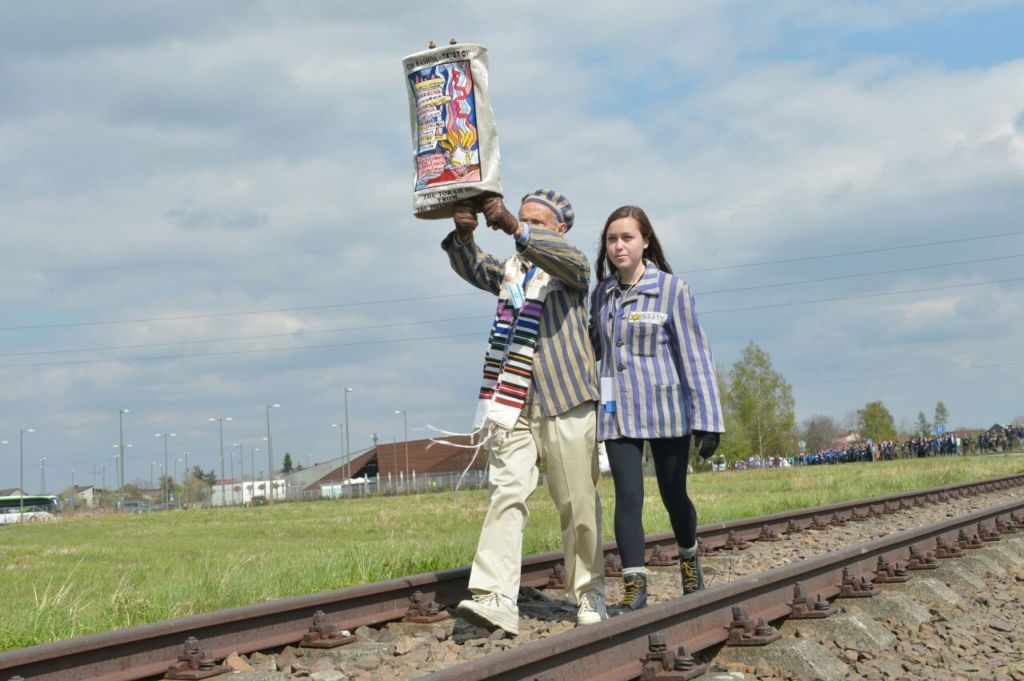
Ultimately, both Greenwald and Stav stressed that it remains to be seen how the changes Israelis have experienced since October 7 will evolve over time.
“In general, people tend to remain relatively stable over their life [in their connection to religion],” Greenwald said. “Everyone grows and evolves, but studies on this topic show that religiosity is a relatively stable construct.”
“These changes may solidify over time, but it’s also possible that people will revert back to what they were before,” he added.
Stav, who views the current change as a positive development, expressed concern that people might ultimately be disappointed by their newly adopted spirituality.
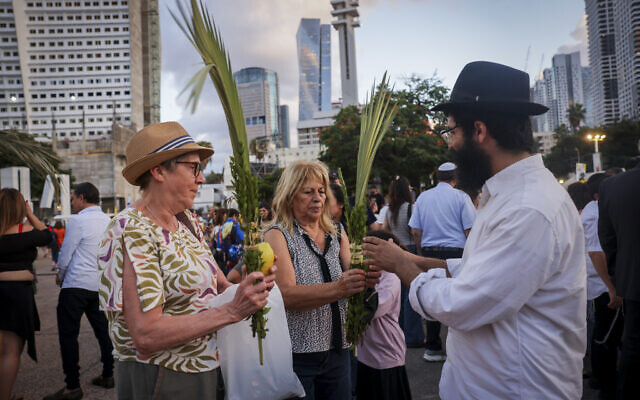
“When someone prays to God for the first time, urging Him to fulfill their request, and this does not happen, it can create frustration,” the rabbi said.
Fubini said she has a faint hope that after the war ends, she will be able to start feeling something different.
“So far, I have felt in a suspended state, as if we were stuck on October 7,” she noted. “The end of the war will finally mark a new day, and maybe slowly, something in me will wake up again. But everything needs to be rebuilt from scratch.”



The Times of Israel Community.