

Why Russia may not respond to the alleged Israeli airstrike in Syria
Moscow may well turn a blind eye to attack on Assad’s chemical weapons depot; the Syrians and Iranians might want to pause too

 Add ToI as a Preferred Source on Google
Avi Issacharoff, The Times of Israel's Middle East analyst, fills the same role for Walla, the leading portal in Israel. He is also a guest commentator on many different radio shows and current affairs programs on television. Until 2012, he was a reporter and commentator on Arab affairs for the Haaretz newspaper. He also lectures on modern Palestinian history at Tel Aviv University, and is currently writing a script for an action-drama series for the Israeli satellite Television "YES." Born in Jerusalem, he graduated cum laude from Ben Gurion University with a B.A. in Middle Eastern studies and then earned his M.A. from Tel Aviv University on the same subject, also cum laude. A fluent Arabic speaker, Avi was the Middle East Affairs correspondent for Israeli Public Radio covering the Israeli-Palestinian conflict, the war in Iraq and the Arab countries between the years 2003-2006. Avi directed and edited short documentary films on Israeli television programs dealing with the Middle East. In 2002 he won the "best reporter" award for the "Israel Radio” for his coverage of the second intifada. In 2004, together with Amos Harel, he wrote "The Seventh War - How we won and why we lost the war with the Palestinians." A year later the book won an award from the Institute for Strategic Studies for containing the best research on security affairs in Israel. In 2008, Issacharoff and Harel published their second book, entitled "34 Days - The Story of the Second Lebanon War," which won the same prize.
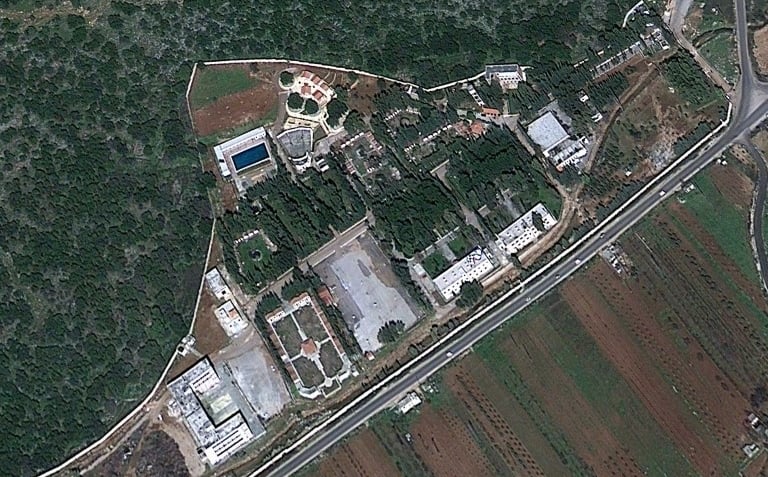
How will Moscow respond to the alleged Israeli attack Thursday on a facility in northwestern Syria where the regime of Syrian President Bashar Assad is said to have stockpiled chemical weapons and missiles?
Analysts have contemplated various possible Russian responses to the attack on the Masyaf base, near Hama, which took place early Thursday morning. Many have suggested that Russia cannot ignore the attack, which occurred some 70 kilometers (40 miles) from its Khmeimim Air Force Base in Syria.
Nonetheless, Russia appears to have good reason to turn a blind eye to this attack, as it has done in the past.
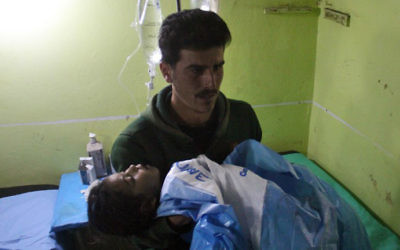
The Russians are certainly interested in retaining their control over Assad and ensuring his victory over the opposition forces, both religious and secular. For this reason, the Russians have even overlooked his chemical attacks on civilians.
It is also important for Russia to demonstrate its superiority in the region. The attacks attributed to Israel so near their own position pose a definite challenge to their control.
However, the Russians also understand that bringing non-conventional weapons to the region, or any weapons which Israel considers to be a game-changer, could have the opposite result than that which they seek in Syria.
Instead of stability, they could see an escalation, with Israel confronting the Syrians and Iranians, and further destabilizing elements entering the region.
Another possible explanation for why Russia would possibly prefer to ignore Israeli attacks was Wednesday’s United Nations report.
UN war crimes investigators said they had evidence that Assad’s government forces were behind a chemical attack that killed dozens of people in Khan Sheikhoun in April and had perpetrated seven such attacks between last March and the end of July.
These attacks occurred despite the regime’s September 2013 commitment to Moscow to destroy all stockpiles of chemical weapons, as part of a wider agreement with the US and the international community.
It is possible that the Syrians, by using chemical weapons, tricked not only the rest of the world but also the Russians.
Though Israel has not confirmed its role in Thursday’s attack, the strike has nevertheless been widely attributed to the Jewish state, with the understanding among analysts that the Syrian weapons facility was being used to violate the red lines Israel has set.
Different than previous attacks
Israel has attacked dozens of targets across Syria in previous years. In August, a former commander of Israel’s air force said that it had carried out dozens of airstrikes on weapons convoys destined for Hezbollah over the past five years. The remarks by Maj. Gen. Amir Eshel revealed for the first time the scale of the strikes, which are usually neither confirmed nor denied by the IAF.
However, Thursday’s attack was different.
This time, the target was considered more valuable and the operation was more dangerous.
First, the location: Hama, north of Damascus, is deep inside Syria, and not far from Russian military positions.
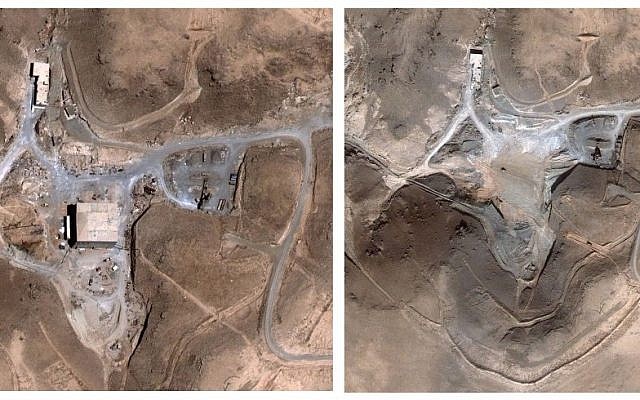
Second, the timing: As the Syrian civil war winds down, it becomes impossible for Israel to try to lay blame for such attacks on opposition groups. Additionally the attack came a day after the tenth anniversary of the (apparent) Israeli attack which destroyed Syria’s Korean-built Dir a-Zur nuclear reactor.
Third, the target: This was a facility of Syria’s Scientific Studies and Research Center (CERS), which is a cover for the manufacture of secret weapons, both chemical and non-chemical, as well as rockets and missiles.
An attack on this type of facility, at this time and place, if committed by Israel, sends a clear message to Iran and of course to the Syrian regime: When Israel’s red lines — such as the building of precision rockets, or Iranian facilities like an air base or port — are crossed, it will take action.
This attack may not cause the Russians to rush to end Iranian efforts at expansion in Syria. However, it might just cause Tehran to reconsider its ambitious plans.
If not, this could all end in bloody confrontation between Israel, Syria and Assad’s ally Iran.





The Times of Israel Community.