

With Gaza war paused, Catholic-Jewish ties reenergized on Nostra Aetate anniversary
The dialogue sparked by the 1965 Vatican document reached new lows after October 7. Now that fighting might be over, optimism surrounds Pope Leo’s determination to make progress

 Add ToI as a Preferred Source on Google
Lazar Berman is The Times of Israel's diplomatic reporter
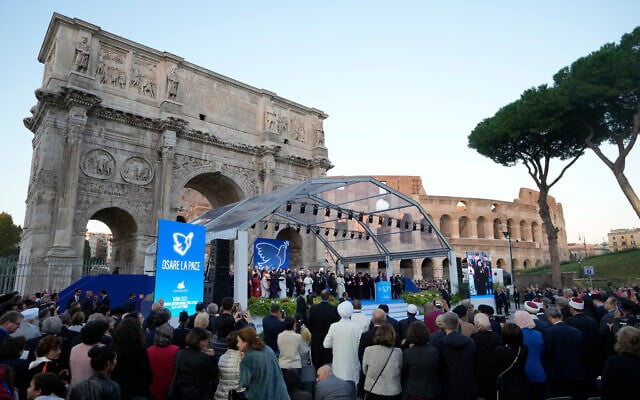
Hundreds of religious figures from diverse faiths convened in the Vatican this week to mark the 60th anniversary of the Catholic Church’s landmark document Nostra Aetate.
The edict launched an ongoing process that seeks to do away with centuries-old stereotypes in the Church in which Jews were depicted as Christ-killers and rootless wanderers.
“There have been so many amazing moments over those sixty years, moments our grandparents and great-grandparents could never have imagined,” Murray Watson, an expert on Catholic-Jewish relations, told The Times of Israel.
“Nostra Aetate was, in many ways, a modest, tentative beginning, but it has yielded amazing fruits,” he continued.
“It is easy to forget that 60 years ago, Catholics and Jews had little experience of talking to one another,” noted Saint Joseph’s University professor Philip Cunningham.
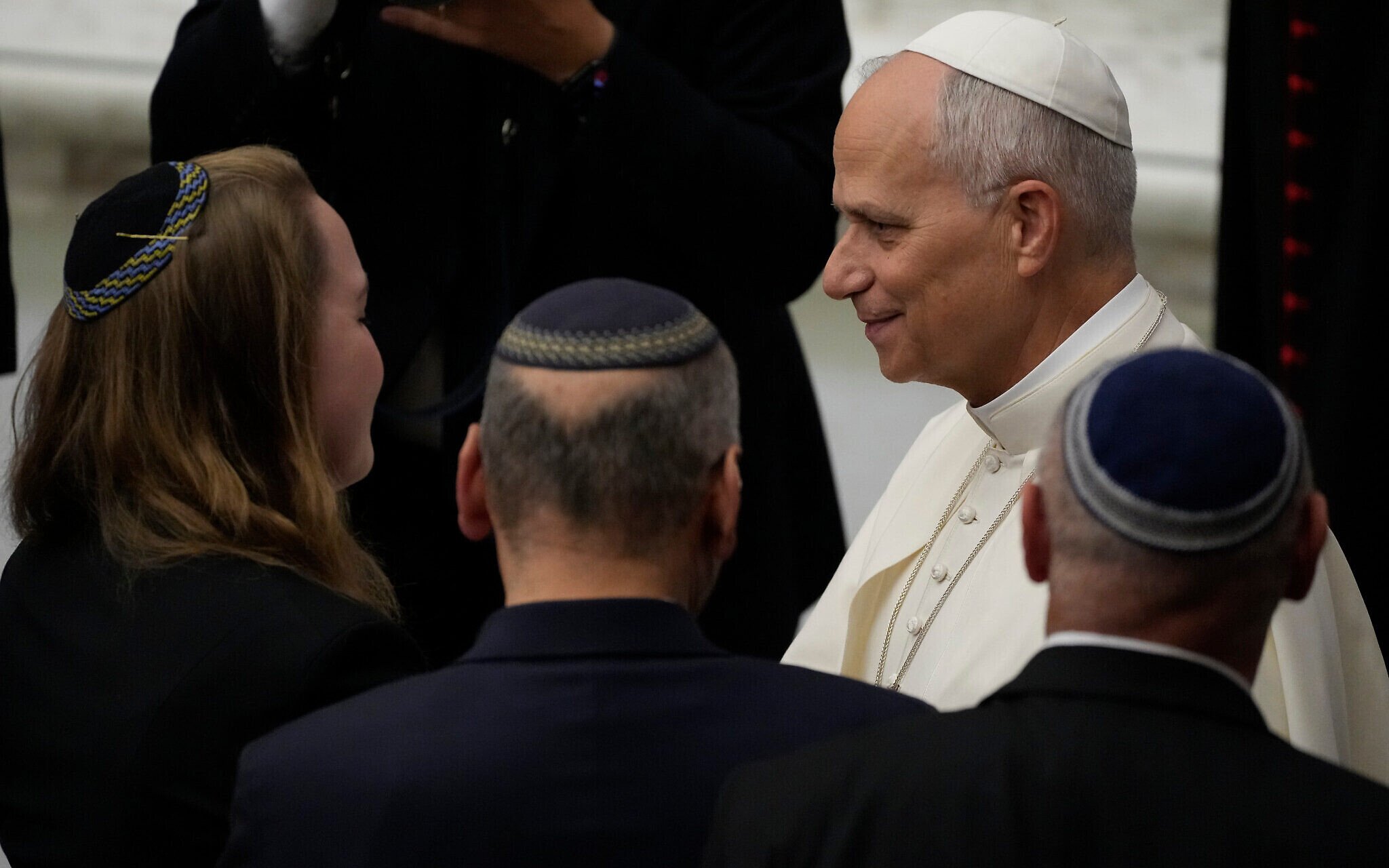
Pope Leo XIV oversaw this week a series of celebrations of the document that launched that process. He presided over a two-part commemoration that began with an interfaith appeal for peace at the Colosseum, followed by an evening in the Vatican entitled Walking Together in Hope, which featured songs, performances, and testimonies.
Though the celebrations were all handshakes and smiles, there is still a sense of unease permeating Jewish-Catholic ties.
Two years of war in Gaza and a recently deceased pope with a patchy record on Jews and Israel dragged the relationship down to its lowest point in years.
For more on this topic, listen to this week’s Friday Focus:
Yet there is also, for the first time since the Hamas invasion of October 7, 2023, renewed optimism in the air. With a new pope in the Holy See and a ceasefire in Gaza that could turn into a regional peace process, the 60th anniversary of Nostra Aetate comes as fresh opportunities for Jewish-Catholic understanding emerge.
“We are definitely in a more positive moment,” said Rabbi Noam Marans, director of interreligious affairs at the American Jewish Committee.
A golden age
Meaning “In our time,” Nostra Aetate revolutionized the Church’s relationship with other faiths. Though it addresses Hinduism and Buddhism, saying it “rejects nothing that is true and holy” in other religions, and regards Islam “with esteem,” the multi-year, multi-pope process that culminated in Nostra Aetate had the Vatican’s relationship with Jews at its core.
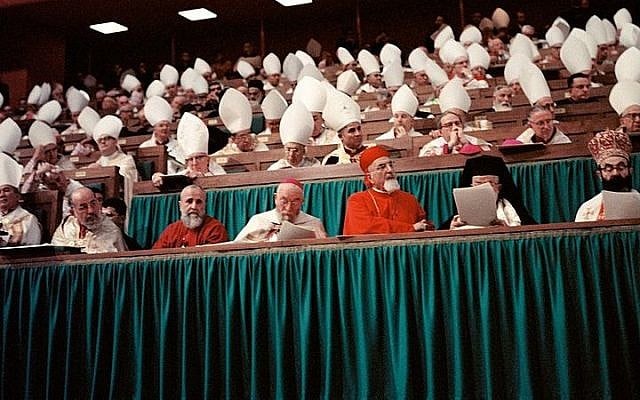
Coming in the aftermath of the Holocaust, the Second Vatican Council that produced Nostra Aetate was not itself primarily about the Church’s relationship with Jews. At the same time, rethinking its approach toward Judaism and the Jewish people was an integral part of the council’s self-imposed mission of ressourcement and aggiornamento— returning to its sources and updating itself to better engage with the modern world.
“God holds the Jews most dear for the sake of their Fathers; He does not repent of the gifts He makes or of the calls He issues,” reads Nostra Aetate. The document also “decries hatred, persecutions, displays of antisemitism, directed against Jews at any time and by anyone.”
“We must not forget how Nostra Aetate actually developed,” said Leo at the 60th anniversary event.
“The fourth chapter, dedicated to Judaism, is the heart and generative core of the entire Declaration,” he stressed.
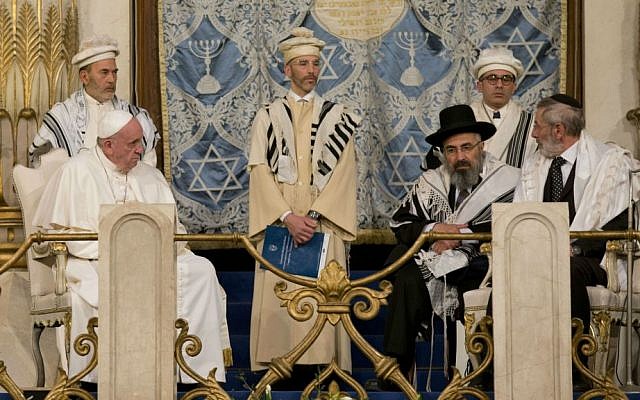
In the two millennia since Christianity emerged, recent decades undoubtedly represent the golden age in its relationship with Jews. Sixty years after the revolution in ties began with the rather brief document issued on October 28, 1965, papal visits to synagogues are almost routine, the church is committed to fighting antisemitism, and popes insist that God’s covenant with the Jewish people was never broken.
Pope Francis was the third pontiff in a row to visit Israel.
“On a local level, many Catholic parishes and Jewish synagogues have grown together as colleagues, friends, and partners in a way that would have seemed unthinkable for most of our shared history,” reflected Watson. “In many places today, we meet together, study together, pray together, and work together on social issues.”
That is not to say things were perfect.
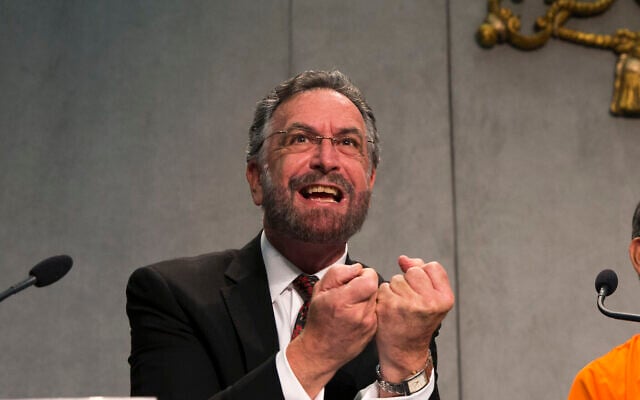
The Vatican recognized Israel in 1993 and popes have said that they understand how central the country is to contemporary Jewish identity. But the Church has not been willing to grant Israel any theological significance.
“There’s a paradox there,” said Rabbi David Rosen, former American Jewish Committee international director of interreligious affairs. ” If you say that the covenant between God and the Jewish people is eternal, the covenant has never been broken, that covenant focuses specifically upon this particular land. And therefore to say that the return of the Jewish people to its ancestral home doesn’t have theological meaning is highly problematic.”
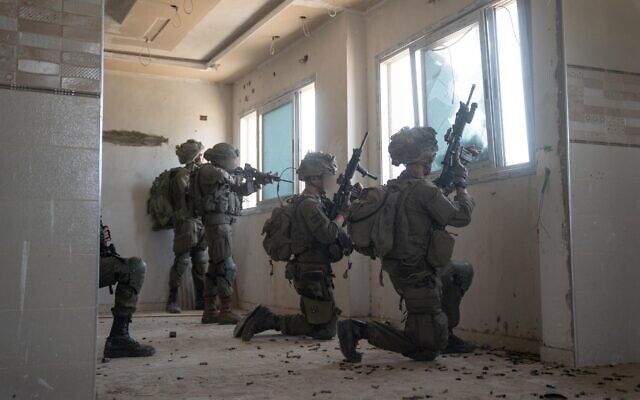
The war against Hamas in Gaza put new strains on the relationship.
Pope Francis’s statements and tweets left Jews feeling confused at times, and under attack at others. In a November 2023 call with Israel’s President Isaac Herzog, Francis reportedly said it is “forbidden to respond to terror with terror.”
Rome’s Chief Rabbi Dr. Riccardo di Segni voiced his “great disappointment” in Francis, warning that Jewish-Catholic relations had taken “many steps backward.”
Shortly after the October 7 attacks, hundreds of Jewish leaders and scholars wrote an open letter to Francis, asking the Church to unequivocally condemn Hamas’s attacks and to distinguish terrorism from Israel’s war on the group.
It took three months for the Pope to respond in a letter that condemned antisemitism, reaffirmed the bond between the Church and Jews, and stressed that his “heart is torn at the sight of what is happening in the Holy Land, by the power of so much division and so much hatred” — but failed to mention Hamas.
Another letter from the pontiff, this one addressed to Middle East Catholics on the first anniversary of October 7, confounded those who care about Catholic-Jewish relations.
Francis decried “the fuse of hatred” lit the year before (though notably did not lay out who struck the match) and lamented “the spirit of evil that foments war.”
Then, quoting one of the New Testament verses most often used to justify Christian antisemitism, he wrote that this spirit was “murderous from the beginning,” and “a liar and the father of lies.”
The verse, John 8:44, was used in children’s books in Nazi Germany, and was cited by the perpetrator of the deadly attack on Pittsburgh’s Tree of Life synagogue on his social media profile.
“It is impossible to overstate what a disaster this is for Jewish-Catholic relations,” wrote Villanova University professor Ethan Schwartz.
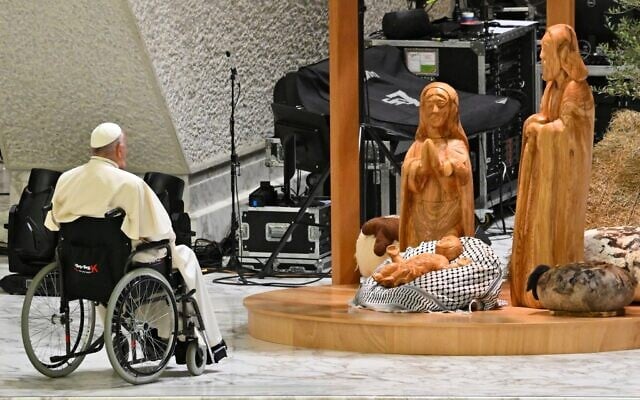
Francis also suggested in an interview that Israel might be guilty of genocide, and joined Palestinian officials to inaugurate a nativity scene in the Vatican featuring baby Jesus, a Jew, lying on a keffiyeh, the scarf used as a national symbol for Palestinians.
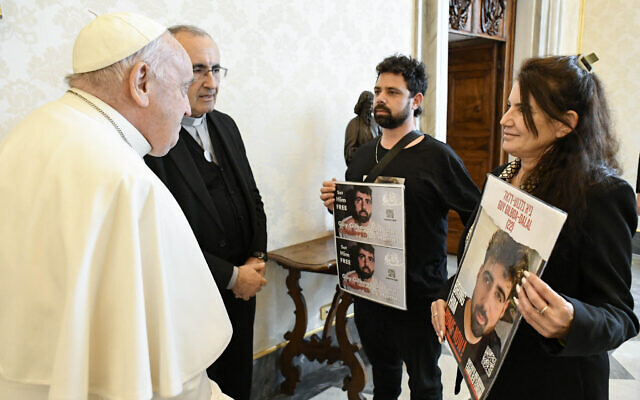
That is not to say Pope Francis was hostile or unsympathetic throughout. He met with hostages’ families and freed hostages on multiple occasions, praying with them and telling them he would do whatever he could to secure the release of those held in Gaza.
He also consistently issued firm denunciations of antisemitism.
“It was very difficult for the Jewish people and the supporters of Israel to see that when he harped on about Gaza and flirted with the language of moral equivalency,” lamented Marans.
“The degree to which that has any lasting effect will depend on whether and how things change in terms of Israeli-Palestinian relations,” Rosen explained.
Hitting the right notes
The election of a new pope in May after Francis passed away dispelled some of the clouds over Catholic-Jewish ties.
Pope Leo immediately showed he intends to invest in the relationship.
He sent a message to Marans, pledging to “continue and strengthen the Church’s dialogue and cooperation with the Jewish people in the spirit of the Second Vatican Council’s declaration Nostra Aetate”.
The day after his inauguration, the new pontiff told Jewish leaders: “Because of the Jewish roots of Christianity, all Christians have a special relationship with Judaism… The theological dialogue between Christians and Jews remains ever important and close to my heart.”
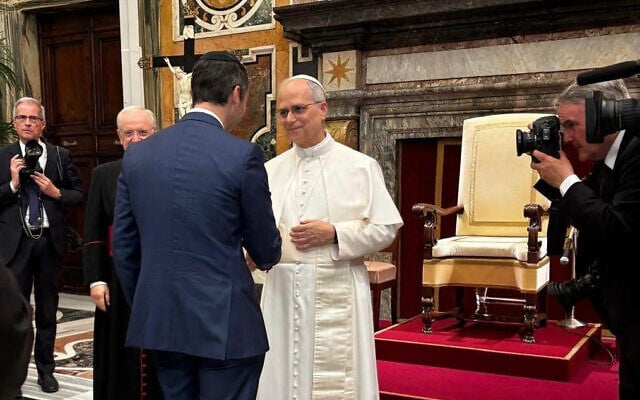
Unlike his predecessors, Leo doesn’t have much personal experience in dialogue with Jews.
“My sense, however, is that he is eager to learn and wants to make his own contributions so that the energy of those six decades continues unabated,” explained Watson.
“My sense is that he values that friendship,” the Canadian scholar continued, “and wants it to be strong, healthy, and a source of real enrichment for both the Catholic and Jewish communities.”
The pope continued to hit the right notes on condemning antisemitism in his addresses this week at the anniversary celebrations.
“He did not connect it to other forms of hate,” said Marans. “He did not connect it to the conflict in the Holy Land. He said unequivocally, no to anti-Semitism.”
From war to peace and beyond
The second reason for optimism is the possible end of the two-year war in Gaza, which has strained ties.
“Not only do Judaism and Catholicism have different ways of thinking about just war theory,” said Watson, “but Catholics often could not grasp how viscerally those events shook, traumatized, horrified, and frightened Israelis and Jews around the world—how the events of October 7 were experienced as an existential threat that evoked the horrors of the Holocaust.”
Many Jews felt betrayed when longtime Catholic interlocutors failed to stand in solidarity with them at a time of perceived peril.

That experience caused many Jews to question the value of the dialogue if it didn’t result in support from Catholic leaders, said Watson.
“I think we will be grappling with those issues for a lot of years to come,” he continued. “They have raised serious questions about how the principles of the dialogue get translated into actions when the going gets tough.”
US President Donald Trump has been investing extraordinary diplomatic capital and military resources into making sure the truce becomes permanent and the transition to a regional normalization process.
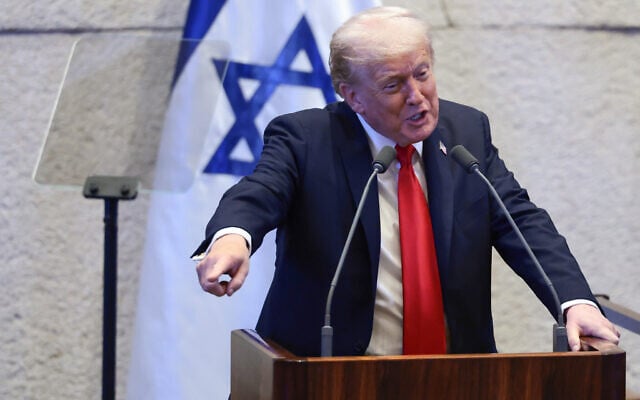
“The long and painful nightmare is finally over,” Trump told the Knesset earlier this month. “And as the dust settles, the smoke fades, the debris is removed, and the ashes cleaned from the air, the day that breaks on a region transformed and a beautiful and much brighter future, appears suddenly within your reach.”
“This is now a very exciting time for Israel, and for the entire Middle East,” he continued.
With images of Muslim leaders meeting their Israeli counterparts potentially replacing those of suffering in Gaza, the Vatican will not be under pressure to comment on a war that most Jews see as among the most justified that Israel has ever fought. Instead, it could have opportunities to praise and support peace processes, in which there is a convergence of interests with Israel and Jewish communities.
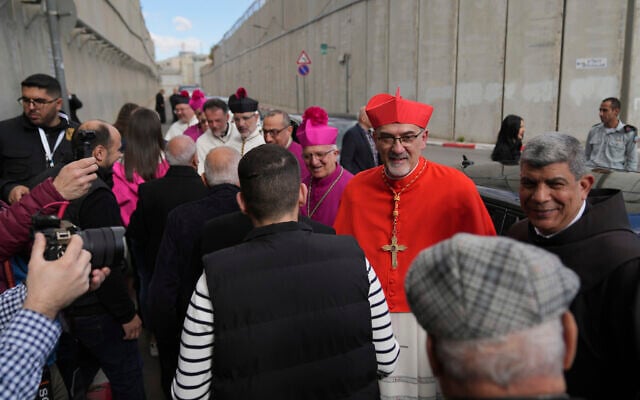
That doesn’t mean Israel and the Vatican are about to agree on everything.
“The Vatican is not unlike Western European countries, which can be disappointing,” said Marans.
Discussions and statements around Israel will continue to be fraught.
“I remain concerned over how the relationship between Catholics and Jews can be set off by undiplomatic language and policy regarding Israel,” acknowledged Marans.
And beyond any disagreements on war and politics between Jewish communities and the Vatican, there is plenty of effort that needs to be put into the Catholic-Jewish relationship to keep moving along the path that Nostra Aetate set.
“More work needs to be done to educate our respective communities at large about accurate understandings of each other, to address social needs together, and to overcome the dangers of widespread antisemitism,” Cunningham pointed out.
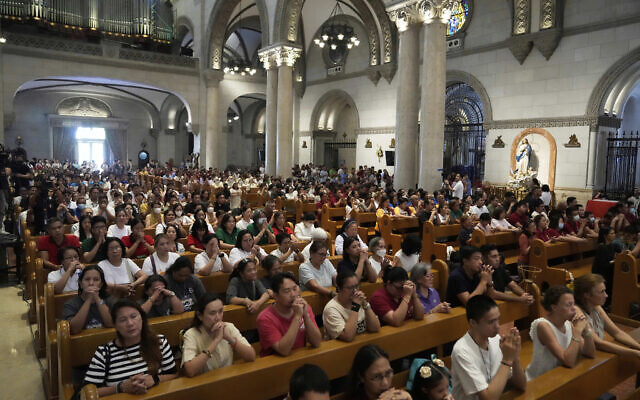
Many lay Catholics are still unaware of Nostra Aetate’s vision and significance.
“For many Catholics, both in the West and around the world, it’s possible to spend a lifetime and never encounter a Jewish person,” said Watson, “so Jewish-Catholic relations sometimes don’t feel as urgent or relevant to many Catholics, among all the other issues in contemporary Catholic life.”
Despite the challenges — some of which have always been a part of the relationship, and some which only emerged recently — the 60th anniversary of Nostra Aetate comes at a potential turning point for Catholic-Jewish dialogue.
“We have a confluence of events here,” said Marans.
“We have a potential ending of this very painful war, the justified defense by the State of Israel, ultimately leading to the freeing with the American administration’s help of the living hostages,” he continued.
“Is this the darkest before the dawn moment? You don’t know and I don’t know. But it’s an opportunity.”





The Times of Israel Community.