

With no tourists on the horizon, tour guides scramble to adapt to a new reality
The economy may be reopening, but with planes still grounded, and with much of the US and Europe stuck at home, an entire profession is being left behind
 Add ToI as a Preferred Source on Google
Jessica Steinberg, The Times of Israel's culture and lifestyles editor, covers the Sabra scene from south to north and back to the center
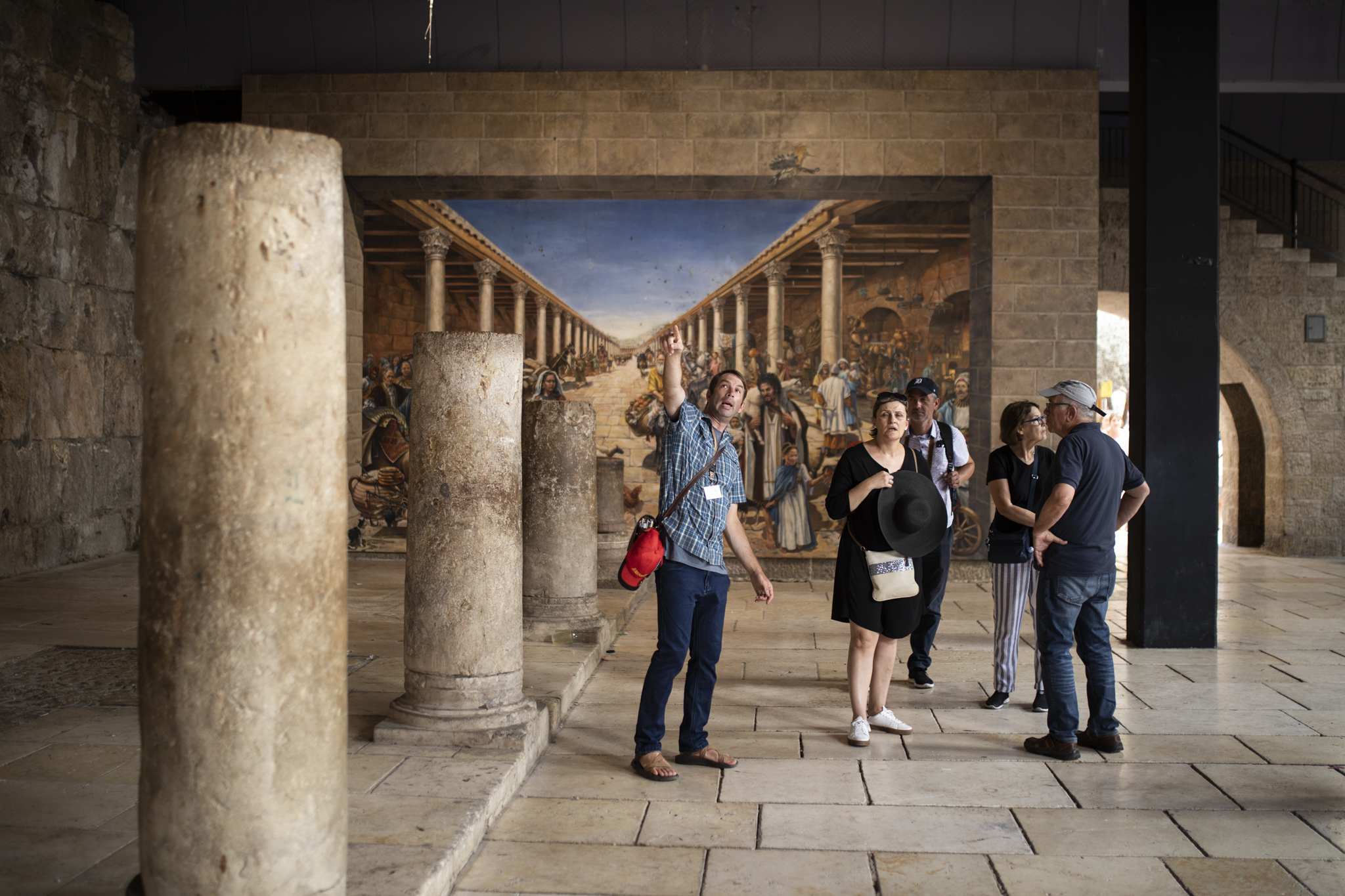
There are few redeeming elements to being an Israeli tour guide during the COVID-19 pandemic.
With planes grounded, much of the US and Europe stuck at home and Israeli hotels shuttered, most tour guides are out of work or furloughed, struggling to figure out when tourists will return to vacation in Israel.
No one has any real clue.
“We’re now in this surrealistic reality where the country is moving back to a new reality, and there’s this group that isn’t really going back to work,” said Ezra Korman, the founder of Makor Education Journeys, a division of the IGT tour company. “Israel is in a place where it could theoretically host people, but we can’t because of what’s out there.”
Instead, cancellations reign. Tours have been canceled for July and August, and into the fall and winter, said Joe Yudin, a licensed tour guide whose company, Touring Israel, normally employs 15 full-time staff (all currently furloughed) and offers steady work for some 20 tour guides.
“What we haven’t gotten is any bookings,” said Yudin, noting that 2020 was shaping up to be his best year yet. “Not for September through December, and not even for 2021. If you even say the word ‘deposit,’ people turn away.”
Yudin, who had taken most of the last year off to work on his PhD in Israel studies from the University of Haifa, is still working on his dissertation, doing podcasts, and attempting to have “cerebral discussions” with other guides about Bible study, ancient eras and specific historic sites. As the co-owner of his company along with his wife, Yudin isn’t furloughed and hasn’t received any government grants.
“I’ll survive,” he said. “For now, I’m trying to keep people’s interest in Israel.”
It’s one way of dealing with the global pandemic that has shuttered his business. While some tour guides have received one or two government grants being given to self-employed professionals and small and medium-sized businesses, others haven’t received anything and have to seriously consider their next career moves.
Jerusalem-based tour guide Hillary Menkowitz was booked for much of the summer but instead has found herself brushing up on her skills in graphic design — her previous profession back in New York and Philadelphia.
She’s also considering starting a master’s degree, relying on a nest egg along with the unemployment benefits she received as a salaried tour guide specializing in educational group tours for teens and families.
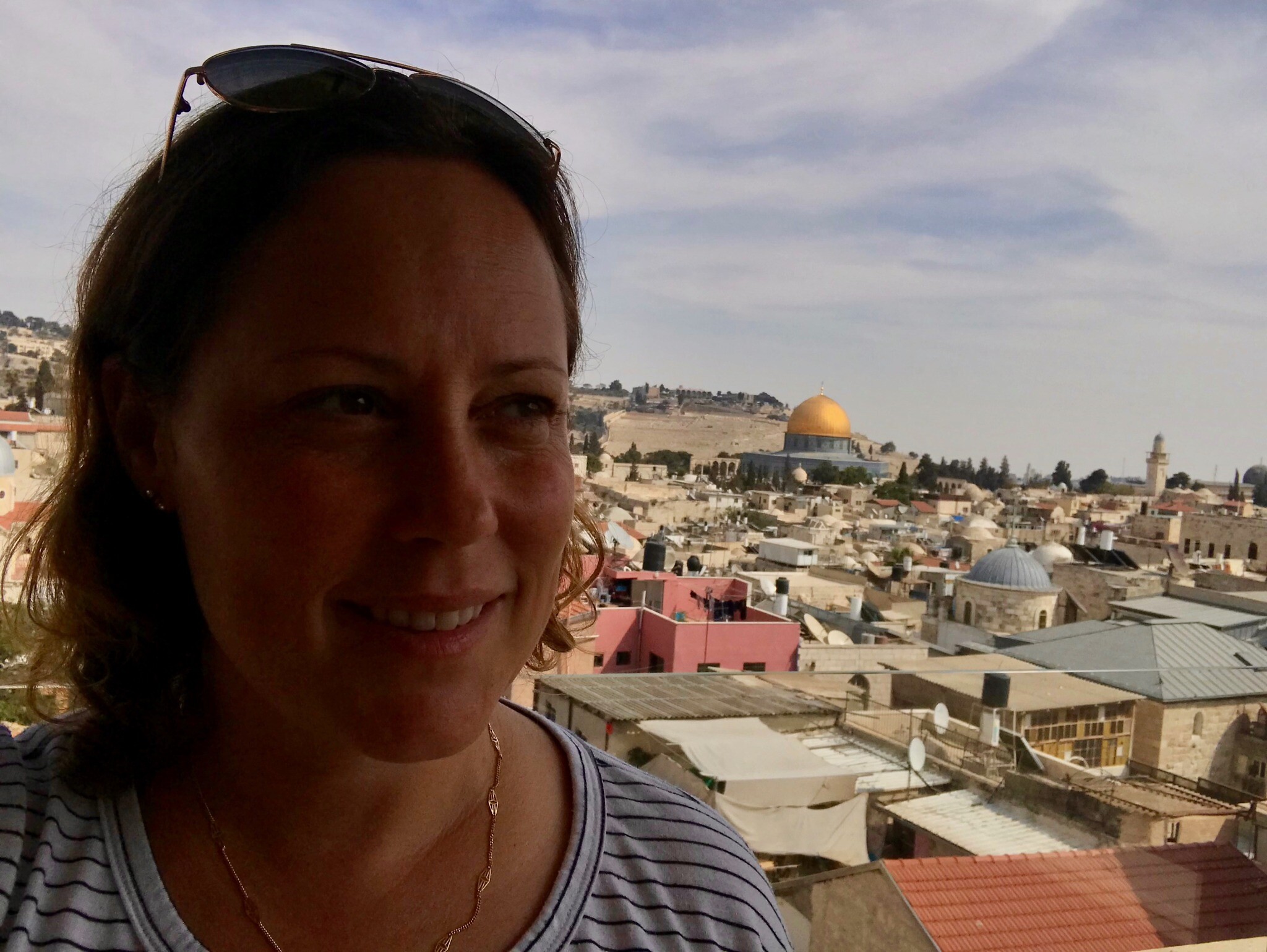
“I’m very unmotivated, even though I’ve been forcing myself to do it,” she said of the graphic design work. “Tour guiding is wrapped up in my aliyah story, it’s a kind of informal Jewish education and a form of emissary work for me. It wasn’t about moving from one career to another. The irony is that it allowed me to see my future here and a life where I could support myself.”
For Bena Mantel, 37, an independent tour guide, it’s the only career he’s ever had, and he has deeply enjoyed it for the last 17 years.
He was booked through the summer, and still has a few gigs that weren’t officially canceled in August and September. Yet.
“A lot of the steam that pushed me at the beginning is gone,” said Mantel, who helped a friend pick cherries in his orchard and recorded some podcasts over the last few months. “There’s absolutely nothing.”
While Mantel received two government grants, he’s thinking about giving up on certain creature comforts.
“There’s a great deal of shame in this,” said Mantel, who holds bachelor’s and and master’s degrees in Israel studies and archaeology, and has guided Barbra Streisand, rapper 50 Cent and other celebrities. “The government won’t help us, it won’t generate temporary jobs for us.”
It seems reasonable to think that there won’t be tourists until February 2021, said Menkowitz, and the first wave of tourists will probably be independent travelers, who are less reliant on tour guides.
“For me, it’s how long do I need to keep myself afloat and what do I need to do in order to do so,” said Menkowitz, who has also been earning small fees for some Zoom talks and remote informal education.
“It’s a 100% cancellation,” said Guy Millo, CEO of Daat Educational Expeditions, a tour company with a US client base and 80 staff members that recently closed its Jerusalem office — one of four locations — and downsized and furloughed a portion of its staff. “We’re the first to get hurt and the last to come back.”
The government hasn’t jumped in to save Israeli tourism because it’s unclear how this will all play out, said Korman.
“There will be tourism, but who knows how long it will take?” he said.
In some ways, those who work in tourism as specialty guides may have an easier time pivoting to another angle of their business.
Inbal Baum, the founder of Delicious Israel, a company that offers foodie tours in Israel’s open air markets, spent the first weeks of the pandemic refunding thousands of dollars, putting one of her two full-time staff members on furlough, and knowing she had nothing to offer her 23 guides.
“It was going to be the best season we’ve ever seen,” said Baum, who grew her company from one hummus hop around the Carmel Market to 14 tours in Tel Aviv and Jerusalem. “In the beginning, I was pretty optimistic, I thought, ‘this is a hiatus, it sucks, but it’s short term.'”
She kept herself busy by writing a blog for clients, holding Zoom meetings with her guides, and taking care of her young children.

But she kept thinking about how she could continue to bring unique food experiences to people, drawing on the Delicious Israel experience of connecting chefs and culinary experts with visitors. With masses of people following food shows and making sourdough bread, she figured that social connections through cuisine could still happen, even if they were virtual experiences.
“I’ve been thinking for a long time about how to do something global,” said Baum. “Let’s create the experiences you would otherwise be having in your home, with the best of the best.”
She networked among her wide circle of culinary colleagues, and quickly created Delicious Experiences, a platform for private, virtual food experiences and workshops with expert chefs, bartenders, mixologists and photographers.
Each chef or expert sets their own price and Baum adds a service fee for a price range from $90 to more than $1,000, with many of the experts donating their earnings. She lucked out with her husband, whose company went into hibernation before the coronavirus hit, helping her with the technology side of creating the new website.

“This definitely fits what I love, it’s an innovation I wouldn’t have had happen otherwise,” she said.
Fashion guide Galit Reismann, who has made a career out of showcasing Israeli designers in her company, TLVstyle, has also worked hard to find a new angle to her bespoke fashion tour business.

Reismann found her entire spring season canceled within one day in March, and shut down for the first month, focusing on her two toddlers.
Once Passover ended, however, the pandemic still loomed and she was itching to get back to work.
“This is the time for our community here,” said Reismann, who created a Facebook page, TLVstyle doing good together, geared toward anyone interested in Israeli design and now counting more than 900 members, although she wants 9,000. “I feel like I need to build the Israeli community.”
For now, Reismann is putting up posts of designers she loves, offering two free tours in Hebrew, and stimulating conversation about Israeli design. She misses pounding the Tel Aviv streets, entering designer’s ateliers and introducing their creations to visitors from abroad.
מחר יוכרזו 5 הזוכות הראשונות בסיור! הסבב השני יוכרז ב 15.6. מוזמנות להפיץ. הזדמנות חד פעמית ???? יש לעקוב אחר הפרטים בקבוצה ????
Posted by Galit Reismann on Saturday, May 30, 2020
“It makes me understand that I love what I do and I miss it, and how much the Tel Aviv streets are my oxygen,” said Reismann, who received two months of government grants, which offered her a financial respite.
She’s working now on Zoom talks featuring other designers, as an opportunity to reach new audiences and hopefully get paid.
“This will be a year of cutbacks but I’m readying myself for that,” said Reismann. “I hope the tours come back, because that’s what we’re all waiting for.”








The Times of Israel Community.