

Women left off the bill for Tel Aviv ‘unity’ concert
Municipality declines to fund Yom Kippur event for religious and secular people in Rabin Square
 Add ToI as a Preferred Source on Google
Stuart Winer is a breaking news editor at The Times of Israel.

A public concert to be held in Tel Aviv’s Rabin Square does not include any women among its lineup of seven performers because the financier is opposed to women singing before a mixed audience on religious grounds.
The “Rising up to Kippur” event, billed as “the best of Israeli artists starting the year with songs from the soul,” was authorized by the city municipality but does not have official funding, organization, or sponsorship, Haaretz reported Sunday.
Among the sponsors of the concert, scheduled for the lead-up to the Yom Kippur fast, which falls on October 11, are the World Zionist Organization, local radio stations Radius, Radio Tel Aviv and Radio Lev Hamedina, as well as TV Channel 20 and various social awareness and unity religious-secular campaign groups, including the Schottenstein Foundation.
Yom Kippur, the Day of Atonement, is traditionally a time for reconciliation between people, and the show is themed on unity and understanding between all segments of Israeli society.
The exclusion of women from musical performances to satisfy religious sensibilities is a controversial subject in Israel.
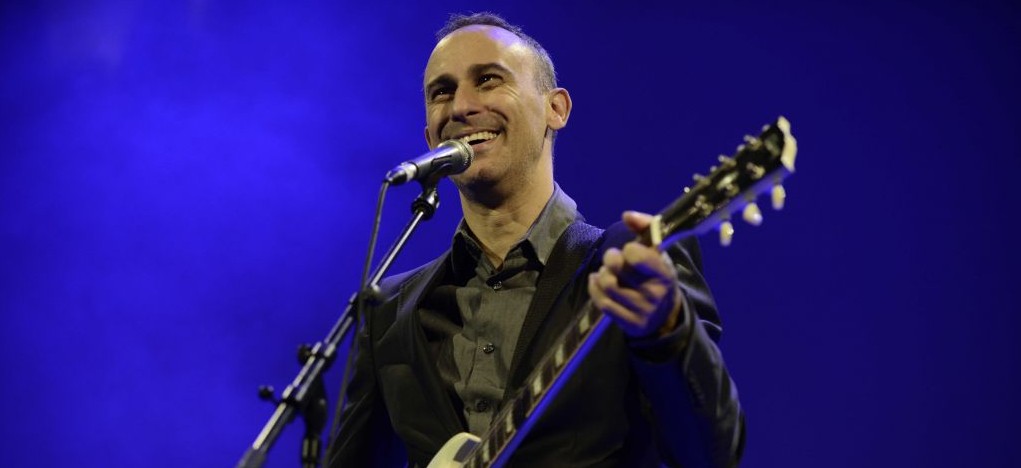
The director and musical producer for the event, Israeli singer-soongwiter Assaf Amdursky, said the choice of performers was not his and that the character of the event was strongly influenced by its Jewish religious financier, who was not identified in the report.
“Although I am the musical director and the musical producer for the evening, I am not the one who laid down the list of the performers” he said. “I came into the picture when the list of artists was already prepared. I work with those conditions to create good music.”
Amdursky, who said he was comfortable with the orientation and restrictions of the event, explained that the financing for the event came from a religious donor.
“He has his considerations and I respect them,” Amdursky said, noting that the sponsor adheres to a strict interpretation of Jewish religious code that forbids a man to hear a woman sing but also wants to attend the show.
Rabin Square, which lies outside the municipal building, is a large open space often used for rallies and other large events.
Shiri Raveh, public relations manager for the performance, said there was no intention to send a message of discrimination, but rather of unity between people, and that the event was being politicized.
“This is a gathering for song and unity for Israel,” she said. “The participating artists were carefully chosen for the audience, without any attempt to raise a specific discrimination. The event will be presented by a female presenter. There is no case here of excluding women, but just a musical choice for the audience.
“The aim of the event is rapprochement, giving a message of forgiveness, compassion and unity in Israeli society. We regret that there are those who are trying to introduce political matters in the performance that is completely grounded in love and unity.”
According to Haaretz, a poster for the show lists the presenter as Korin Gideon, who co-hosts the Israeli television version of the reality show Big Brother, but she has denied any connection to the event.

The Tel Aviv municipality stressed in a statement that it is not a party to the concert and criticized the apparent contradiction between calling for rapprochement and also denying women a presence.
“The municipality is not taking part and is not cooperating with the gathering, in light of the exclusion of women that exists in its framework,” the city said. “We find it difficult to understand how an assembly that purports to promote a rapprochement is consistent with the exclusion of women. The public is sensible enough to decide whether or not to take part in an event that bans women from singing.”
“A cultural event that excludes women is not legitimate in the public space in Israel,” said city council member Michael Gitzin. “There is no religious or cultural outlook that can give legitimization to an event like this, and it is riling to see key media channels in Israel cooperating with radical bodies that silence women as an ideology.”









The Times of Israel Community.