

A pumpkin patch on the moshav
Moshe Tellem grows tons of gourds, literally
 Add ToI as a Preferred Source on Google
Jessica Steinberg, The Times of Israel's culture and lifestyles editor, covers the Sabra scene from south to north and back to the center
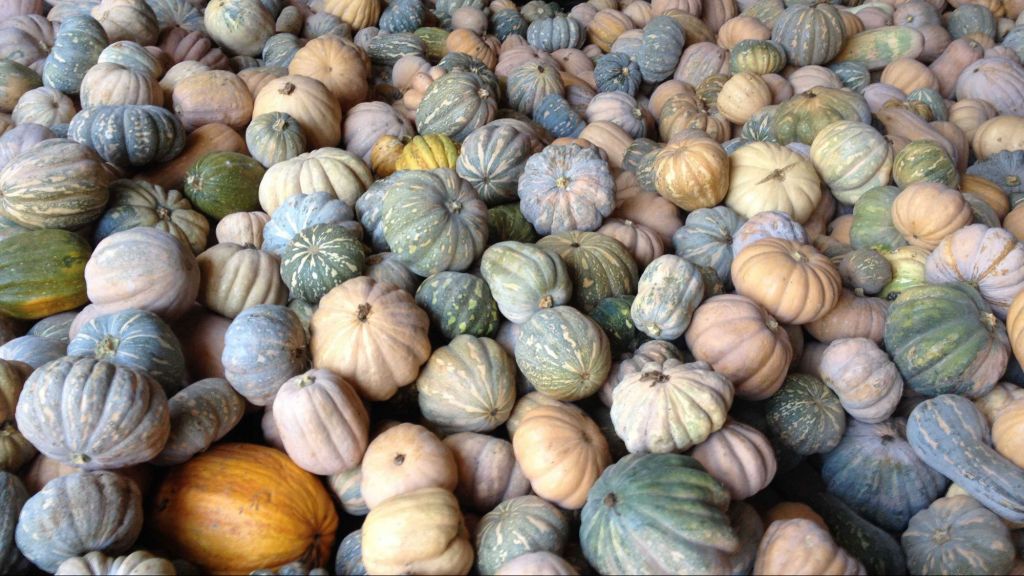
Expat Americans seeking pumpkin for Thanksgiving need to ditch the NIS 15.95 canned version and the hunks of plastic-wrapped supermarket squash and head to Rishpon, home to Israel’s premier pumpkin farmer, moshavnik Moshe Tellem.
He’s harboring a ton of gourds. Literally.
Tellem and his farming partner, Yuval Ben Yakar, are the last farmers in Rishpon, a moshav just north of Herzliya that once struggled to survive, but is now better known for its pricey villas, high-end design stores and rustic cafes. They both grew up in the small town, born into farming families. Tellem, whose father raised cows and grew potatoes and other vegetables, decided to plant something a little different after seeing his first pumpkin at a wholesaler, back in the early 1960s.
A graduate of the Jezreel Valley farming school, he started planting the more typical pumpkins found in Israel, those massive gourds often found in local markets, where sellers slice off half-kilo hunks for customers. Then he aimed for the more exotic varieties, importing different species from Thailand, Japan, Ethiopia, Brazil and other destinations. He added five types of chestnuts as well.
“We’ve got 20 types now,” said Tellem. And more than 200 tons in total in an average year.
In Israel, the demand is for sweet gourds, Tellem explained, and people like the ones that are more orange in hue. He sells his pumpkins to local markets and specialty stores, including stalls at Jerusalem’s Mahane Yehuda and Tel Aviv’s Carmel Market.
“The pumpkins I grow, the exotics, are almost like sweet potatoes,” he continued. “They’re more tasty, you can do all kinds of things with them. And they’re full of vitamins.”
Tellem, now 73, travels to the Far East on a fairly regular basis in order to research new squash types.
“The pumpkins are like my kids,” he said. “I love talking to them.”
Still, it’s getting harder to sustain the business, given the price of water and the need to use safe farming methods. Tellem’s gourds aren’t officially labeled as organic, but he doesn’t use any pesticides.
He’s also probably the last member of his family to farm pumpkins. One of his sons does own a plant nursery in Rishpon, while Ben Yakar, his farming partner, cares more about radishes; he cultivates several types of the crunchy root vegetable with Tellem.
“I have nothing to do with these,” said Ben Yakar, waving a hand at the piles of pumpkins gathered in Tellem’s shed. “I don’t eat pumpkin.”
Tellem’s several hundred tons of pumpkins have been available since July, and he still has another couple of tons sitting in his Rishpon shed, where he sells them at wholesale prices.
For those seeking a kabocha or a butternut, head to Rishpon and follow the signs to the cemetery; Tellem’s home and shed are located right next door, just before the moshav’s remaining farmland. You can also ask anyone in town where to find his house; Tellem is well known around Rishpon, both for his pumpkins and his folk-dancing classes.
[mappress mapid=”4937″]









The Times of Israel Community.