

Death of a spymaster
Justice Minister Shaked’s future appointment of Supreme Court justices worries the press; Mossad legend Dagan remembered as national hero
 Add ToI as a Preferred Source on Google
Ilan Ben Zion is an AFP reporter and a former news editor at The Times of Israel.

What kind of legacy does a legendary former Mossad chief, an outspoken critic of the current government, leave when he passes? Meir Dagan, 71, died Thursday, and his death is the key story in the Hebrew newspapers Friday morning.
In its front page obituary, Haaretz remembers Dagan as “the fighter who prevented war” — namely an Israeli war against Iran. Israel Hayom, which devotes its first seven pages to the former IDF general and Israeli spymaster, calls him “a man of heroism, imagination and courage.” But whereas Haaretz puts Dagan’s outspoken objection to a strike on Iran on its front page, the pro-administration paper buries it at the end of its reportage. Yedioth Ahronoth, meanwhile, refers to Dagan, who’s honored with a battery of obituaries penned by a variety of authors including former foreign minister Tzipi Livni and former president Shimon Peres, as “a man who knew no fear.”
Dagan’s former subordinate, ex-deputy Mossad chief Ram Ben Barak, writes in Israel Hayom that “the State of Israel lost today one of its greatest fighters and leaders of this generation.” Dagan, he says, was a true leader “who knew to look forward, to dissect reality and determine targets for action.”
“You could see in the Mossad that everyone greatly loved Meir, from the junior workers to the heads of departments,” he writes.
The tabloids also feature a World War II photograph Dagan kept on his desk — of his grandfather, moments before he was shot by a Nazi soldier.
“Look at the kneeling man,” Israel Hayom quotes Dagan telling people regularly. “That’s my grandfather before he was murdered. I see this picture everyday and promise that something like this won’t happen again.”
Yedioth Ahronoth elaborates a bit further, quoting the former Mossad chief saying: “This is what guides me, this is what instructs me to work for the sake of the state of Israel and its protection. I look at the photo and guarantee that I will do everything in my power so that something like this won’t happen again.”
Concern over the selection of Supreme Court justices is not solely an American matter, as Justice Minister Ayelet Shaked’s appointment of replacements for retiring judges comes into the media spotlight. Four of the 15 Supreme Court justices will retire in 2017, including the current chief justice. But while three of the departures were anticipated for some time on account of their age and term in office, Zvi Zilbertal’s surprise announcement he’d retire early means Shaked will have the rare opportunity to change the face of the court drastically, Haaretz reports. As justice minister, Shaked becomes “the key figure in appointing four Supreme Court justices, and a year later a third of the justices, with the retirement of Justice Uri Shoham,” the paper writes.
Yedioth Ahronoth writes that Shaked is expected to use her influence in order to press for the selection of conservative justices who advocate “judicial restraint” as much as possible. The paper says Shaked has “an undisguised agenda concerning her desired composition of the Supreme Court” inasmuch as she wants to reduce judicial oversight of government policies concerning security, the West Bank, political appointments, and the relationship between religion and state. It further adds that the four replacement justices are expected to be chosen in a single batch, and are likely to be selected from the religious-nationalist community which Shaked’s Jewish Home party represents.
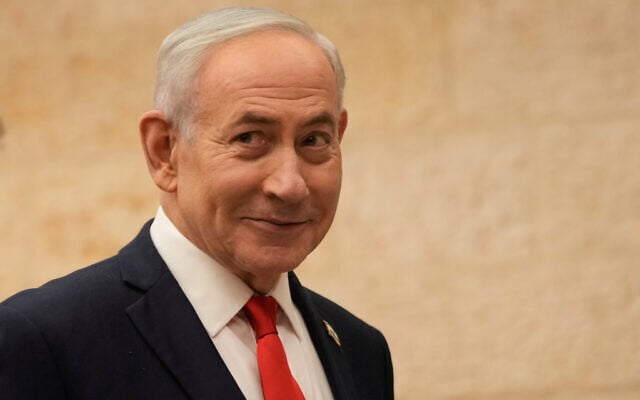
Israel Hayom avoids the issue altogether, and instead highlights Prime Minister Benjamin Netanyahu’s renewed criticism of NGO Breaking the Silence for “crossing another red line,” according to a Channel 2 investigative report broadcast Thursday, by collecting sensitive intelligence information.
The prime minister said on Twitter that security officials were investigating the issue, the paper reports. It also quotes Absorption and Jerusalem Affairs Minister Ze’ev Elkin saying that the alleged actions by the anti-occupation organization, “which have no connection to an ideological disagreement about what happens in the West Bank, raises serious concerns about the use of Breaking the Silence as an espionage tool against the IDF and requires an immediate investigation by the Shin Bet and Military Police Investigations Unit.”
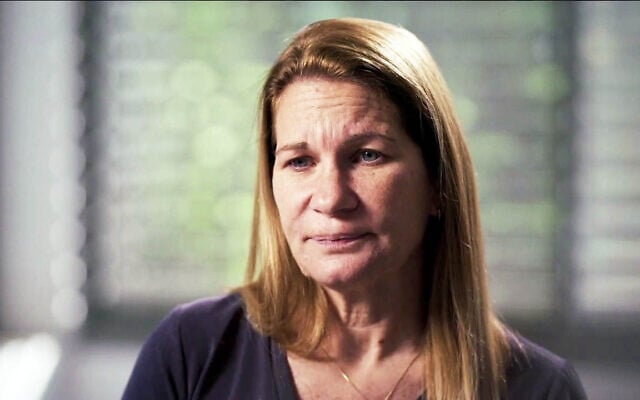
Breaking the Silence CEO Yuli Novak told the channel that “we don’t collect classified information and don’t follow [military] units.” “Our objective is to gather information from soldiers who served in the territories and publish them,” she said. “We are working closely with the [military] censor, the only body authorized to tell us what’s allowed to be published or not.”
Finally, a surprising remark by the IDF’s deputy chief of staff makes front page news in Haaretz. Yair Golan said bluntly that so long as Turkish President Recep Tayyip Erdogan is in power, Israel will have diplomatic problems with Ankara.








The Times of Israel Community.