

Getting down to brass tacks
Papers parse Avigdor Liberman’s calm and friendly first day with the generals, and take Sara Netanyahu and the top cop who may be protecting her down a peg
 Add ToI as a Preferred Source on Google
Joshua Davidovich is The Times of Israel's Deputy Editor
The worlds of intrigue and skullduggery pop onto the front pages of Israel’s Hebrew-language newspapers Wednesday, though readers hoping for sexy tales of spycraft and international conspiracies will likely be disappointed with the motley collection of stories of deeds dirty, deceptive and downright lacking much substance that set the news agenda.
That’s not to say the stories lack news value, though. An internal justice apparatus rift on how to deal with the Lady Macbeth-like Sara Netanyahu, exclusive details of a French peace proposal and Avigdor Liberman taking over the Defense Ministry are all worthy of the coverage they receive in their respective papers.
Like a pole dancer who leaves her clothes on, Israel Hayom teases readers with the front-page headline “Liberman: Getting to know the IDF General Staff – and its secrets” knowing full well it cannot reveal those secrets. As if that weren’t bad enough, it’s not as if the paper didn’t have what to report, seeing as Liberman said two newsworthy things during those meetings – that he prefers national unity to territorial holdings and that he’s not going to put up with wars of attrition – both of which are buried deep within its transcriptionesque story.
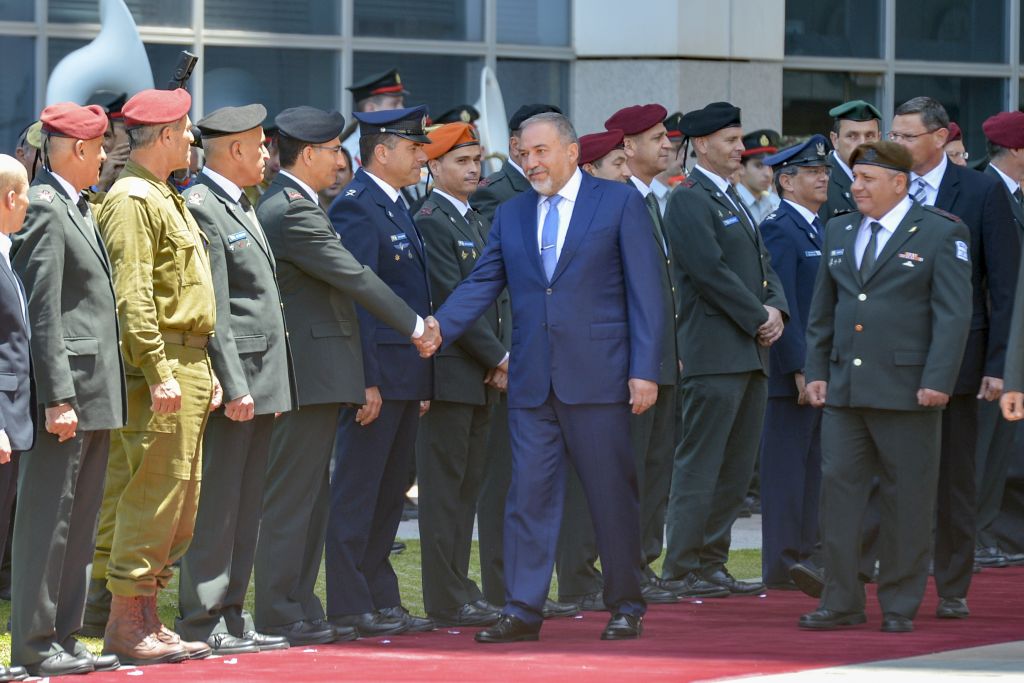
Columnist Yoav Limor dumps a few more cups of sugar onto the coverage, using the photos of the smiling generals and minister at the formal meeting as proof that fears of Liberman leading a kulturkampf within the army were totally unfounded.
“On its face it seems both sides, Liberman on one side and the defense apparatus (with the IDF at its head) on the other, are willing to give this a real shot. This comes not only from the body language, which broadcast comfort and sense of purpose, but mostly from what was said. In his opening speech, Liberman said all the ‘correct’ things and held back from anything that could even give a hint of an argument or criticism,” he writes. “Anyone who thought Liberman came to put down generals during breakfast, on his way to conquering the region, was met with a surprise; the defense minister prefers peace to war and intends to walk hand-in-hand with the army chief of staff.”
In Yedioth, though, columnist Alex Fishman takes away a slightly different message from the meeting, seeing Liberman’s behavior as more calculating than anything else.
“Nothing is spontaneous. Everything is planned. Even the decision to call Moshe Ya’alon and arrange an orderly handover was well worked out. His strategy is to smoothly transition into his powerful role through the welcoming channel of the [national] consensus. The army is the consensus — and now he’s a part of it. The spikes he whipped out against the defense heads over the soldier shooter in Hebron are gone. In his speech he didn’t hint at any disagreement, certainly not on values. For now, he broadcast to them: I’m with you,” Fishman writes. “Liberman spoke and the officers were quiet. The event lasted no more than half an hour and left them with the feeling that the incoming minister intends to be short and to the point. Only when he raised a toast did he break the ice a bit and said something along the lines of ‘I’m used to entering new jobs amid storms. Here I’m quiet, I slide in smoothly, calmly’ – and didn’t forget to thank the army chief for helping him enter the post.”
It’s likely most people were not overly surprised by Liberman’s unabrasive first day – after all he is a pragmatic politician and gladhander and not the caricature some made him out to be. In the vein of surprises that aren’t surprises, most will probably be less than shocked to read Haaretz’s front page, which leads off with news that the French peace proposal will seek to include strict timelines, giving the public a first whiff of any details from the plan, which the paper reports will be discussed Wednesday at a preliminary meeting before the peace confab in Paris Friday.
The report does not detail what timetable the French may have in mind, and in fact while the paper says the French seek a “rigid” timetable, that characterization is somewhat belied by its own transcription of the document, which is not nearly as strongly worded.
“Time is not a neutral factor, given the steady erosion of the two-state solution. An open-ended approach would be oblivious to the reality on the ground and the constant risks of escalation. Ministers will agree on the principle that a clear timetable will need to be established for the negotiations when they restart, and that some interim review might be necessary to gauge the seriousness of the process,” the paper quotes the document as reading.
Prime Minister Benjamin Netanyahu has repeatedly railed against setting a timetable for a peace deal, but it’s likely he’s more concerned with the possibility of his wife doing time, as Sara Netanyahu continues her week from hell.
Yedioth, which makes no bones about the fact that it’s not a big fan of the Netanyahus, has a field day with the various affairs surrounding Sara Netanyahu, including a judgment against the Prime Minister’s Residence to the tune of NIS 120,000 for abuses suffered at her hands by a worker.
“Reprimands, shouting, humiliations,” reads a front page headline, quoting from a judge’s decision about Sara Netanyahu’s behavior.
The paper itself has a few choice words, not only for Netanyahu, but for her lawyer and her husband, over what it calls an unprecedented attack on Judge Dita Proginin.
“[Benjamin Netanyahu] has been taken over by a hysteria over the affairs against him and against his wife, and their inability to sweep them under the rug,” columnist Tova Zimuki writes. “If it were just the insults, it could be understandable: But there are those in the justice system who fear that Netanyahu could try to damage the justice system.”
That fear comes to a head with another story in the paper accusing police chief Roni Alsheich of zigzagging after he released a statement making peace with Attorney General Avichai Mandelblit and saying the police should not have released info about cops recommending graft charges against Sara Netanyahu.
“Police chief says: The public doesn’t need to know,” reads a teaser on the paper’s front page.
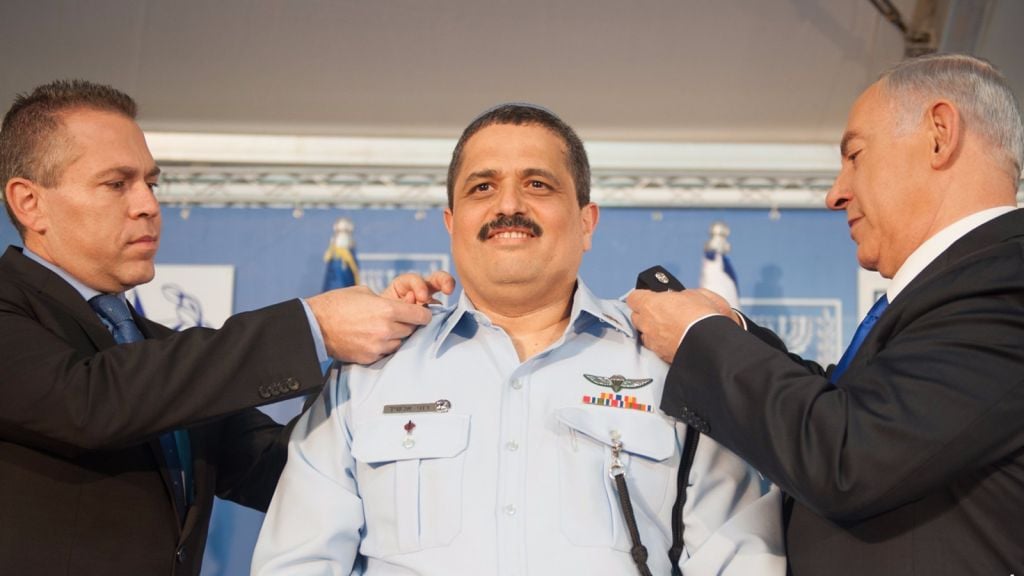
Alsheich’s strange behavior in the Netanyahu case, on top of the police’s inability to get its story straight on whether an alleged gang rape of a Jewish woman by a Palestinian man was nationalistic in nature, as claimed by the prime minister, leads Haaretz to pen a lead editorial accusing him of being a terrible top cop and little more than a pawn for Netanyahu.
“The protection of the prime minister’s wife is infuriatingly discriminatory in that it breaches one of the most basic principles of democracy – equality before the law. But the rape affair has set new heights of embarrassment for the police,” the paper writes. “In a democratic country the prime minister isn’t supposed to post incendiary messages on Facebook based on unfounded and partial information. But the police would be expected to protect the public interest of getting at the truth instead of dancing around panicked to the prime minister’s flute. Alsheich the savior has turned out to be deepening the crisis in the police. This is another failed appointment of the Netanyahu school, which prefers political or ideological loyalty over job skills.”






The Times of Israel Community.