

Ghosts of the past, ghosts of the present
The Hebrew press reveals details on suspected firebombers of a Palestinian family, discusses possible motives behind California mass shooting
 Add ToI as a Preferred Source on Google
Adiv Sterman is a breaking news editor at The Times of Israel.
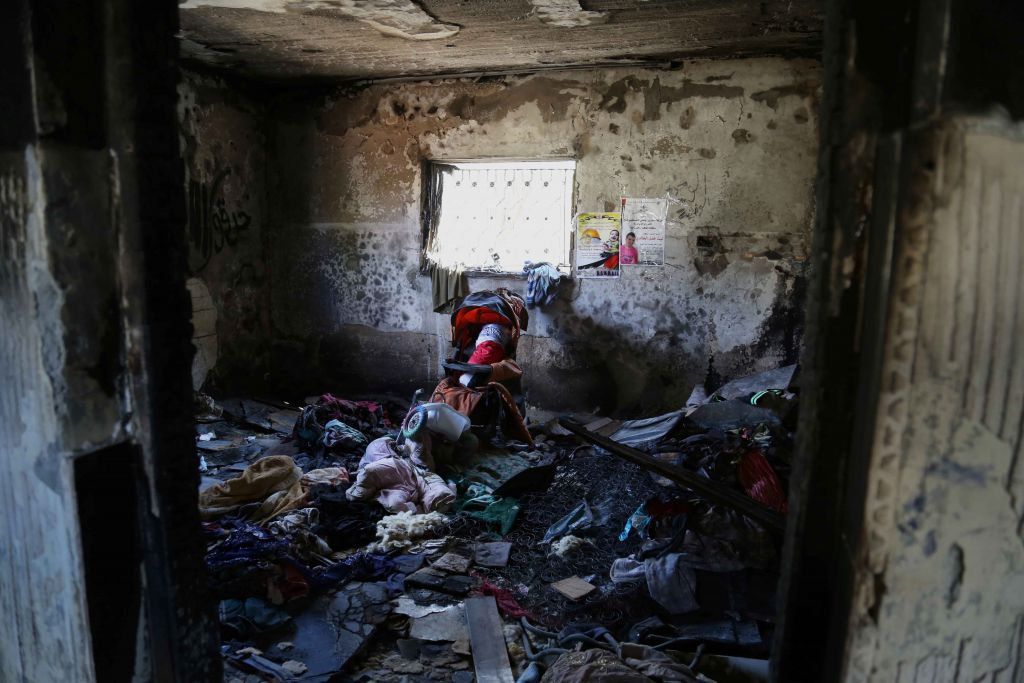
The fog surrounding “one of the worst cases of Jewish terrorism in recent years” — as security sources prohibited from further commenting on the affair have referred to it — has slightly dissipated after it is finally cleared for publication that Israel Police and the Shin Bet security service arrested multiple suspects who may have been involved in the fatal firebombing of the Dawabsha family home in the Palestinian village of Duma in July.
While details concerning the identities of the suspects remain under strict gag order, some of the Hebrew papers attempt to provide readers with just enough information necessary in order to get a comprehensive picture of the motives and ideologies that allegedly led the suspects to carry out the shocking attack. Other media outlets, however, have for the time being kept the lid on the story, publishing only the bare minimum allowed by the military censor, in fear, perhaps, of prematurely uncovering some uncomfortable truths regarding the extremist sentiments that have managed to strike roots on the fringes of some Jewish settler communities in the West Bank.
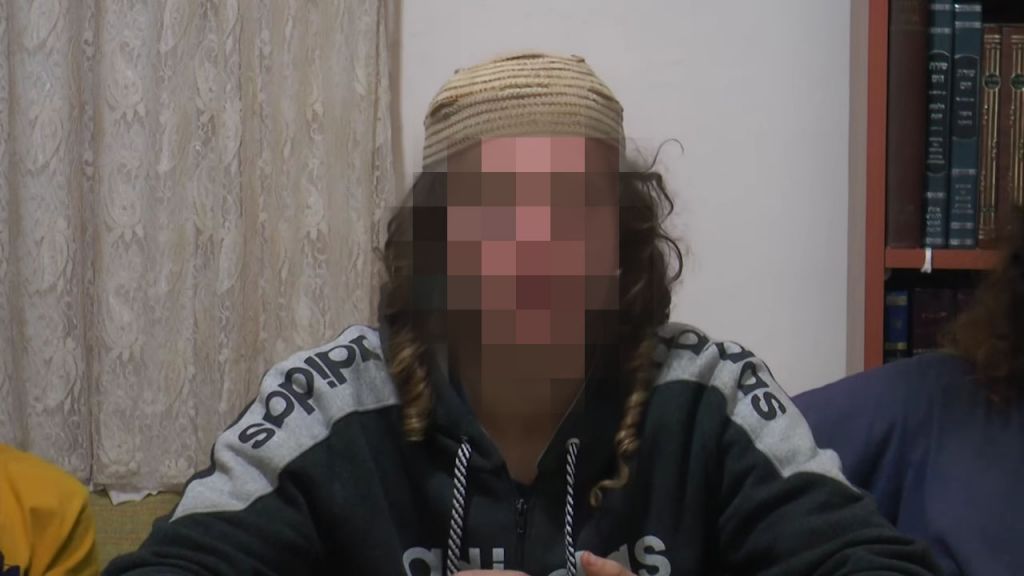
Yedioth Ahronoth leads with large, pixellated images of three of the alleged attackers, along with the headline “The arrested of the Jewish terror.” In what seems to be a deliberate choice on part of the daily, the large knitted skullcaps and massive, traditional Jewish sidelocks supported by the three are not blurred out like their faces, highlighting the suspects’ apparent connection to the anti-authoritarian, Hilltop Youth movement in the West Bank.
Nahum Barnea, one of Yedioth’s top columnists, goes as far as calling the suspects “the third generation of the [Jewish] underground,” in reference to a group of West Bank settlers who in the late 1980s carried out attacks against leading Palestinian public figures, and even plotted, unsuccessfully, to destroy the Al-Aqsa Mosque atop of the Temple Mount. The paper, it should be noted, also presents the version of the father of one of the suspected firebombing suspects, who vehemently asserts that while he “hates the state’s institutions,” he is nevertheless “against violence.” The suspect, the father quoted by Yedioth continues, “was far from the scene of the incident on that night.”
Israel Hayom dedicates a noticeably smaller headline than Yedioth to the developments in the Dawabsha case, and chooses to focus on the Palestinian family struck by the apparent terrorist attack, rather than on the alleged perpetrators of the firebombing. While the Israeli daily clearly highlights that the suspects are members of an extremist Jewish terrorist group, no blurred out photos are to be found, and instead, the article presents images of the torched Dawabsha family home, and of three-year-old Ahmed Dawabsha, who is still unaware of his parents death in the attack, at a hospital bed.
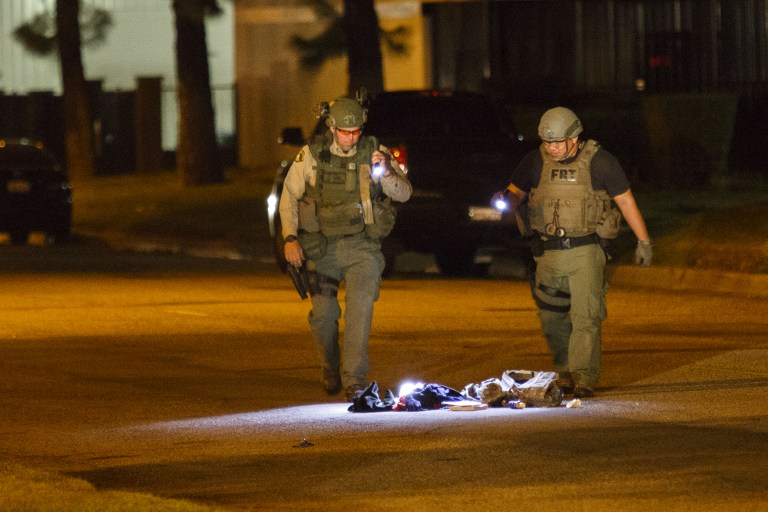
The bulk of Israel Hayom’s front page is dedicated to the mass shooting overseas, in San Bernardino, California which left 14 dead and dozens wounded. In this case, the paper stresses an assertion by San Bernardino officials, according to which one of the killers, 28-year-old Syed Farook, “returned from [a visit] to Saudi Arabia as an extremist Muslim.” The attack, Israel Hayom analyst Boaz Bismuth determines, was not your typical, all-American mass shooting, as it seems to have been meticulously planned, and was therefore most probably driven by extremist fervor.
Even as security forces struggle to fully understand what exactly went down during the attack, Bismuth confidently asserts that “the wind of Jihad is [now] blowing in the United States,” and posits that it is “incredibly likely” that Islamic terrorism has reached America, “even if under the directive of the president [Barack Obama], one can not call it that by name.”
The headlines and articles in Haaretz deal for the most part with the same topics as the other two aforementioned papers, but one story on the daily’s front page stands out nonetheless. Haaretz writer Ofer Aderet brings us an interesting bit of forgotten Israeli history about a Bat Yam insurance agent, who is the first person known to have ever had a sex change operation. Carl Bear, born to a Jewish family in Germany in 1885, was originally believed to be female, though the individual’s physical characteristics were soon classified by doctors as “so strange,” that Bear’s sex could not be determined.
Bear was raised as a girl until deciding later in life to identify as a male, after describing his uncomfortableness with being labeled a female. In 1906, Bear underwent a sex-change, and was active in the German feminist movement as well as in Jewish organizations until fleeing the Nazi regime to mandatory Palestine in 1937. Under British rule and after the establishment of the Jewish state, Bear lived an extremely rich and provocative life, marrying several times and engaging in numerous affairs with Israeli women. He died in 1956, and is buried in Tel Aviv’s Kiryat Shaul Cemetery.








The Times of Israel Community.