

Making it official
Netanyahu is formally tasked with building a coalition, and the Hebrew press highlights parties’ horse-trading and Netanyahu’s acceptance speech
 Add ToI as a Preferred Source on Google
Marissa Newman is The Times of Israel political correspondent.
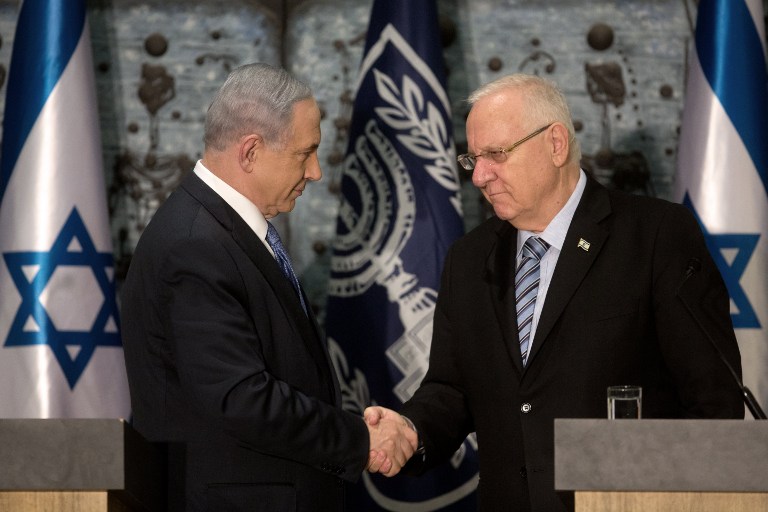
Prime Minister Benjamin Netanyahu was officially tasked with forming a coalition on Wednesday evening, and with a 28-day window (although subject to extension), the sparring over coalition dealings and ministerial appointments is in full swing.
With talks set to kick off officially on Thursday, the Hebrew newspapers highlight the president’s not so thinly veiled criticism of the prime minister during the ceremony, while outlining what the future cabinet will look like and the key points of contention between the political parties.
Haaretz plays up the president’s misgivings, Yedioth Ahronoth spotlights the coalition squabbling already a-brewing, and Israel Hayom – as is its wont — is simply gung-ho.
Yedioth Ahronoth’s cover story is Moshe Kahlon’s boycott of a meeting with Netanyahu on the first day of coalition talks. “The reason: Netanyahu gave key positions to the ultra-Orthodox related to housing reform – without consulting him or negotiating with him,” it reports. Netanyahu was reported to have promised MK Moshe Gafni the Knesset Finance Committee, an office coveted by Kulanu and formerly held by the ultra-Orthodox Knesset member.
The paper proceeds to list which Knesset members want which offices, portending a lot of resentful Knesset members when a coalition deal is ultimately signed. Within Likud, it writes, the first 20 MKs on the list are seeking a portfolio (with 18 portfolios overall). Specifically, Gilan Erdan, Silvan Shalom, and Yuval Steinitz want the Foreign Ministry, Yisrael Katz wants the treasury, Miri Regev wants housing or education, and Moshe Ya’alon wants to keep his position as defense minister (a position Jewish Home leader Naftali Bennett and Yisrael Beytenu leader Avigdor Liberman are both also demanding). Benny Begin and Yariv Levin want the Justice Ministry. Competing with Miri Regev, MKs Tzipi Hotovely, Zeev Elkin, and Gila Gamliel also have their eye on the Education Ministry. And that’s just within Netanyahu’s party.
The paper features a handy chart of the likely coalition partners’ demands and the promises made to them – including the Jewish Home’s demands for defense/foreign affairs, and education/justice/religious affairs. Likud has said the right-wing party will only receive two portfolios, it reports.
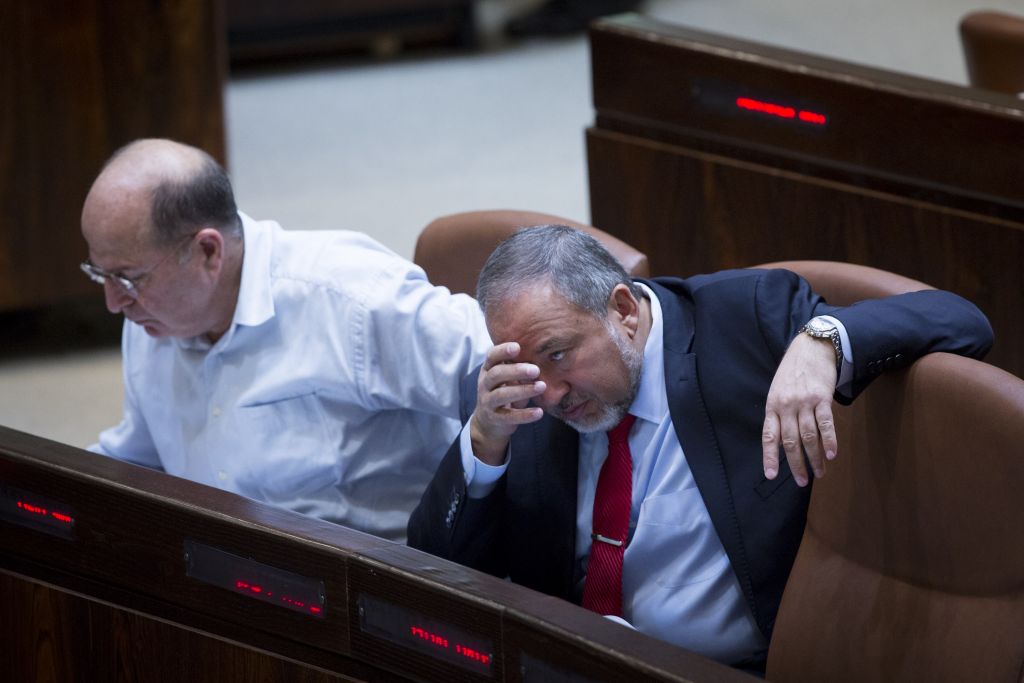
Haaretz also speculates on the portfolio distribution, writing that Ya’alon will likely stay in his role, Liberman will be offered to remain in the Foreign Ministry, and Shas will be handed the Interior Ministry. “The main obstacle” in the coalition talks in Bennett’s party, it reports. Erdan or Levin will be justice minister, and Begin will be intelligence minister, it writes, adding that there are increasing indications that the number of ministers will jump from 18 to 24.
Shas’s Aryeh Deri and Liberman are opposed to increasing the number of portfolios, even though the decision would help their parties, it notes. With regard to Kahlon, the paper writes that Gafni would receive the Finance Committee only if he committed to advancing Kahlon’s economic reform.
Both Yedioth and Haaretz emphasize comments by President Rivlin rebuking the prime minister for his warning on election day that the Arabs are voting “in droves.” The latter places Rivlin’s quote — “Those afraid of ballots in the box will ultimately receive stone-throwing in the streets” — in its headline, while Yedioth notes in its report that the president’s urging that US ties be mended was also a critique of Netanyahu.
Writing for Yedioth, columnist Sima Kadmon highlights Rivlin’s remarks and the chilliness between the two long-time rivals during the joint press conference. But beneath her sardonic presentation of the event, Kadmon, a fierce critic of the prime minister, also appears to be somewhat placated by Netanyahu’s speech in which — among other things — he pledged to make peace, fix the cost of living, and work with neighboring Arab countries.
“Netanyahu’s speech did a 180 from the remarks that came out of his mouth only 9 days earlier,” she writes. “The viewers at home, those not from Netanyahu’s camp – namely the left, the Arabs, all those non-Zionists – could briefly feel that their prime minister is not inciting against them. If they closed their eyes, they could experience for a few seconds what a prime minister of all of us is… Even the challenges Netanyahu presented were suddenly normal. Suddenly talking about peace again, and life itself is not only about Iran, but also the cost of living and housing prices, and recognition of the need to preserve our relationship with the US,” she writes.
Israel Hayom omits Rivlin’s criticism of the prime minister entirely, though it includes the president’s urging to heal the social wounds and mend US ties. It notes that the ultra-Orthodox parties are poised to receive the same positions they held in 2009 — if rumors are to be believed.
“The prime minister is trying to convey the message to the leaders of the Haredi parties that he views them as the Likud’s natural partners, and therefore wants to restore the alliance they had before, although in the last government the ultra-Orthodox were kept out [of the coalition].”
Not having received the memo that Kahlon was boycotting talks on Thursday, Haaretz dedicates its editorial to the Kulanu leader, addressing him officially as Israel’s next finance minister.
“The first appointment Prime Minister Benjamin Netanyahu announced was that of Moshe Kahlon as finance minister,” it writes. The editorial urges Kahlon to deal with housing prices, and dissolve the Israel Lands Authority and the JNF in the process.
“Kahlon has the potential to be an excellent finance minister. He supports reforms, which are always preferable to randomly increasing the deficit, and has social sensitivity and concern for the needy. In view of the forces that will act against him, he will have to remain loyal to the interests of the broad public that elected him. It’s important that Netanyahu back him up.”



The Times of Israel Community.