

UK boy’s school assignment spells terror alert
Muslim student accidentally writes about his family’s ‘terrorist’ house; he meant ‘terraced’
 Add ToI as a Preferred Source on Google
Renee Ghert-Zand is the health reporter and a feature writer for The Times of Israel.
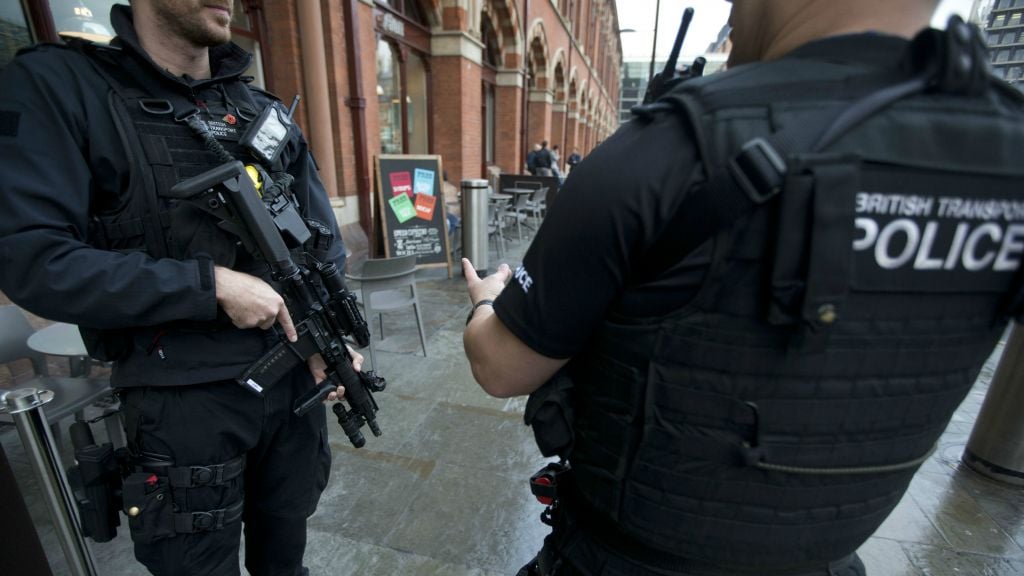
Those who think that spelling doesn’t matter might want to think again after what happened to a Muslim schoolboy in Lancashire, England.
The 10 year old wrote in an English class assignment last month that he lived in a “terrorist house.” Adhering to the 2015 Counter-Terrorism and Security Act, the boy’s teacher reported him to the police instead of just sending him home with spelling corrections homework. According to the law and its attendant de-radicalization strategy called, “Prevent,” teachers must report any suspected terrorist activity to the authorities.
The boy, who has not been named, was interviewed by local police and social services, and the contents of a computer at his home were examined, according to the Guardian Wednesday. Anti-terrorism units were not brought in on the investigation.
However, had the teacher asked the boy to clarify what he meant, she would have understood that instead of “terrorist,” he had intended to express that the dwelling was a “terraced” house. Terraced houses have been popular in Britain historically, and are similar to American row houses, where identical dwellings are built in a row and share side walls.
Once it was discovered by authorities that all that was involved had been an innocent spelling error, no further action was taken.
“We are absolutely disgusted that this has happened in our family,” a female relative of the boy is heard saying in a video made by the BBC. The woman’s face has been blurred, but her hijab, or head scarf is visible.
“We’ve heard about it with a 30-year-old man, but never with a 10-year-old child. He became more isolated, he wasn’t talking to anybody else, he wasn’t sleeping or eating properly. He was just hiding away in a blanket,” she said about the boy’s apparently traumatic experience.
The BBC reported that last year, 1,355 people under the age of 18 were referred to the UK’s de-radicalization program, compared with 466 in the previous 12 months.
Miqdaad Versi, assistant secretary-general of the Muslim Council of Britain, the UK’s largest umbrella group for Islamic associations issued a statement raising a red flag about the “Prevent” strategy.
“There are huge concerns that individuals going about their daily life are being seen through the lens of security and are being seen as potential terrorists rather than students,” he said.
“Prevent” has been controversial, even within the Muslim community itself. Asid Sadiq,president of of the National Association of Muslim Police, told the Guardian that he “think[s] Prevent is working quite well. It has made a difference.”
By contrast, former senior police officer Dal Babu said many in the Muslim community see the program as tantamount to spying. He also claimed that singling Muslims out was counterproductive, saying that counter-extremism authorities “should not be putting Muslim community in a separate box when it comes to safeguarding vulnerable young people.”
The UK incident is reminiscent of the arrest last September of 14-year-old Ahmed Mohamed, a Muslim boy in Texas who proudly brought a homemade clock to school that was mistaken for a bomb. After a media storm, he was later invited to the White House.







The Times of Israel Community.