

Who’s harming the West Bank environment?
The PA complains about settlements thwarting peace, but it’s doing a great deal itself to undermine coexistence

 Add ToI as a Preferred Source on Google
Avi Issacharoff, The Times of Israel's Middle East analyst, fills the same role for Walla, the leading portal in Israel. He is also a guest commentator on many different radio shows and current affairs programs on television. Until 2012, he was a reporter and commentator on Arab affairs for the Haaretz newspaper. He also lectures on modern Palestinian history at Tel Aviv University, and is currently writing a script for an action-drama series for the Israeli satellite Television "YES." Born in Jerusalem, he graduated cum laude from Ben Gurion University with a B.A. in Middle Eastern studies and then earned his M.A. from Tel Aviv University on the same subject, also cum laude. A fluent Arabic speaker, Avi was the Middle East Affairs correspondent for Israeli Public Radio covering the Israeli-Palestinian conflict, the war in Iraq and the Arab countries between the years 2003-2006. Avi directed and edited short documentary films on Israeli television programs dealing with the Middle East. In 2002 he won the "best reporter" award for the "Israel Radio” for his coverage of the second intifada. In 2004, together with Amos Harel, he wrote "The Seventh War - How we won and why we lost the war with the Palestinians." A year later the book won an award from the Institute for Strategic Studies for containing the best research on security affairs in Israel. In 2008, Issacharoff and Harel published their second book, entitled "34 Days - The Story of the Second Lebanon War," which won the same prize.
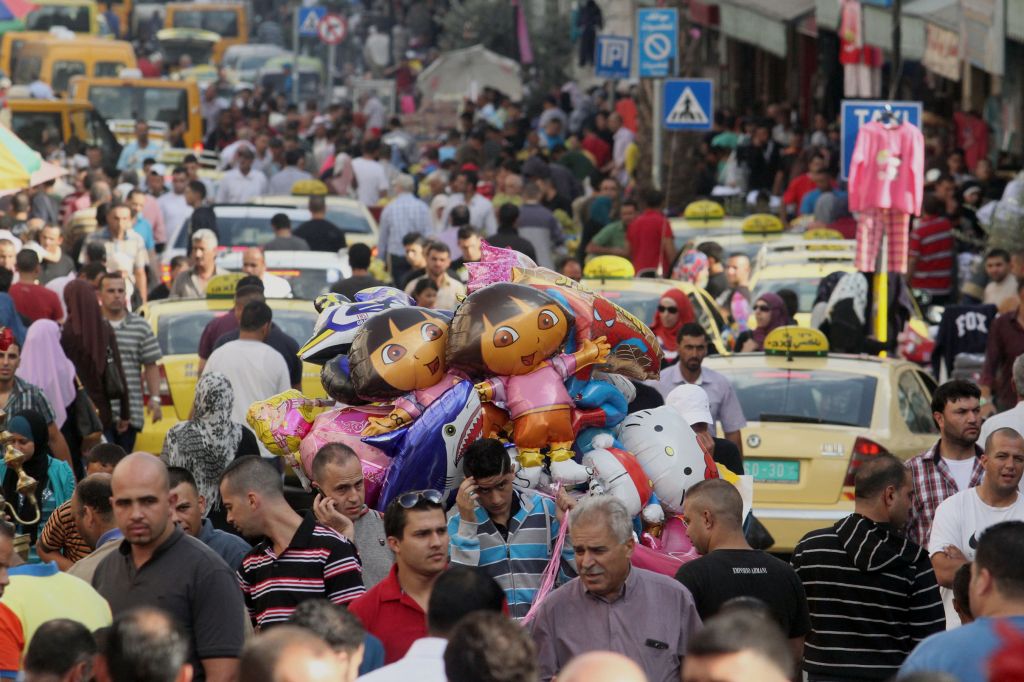
RAMALLAH — Last Tuesday marked the first day of the Feast of the Sacrifice, the Eid al-Adha holiday. The streets of Ramallah had never been so empty at mid-day. Clock Square (which has been renamed Arafat Square) and Manara Square, usually the most bustling places in the city, were virtually deserted. Everyone was celebrating, moving from one house to the next, from one relative to another, visiting family members in other cities and villages. In the residential neighborhoods, groups of men could be seen visiting one house after another.
“That’s how it is here,” said B., a friend from a different Palestinian city. “So far today, I have visited 40 homes.”
All restaurants were closed, save a few that serve tourists or journalists with nothing better to do. The city had fallen into the deep slumber of the Feast of the Sacrifice and appeared relaxed and peaceful. Alongside the main road, just south of the al-Am’ari refugee camp, a butcher slaughtered one sheep after another, leaving behind piles of innards and rivulets of blood. At the entrance to al-Am’ari, not far away, a large billboard caught the eye. It called upon the public to protect the environment. The image on the poster depicted Palestinians cleaning the streets as jeeps bearing Stars of David pollute and contaminate the land.
Many of the Palestinians’ grievances against Israel for building in the settlements appear well-founded. Each Jewish home built outside of the large settlement blocs in the West Bank seems to reduce the likelihood of an evacuation and a two-state solution. But on the other hand, the support and admiration that the official Palestinian media expresses toward terrorists who organized suicide bombings or murdered children — such as the Fatah Facebook page, which consistently praises the murder of Israelis — does nothing to promote a better future for the two nations.
A poster, designed by the PA Ministry of Environmental Affairs, that explains to every child that the Jews contaminate Palestinian land, does little to encourage coexistence. It is no way to protect the environment, or to promote peace.





The Times of Israel Community.