

100 European legislators visit Auschwitz, urged to be tougher on anti-Semitism
Ministers and members of parliament attending 2-day Krakow confab are handed drafts of stricter laws on hate speech, education, and Nazi memorabilia trade
 Add ToI as a Preferred Source on Google
Yaakov Schwartz is The Times of Israel's deputy Jewish World editor
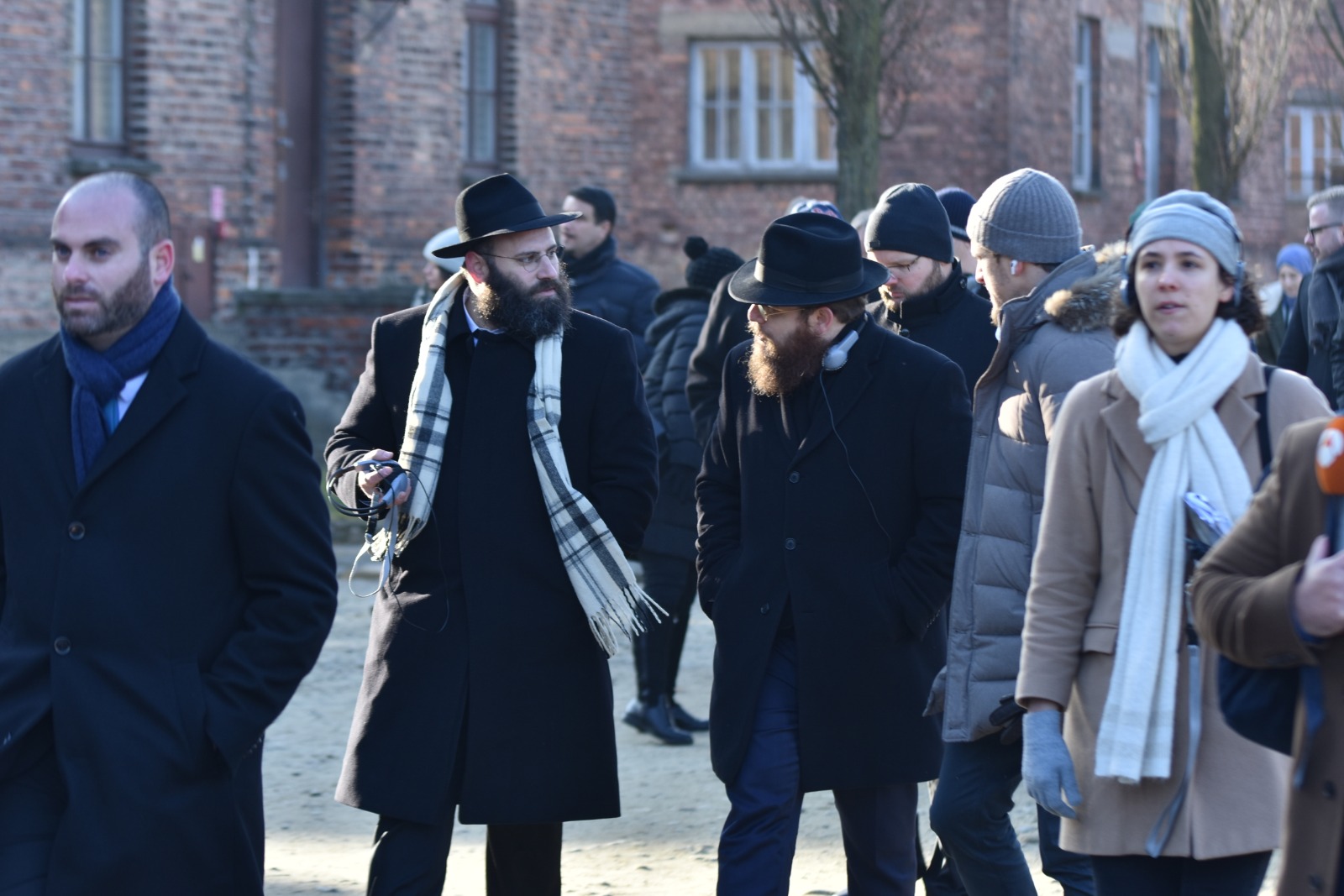
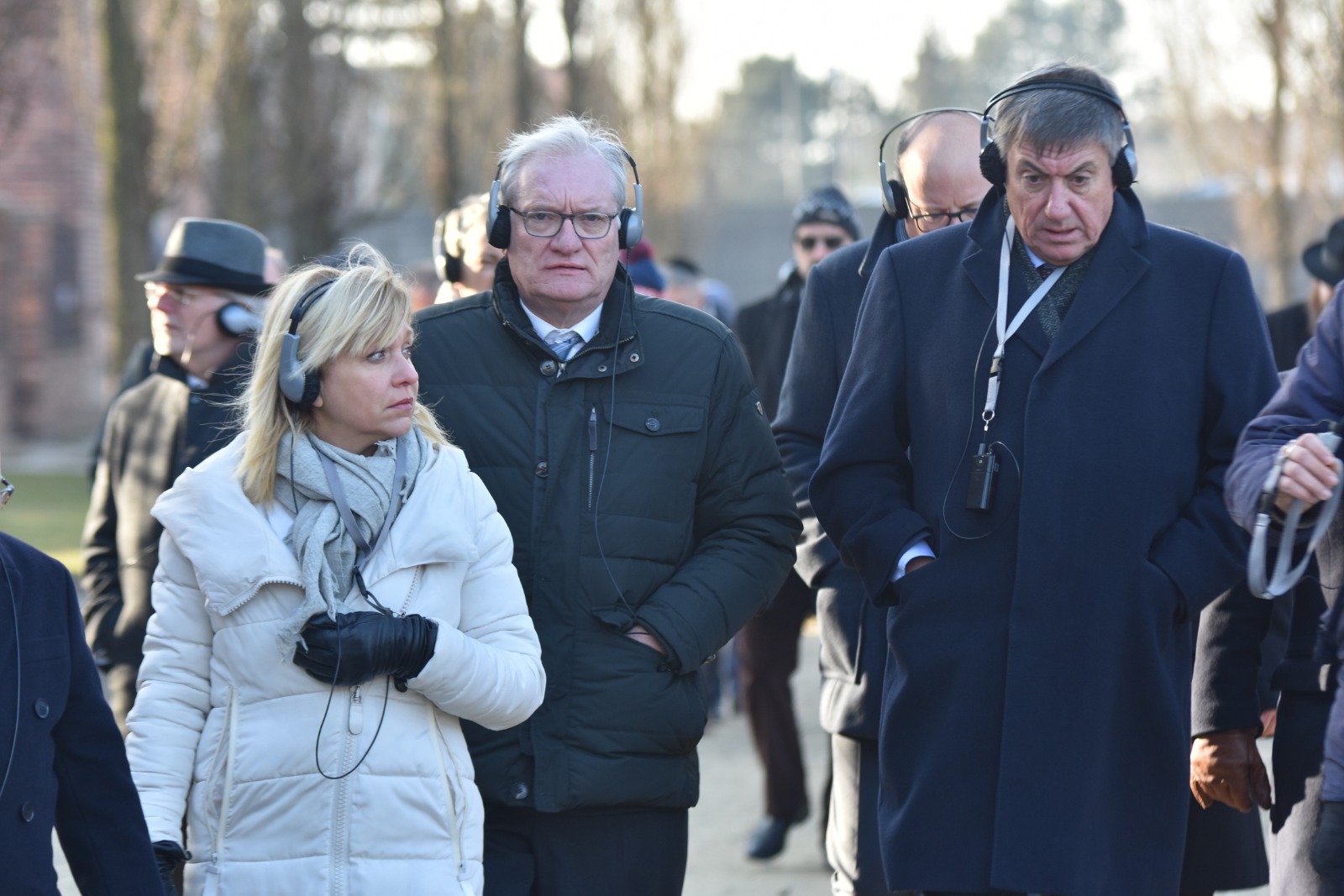

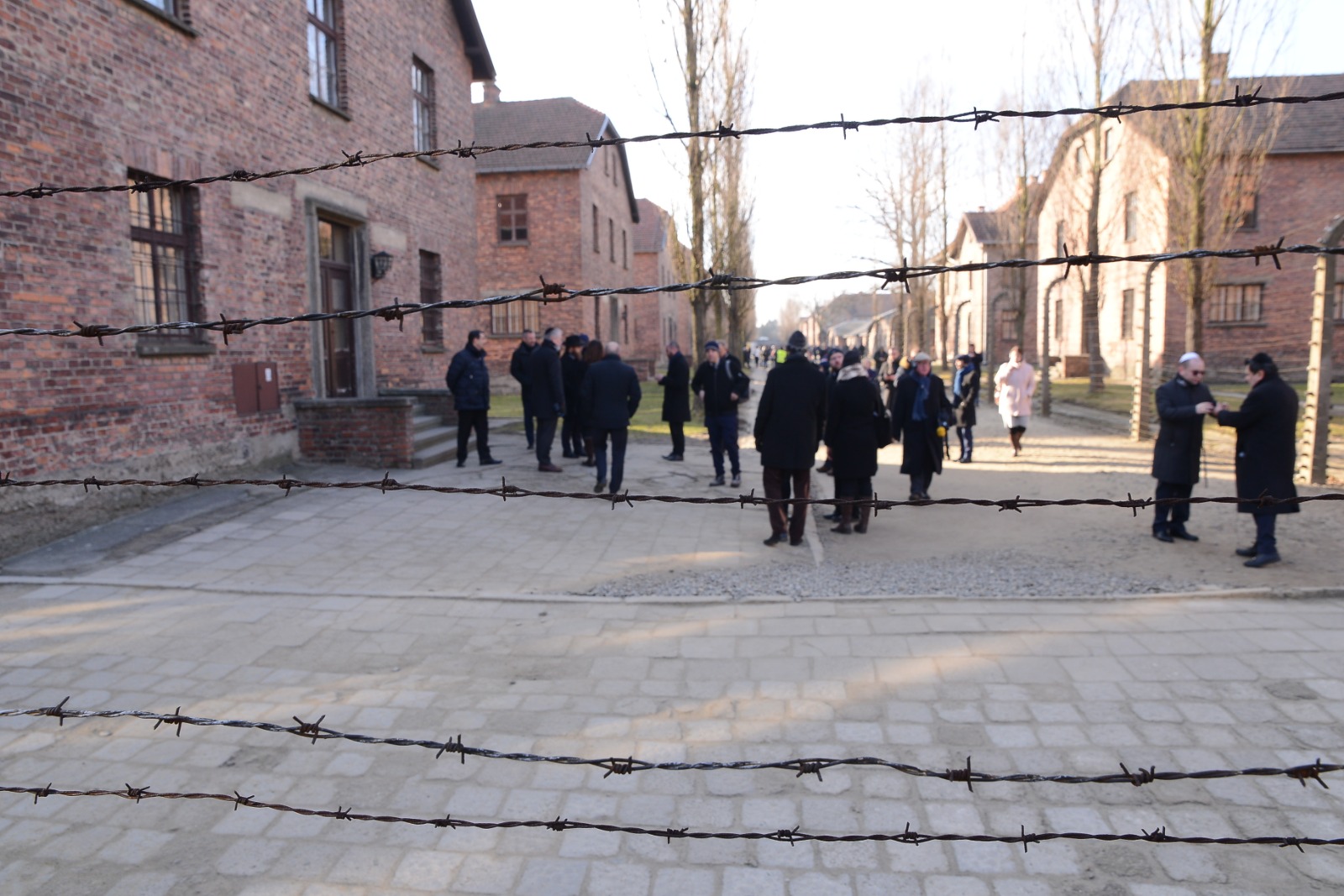

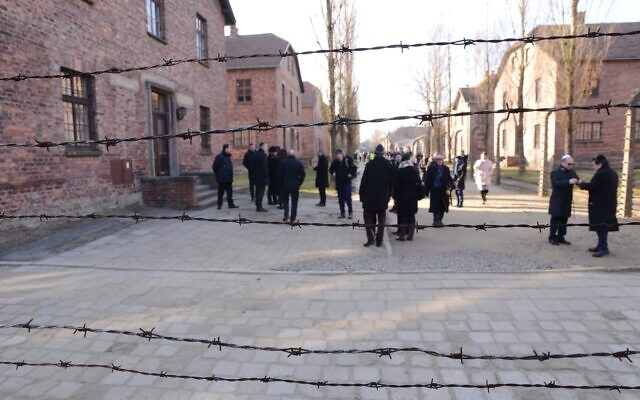
KRAKOW, Poland – A delegation of over 100 European ministers and parliamentarians toured the Nazi death camps of Auschwitz-Birkenau on Tuesday, with a coalition of European Jewish leaders encouraging the legislators to strengthen anti-Semitism laws in their respective countries.
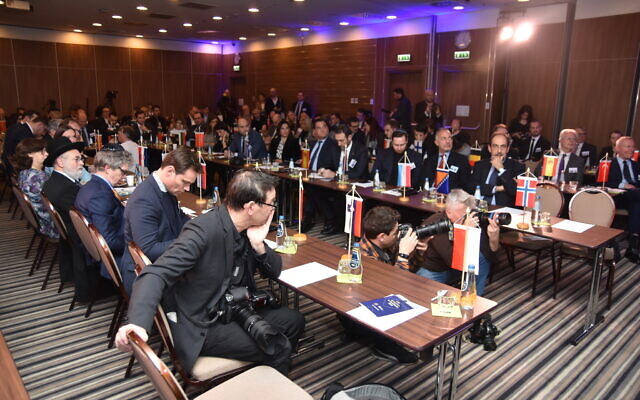
The visit was part of a conference that ran January 20-21 — just ahead of the anniversary of the camp’s liberation on January 27, 1945 — that urged attendees to amend or adopt laws regarding anti-Semitic stereotyping, educational initiatives, and the sale of Nazi memorabilia for profit or “personal macabre interest.”
The text was drafted in concrete legislative language by the delegation’s sponsors, the European Jewish Association (EJA) and the European Action and Protection League (APL), with additional partnership from B’nai Brith Europe, the Simon Wiesenthal Center, the European March of the Living network, and communities and organizations throughout Europe.
“I had the chance to speak with many of the participants of this delegation, and I was satisfied to see that many of them felt that this visit has made a huge impact on them,” EJA head Rabbi Menachem Margolin told The Times of Israel.
“They are willing to work with us in drafting the legislation we have promoted at the conference, and we have no doubt that once country after country will adopt this legislation, the situation will be much better, since it will simply ban many expressions of anti-Semitism — which will reduce the incitement, and naturally it will reduce, without question, the incidents,” Margolin said.
The last decade has seen a rise in deadly anti-Semitic attacks across the continent, including violent attacks in Belgium, France, and Germany.
Lebanese businessman Abdallah Chatila received the King David award at the conference. Chatila recently bought a cache of Nazi memorabilia on auction for 600,000 euros ($660,000) and gave the items to the Keren Hayesod foundation, which in turn gave them to Israel’s Holocaust memorial center, Yad Vashem. The businessman cited as motivation the desire to prevent the items from falling into the hands of Nazi fetishists.
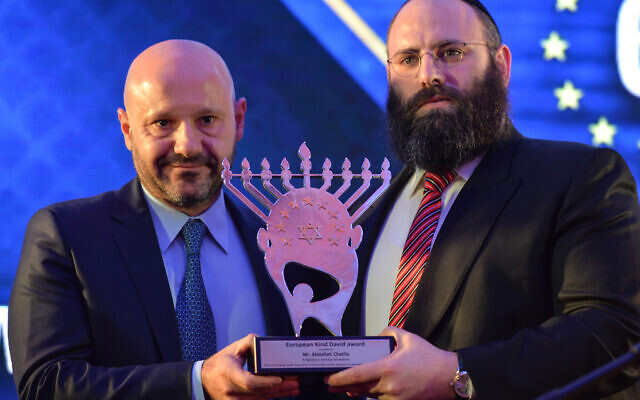
Chatila said he was personally affected by the increasing violence against Jews in Europe, as the mother of a close friend of his was among four murdered in a 2014 shooting attack on the Jewish Museum of Belgium.
“After her mother was killed, my friend was never the same again,” Chatila told the conference. “Not just because she lost her mother, but because she was the child of a Holocaust survivor who came from the camps, and she thought she was able to escape hatred – but in the Jewish Museum, in Brussels, in Europe, in the center of the world, she was killed along with three others. This is not possible. Not nowadays.”
“We have a responsibility to stand up for ourselves and do whatever we can in order to better our situation,” APL head Rabbi Slomo Koves told The Times of Israel. “We can’t just stand on the side and say that the situation is bad and wait for others to do the job.”

Koves, who is also the executive rabbi of the Chabad-affiliated EMIH community in Hungary (Unified Hungarian Jewish Congregation), said that anti-Semitism has been successfully lowered in Hungary following 30-year highs that culminated in the election of members of the anti-Semitic Jobbik party to parliament who openly made “racist and anti-Semitic remarks.”
“We at the Jewish community realized that we have to come together and unite on the issue of fighting anti-Semitism, and this is how we founded the APL,” he said.
According to Koves, the APL’s goal is to collect extensive data, which is then used to determine what actions can be taken within a given country’s legal framework to combat anti-Semitism.
Among the organization’s achievements, Koves said, is the creation of a monitoring system that tracks and reports anti-Semitic attacks in Hungary on a monthly basis, and the opening of 100 legal cases on behalf of individuals and the community as a whole, which are fighting issues spanning from Holocaust denial to anti-Semitic verbal assaults or physical attacks. The APL has also seen a handful of legislative changes based on its recommendations, and has recommended over 400 textbook revisions “to improve content in regard to Jews, anti-Semitism, Holocaust history, and the modern State of Israel,” he said.
Koves said he would like to see the program expand into an additional 14 European countries with a significant Jewish population.










The Times of Israel Community.