

Fractured union: Israel has all but given up on the EU
Netanyahu increasingly considers ties with Brussels a ‘lost cause,’ believing he can reap same benefits by improving relations with individual member states. Many Israelis agree

 Add ToI as a Preferred Source on Google
Raphael Ahren is a former diplomatic correspondent at The Times of Israel.

December 11 was a cold and stormy day in Brussels.
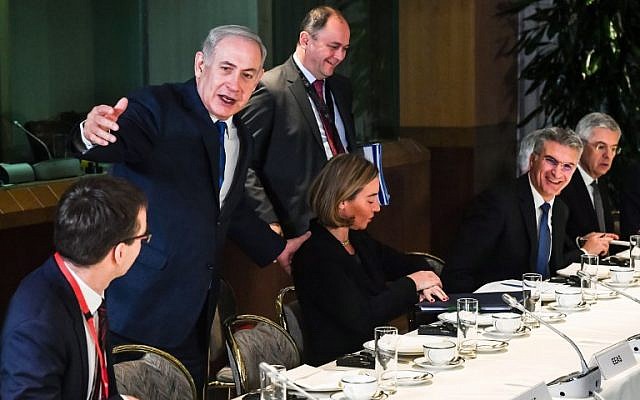
In the morning, European Union foreign policy czar Federica Mogherini welcomed Prime Minister Benjamin Netanyahu to the European Council headquarters by rebuffing his vision of the entire continent recognizing Jerusalem as Israel’s capital.
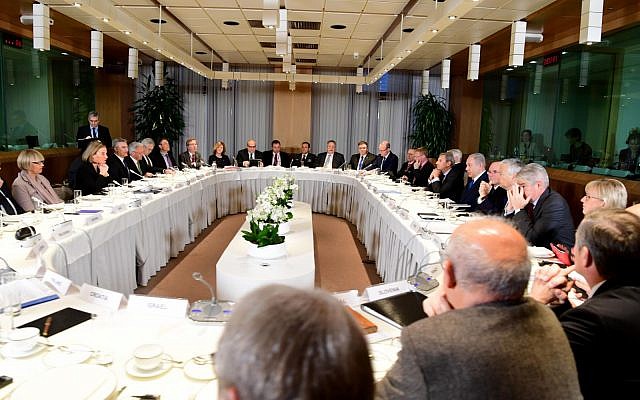
A little later, Netanyahu met with the EU’s 28 foreign ministers for a discussion he hoped could thaw the union’s tough stance on Israel’s policies vis-a-vis the Palestinians, but mainly showed him the Europeans were unmoved by his arguments.
The prime minister was then scheduled to meet with European Commission President Jean-Claude Juncker but cancelled the meeting on short notice. His office cited the inclement weather and the need for him to be present later that night at the Knesset for the first reading of a bill that would prevent convenience stores from opening on Shabbat.
In the early afternoon, Netanyahu’s motorcade was still making its way through the snowy streets of Brussels on the way to the airport — where the wings of his Boeing needed to be defrosted before takeoff — when Mogherini chose yet brasher words to reject the prime minister’s vision of European countries moving their embassies to Jerusalem.
“He can keep his expectations for others, because from the European Union member states’ side this move will not come,” she said at a press conference.
Netanyahu’s chilly day in Brussels further deepened an ongoing crisis between Israel and the EU. Bilateral relations have been tense for years, but the union’s pouring of cold water on the US’s recognition of Jerusalem, and Netanyahu’s perceived snub of Juncker, further entrenched a widening gulf between the two parties.
“Netanyahu feels it’s a lost cause,” a well-placed diplomatic source told The Times of Israel recently, adding that the premier now regrets that he even made the trip to Brussels.
“We’re in a very deep crisis. It’s a real, genuine crisis. And if things don’t change, we will hit a brick wall soon.”
The EU has long been a popular punching bag for Israeli politicians, with members of the coalition and some in the opposition agreeing that the union treats the Jewish state unfairly and often stands on the wrong side of history.
Brussels’ adamant opposition to settlement expansion and Israel’s demolition of Palestinian structures, as well as European funding of leftists nonprofits, have angered right-wing Israelis for years.
But the bad blood between Jerusalem and Brussels has reached such depths that some Israeli officials now believe Netanyahu has given up almost entirely on the EU.
Israel’s ties with the 28-member state union significantly worsened after the EU’s November 2015 decision to label settlement products. In its initial anger, Israel suspended contacts with the EU, but soon reinstated them. There were other signs of a detente, for example when a senior official in Brussels said in late 2016 that the union was willing to reconvene the EU-Israel Association Council, a bilateral forum on ministerial level, after a five-year hiatus.
But relations quickly turned south again. In July 2017, Netanyahu was overheard, during a visit to Budapest, calling the EU “crazy” for insisting on linking the advancement of bilateral ties to progress in the peace process.
Tensions were exacerbated after US President Donald Trump’s December 6, 2017, recognition of Jerusalem as Israel’s capital, a move the union vehemently opposed.
Last winter in Brussels — the de facto EU capital dubbed by Netanyahu’s aides as the “lion’s den” — the prime minister hoped to be able to change the union’s alleged pro-Palestinian leanings. But despite both sides reporting that the meetings were cordial and without any antagonism, in private conversations Israeli officials admit that Netanyahu flew back home deeply disappointed.
To add insult to injury, Brussels also assumed the role of chief defender of the Iranian nuclear deal after Trump announced the US’s withdrawal from the landmark pact on March 8. Brussels not only condemned the president’s move but also vowed to protect European companies from reimposed sanctions.
Israeli attacks on the union have since increased in frequency and intensity. Ministers openly accuse the EU of funding anti-Israel boycotts and even organizations with terrorist links.
Ties hit a nadir in June, when Netanyahu said he didn’t have time to meet with Mogherini during a planned trip to Jerusalem. In diplomatic terms, that was as big a slap in the face as there is. The official reason given was the prime minister’s busy schedule, but in leaked comments his aides made no attempts to deny he was sending a message.
Israel is fed up with the EU, they said, and if Mogherini thinks she can agitate against Trump’s Jerusalem recognition, fight for the Iran deal, and expect to be welcomed warmly in Israel, she’s wrong.
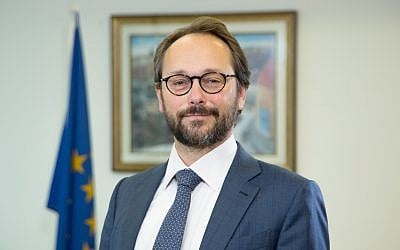
When an anonymous source accused the EU’s ambassador in Israel, Emanuele Giaufret, of having said the so-called Jewish nation-state bill “reeked of racism,” Netanyahu immediately summoned him for a dressing down at the Foreign Ministry.
Giaufret publicly denied he used that kind of language, wondering why he was getting censured merely based on unconfirmed reports in the media.
The EU stance
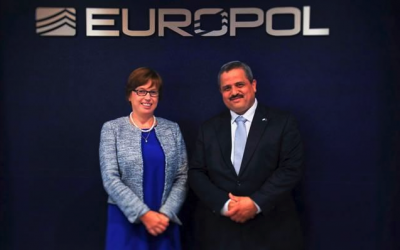
The EU has so far not hit back. European officials insist that bilateral relations remain strong, stressing fruitful cooperation in science, technology, and even the joint fight against organized crime and terrorism.
Last month, some senior EU professionals visited Jerusalem and Ramallah for a “review of modalities of EU engagement on the ground in support of a two-state solution.” The results of this review have yet to be published, but Brussels made plain it has “no intention to reduce the current level of EU funding, nor to review EU policies on the Middle East Peace Process.”
There may be political disagreements, European officials allow, but Jerusalem and Brussels share a commitment to democracy and Western values. Israelis should not forget that the union remains Israel’s top trading partner, they say.
Mogherini has been the Iran deal’s patron saint from the beginning, they also note, both because Europe has a vested economic interest in the Islamic Republic but also because Brussels believes it the best way to keep Tehran from going nuclear.
And the union has taken such a strong position on Jerusalem, officials say in private conversations, in order to preserve the little consensus on Middle East issues that is left.
They explain that in a time when countries like Hungary and the Czech Republic have become increasingly cozy with Israel, while others, like France or Ireland, continue to support the Palestinian cause, the union fears that its common positions on the core issues could unravel if it doesn’t defend them vigorously.
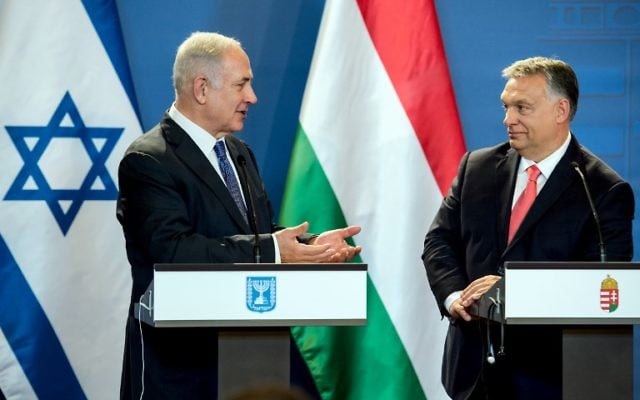
Despite these significant differences, the EU wants to continue fostering good ties with Israel. But the feeling is not mutual.
As long as the union continues to tie any progress in bilateral ties to progress with the Palestinians, efforts to upgrade bilateral agreements will remain frozen, the Israeli diplomatic official told the Times of Israel.
The EU is still championing the Iran nuclear deal, which we see as an existential threat. How are we supposed to treat to them?
If Israel cannot get Brussels to realize the absurdity of holding its ties with Jerusalem hostage to the peace process, “then I’m not sure there is any added value in our relationship,” the official added.
The benefits of EU-Israel cooperation can also be reaped through bilateral agreements with individual member states, according to this argument. EU officials contest that assertion, but many Israeli politicians back the prime minister’s line.
“By supporting NGOs that oppose Israel’s government and in some cases opposes Israel’s right to exist, the EU undermines our sovereignty and disrespects our democracy. The EU has taken a virtually uninterrupted position critical of Israel and supportive of the Palestinians,” Deputy Minister for Diplomacy Michael Oren said.
“How many anti-Semitic and even anti-European speeches from Abu Mazen [Palestinian leader Mahmoud Abbas] did it take for them to come out and condemn him? The EU is still championing the Iran nuclear deal, which we see as an existential threat. How are we supposed to treat to them?”
This week, Oren joined Public Security Minister Gilad Erdan in calling the EU “morally bankrupt” over its opposition to the reimposition of US sanctions on Iran.
Iran is in financial crisis but EU is morally bankrupt. Imagine threatening to sanction Europeans who refuse to do business with Iran and help it to fund terror – even in Europe.
— Michael Oren (@DrMichaelOren) August 7, 2018
Israel’s opposition, too, has many grievances with the EU, but argues that the current government should not yet give up on the union.
“Europe is a key trading partner and remains a significant player in the international arena,” Yesh Atid party leader Yair Lapid told the Times of Israel this week.
“The government can and should manage relations far better without compromising a millimeter on our values and priorities — the European Union is wrong on Iran, it must end funding for anti-Israel NGOs, it must end its involvement in our legal and political system and it must end the absurd labeling of products from the West Bank and Golan Heights.”
At the same time, changing the EU’s positions on these matters “requires smart diplomacy, real investment in our Foreign Ministry and hard work,” Lapid went on. “That isn’t happening under this government.”
All that is not to say that Israeli diplomats tasked with promoting relations with the EU are not constantly making efforts to advance bilateral agreements. They haven’t given up hope entirely, but in light of the unmistakable signals coming from political leaders, Israel is likely to continue giving the EU the cold shoulder.








The Times of Israel Community.