

Abbas receives draft constitution that aims to transition PA to full-fledged state
Document must be approved by public referendum, which PA president may hold off on scheduling to avoid punitive measures from Israel, which is already withholding billions in funds
 Add ToI as a Preferred Source on Google
Jacob Magid is The Times of Israel's US bureau chief
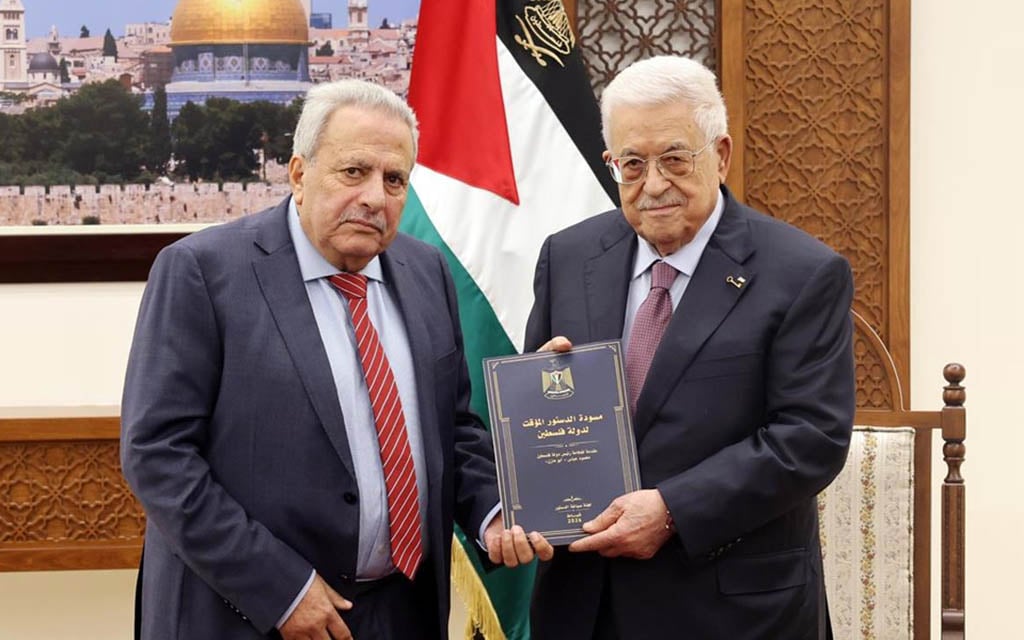
Palestinian Authority President Mahmoud Abbas received a draft constitution on Thursday that aims to transition the PA to a full-fledged state, Ramallah’s official Wafa media outlet said.
The PA already refers to itself as a full-fledged state, but this would be the first time the transition would be embedded in a constitutional framework. To date, the PA has been operating under the Palestinian Authority’s basic laws.
If adopted, it would likely have a limited impact on the ground for Palestinians, as Israel still maintains overall security control of the territories between the Jordan River and the Mediterranean Sea. However, the formal transformation to statehood status — one already recognized by over 160 countries around the world — may boost the PA’s legitimacy in certain international arenas.
Thursday’s submission of the 70-page constitution by drafting committee chairman Muhammad al-Hajj Qasim followed seven months of consultations on the matter. Abbas ordered that the draft constitution be submitted to the Palestine Liberation Organization’s Executive Committee for review before being made available for public feedback, a process that could take months to over a year, a Palestinian official told The Times of Israel.
It will then have to go through a public referendum and receive a majority support in order to come into effect.
However, Israel would likely seek to block such a vote from being held as it opposes the unilateral transformation of the PA into a state. Doing so would also likely be seen as a violation of the Oslo Accords, which envision Palestinian statehood resulting from direct negotiations between the parties. Prime Minister Benjamin Netanyahu has long opposed such negotiations, however, and Jerusalem has accused the PA of rejecting previous statehood offers.
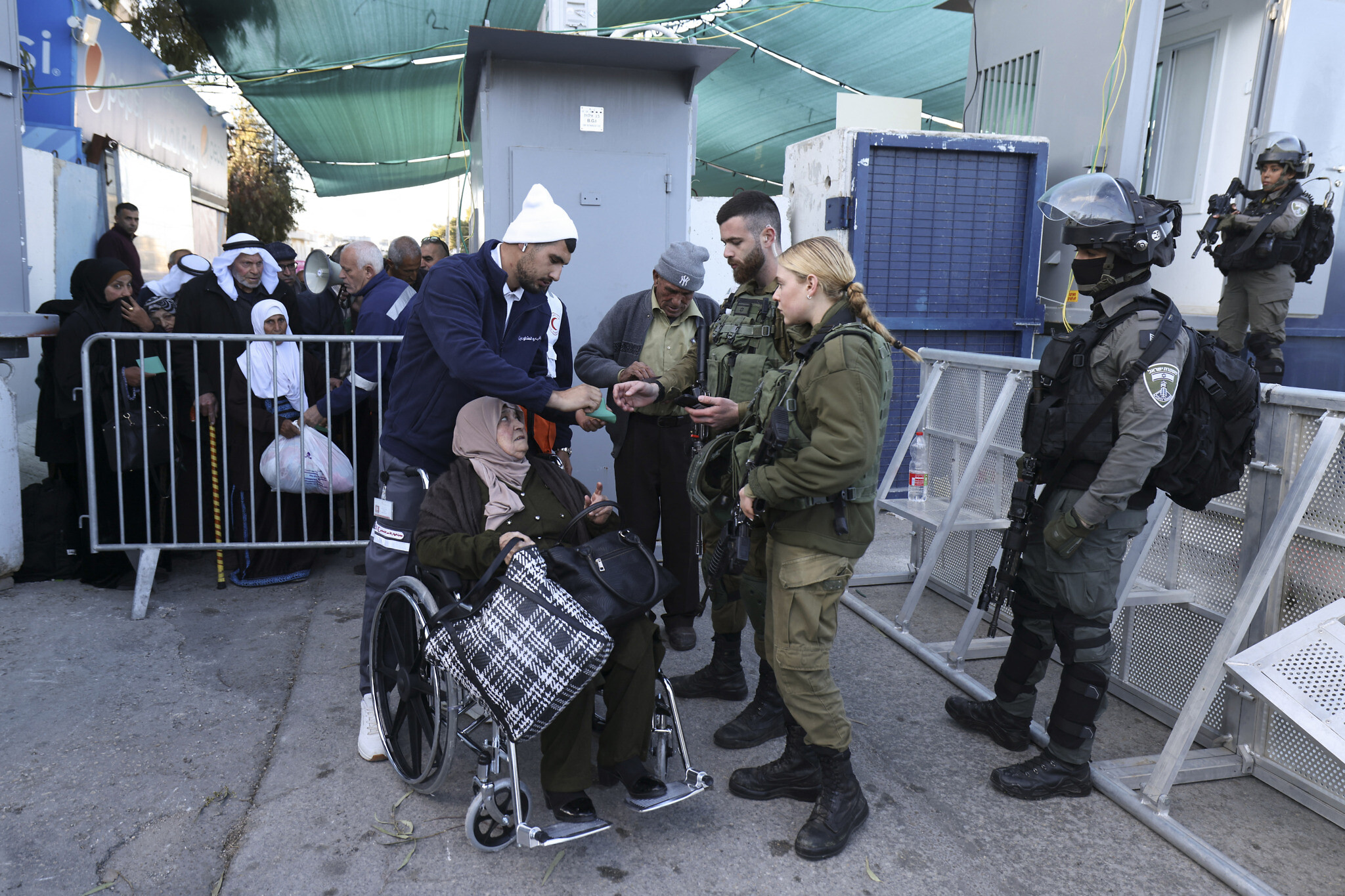
No date has been set for a referendum on the draft constitution, and analysts speculate that Abbas is not likely to rush the move in order to avoid punitive measures from Israel, which is already withholding several billion dollars in tax revenues that belong to Ramallah, significantly hampering its effort to pay public sector employees and continue to function.
But Abbas is also facing pressure both domestically and from the international community to reform the PA, and Ramallah is framing the new constitution as a key part of that process.
The draft constitution stipulates that if approved, some of its provisions would take effect before a presidential election is held, while other provisions would take effect afterward.
Qasim said in a statement that the draft constitution “preserves political pluralism and the separation of powers, while also empowering the legislative branch to exercise oversight and legislative authorities.”
The PA’s main parliamentary body, the Palestine Legislative Council, has not convened since 2007, when splits between Abbas’s Fatah party and Hamas rendered the body inoperative.
The draft constitution maintains the main elements of the existing hybrid parliamentary-presidential system, but stipulates that the latter position has a limit of two four-year terms.
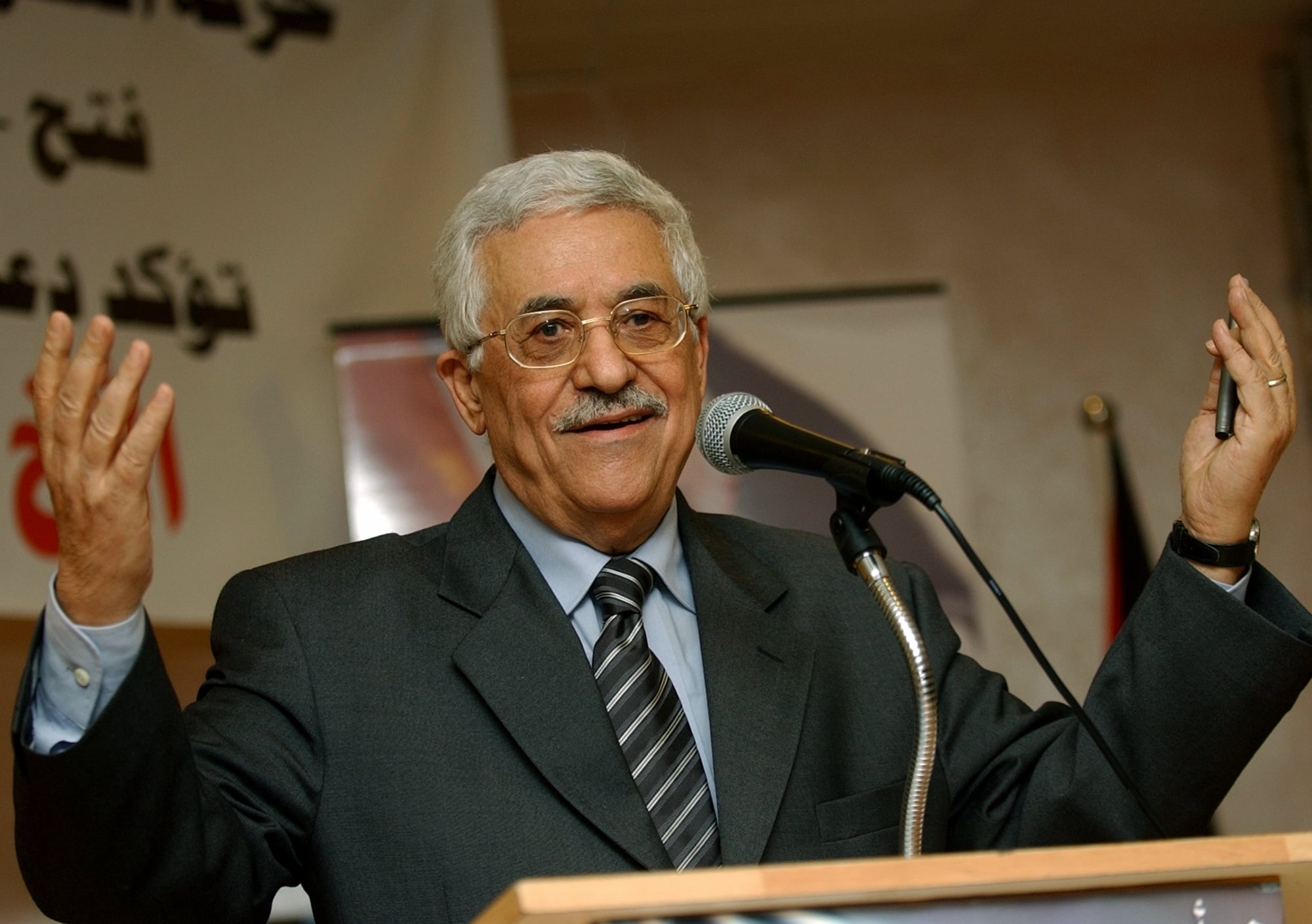
Abbas is currently serving in the 21st year of his first term after canceling several planned elections over what he says was Israel’s refusal to allow balloting in Israeli-annexed East Jerusalem. The decision is widely understood to also be due to fears of Hamas gains.
No date has been set for either the parliamentary or presidential elections in the PA.
However, PA municipal elections are slated for April and the first-ever direct, popular elections for the PLO’s Palestinian National Council are scheduled for November. The latter body selects the members of the PLO’s Executive Committee.
The PLO is supposed to be the overarching umbrella body representing Palestinians worldwide, whereas the PA is supposed to be a transitional administrative body providing services for Palestinians in the West Bank and Gaza.




The Times of Israel Community.