

AI rabbis? Some NY Hasidic groups see new technology as a challenge, others as a tool
Artificial intelligence that can answer questions of Jewish law may threaten congregants’ relationships with religious leaders, but also serves as a powerful educational resource
 Add ToI as a Preferred Source on Google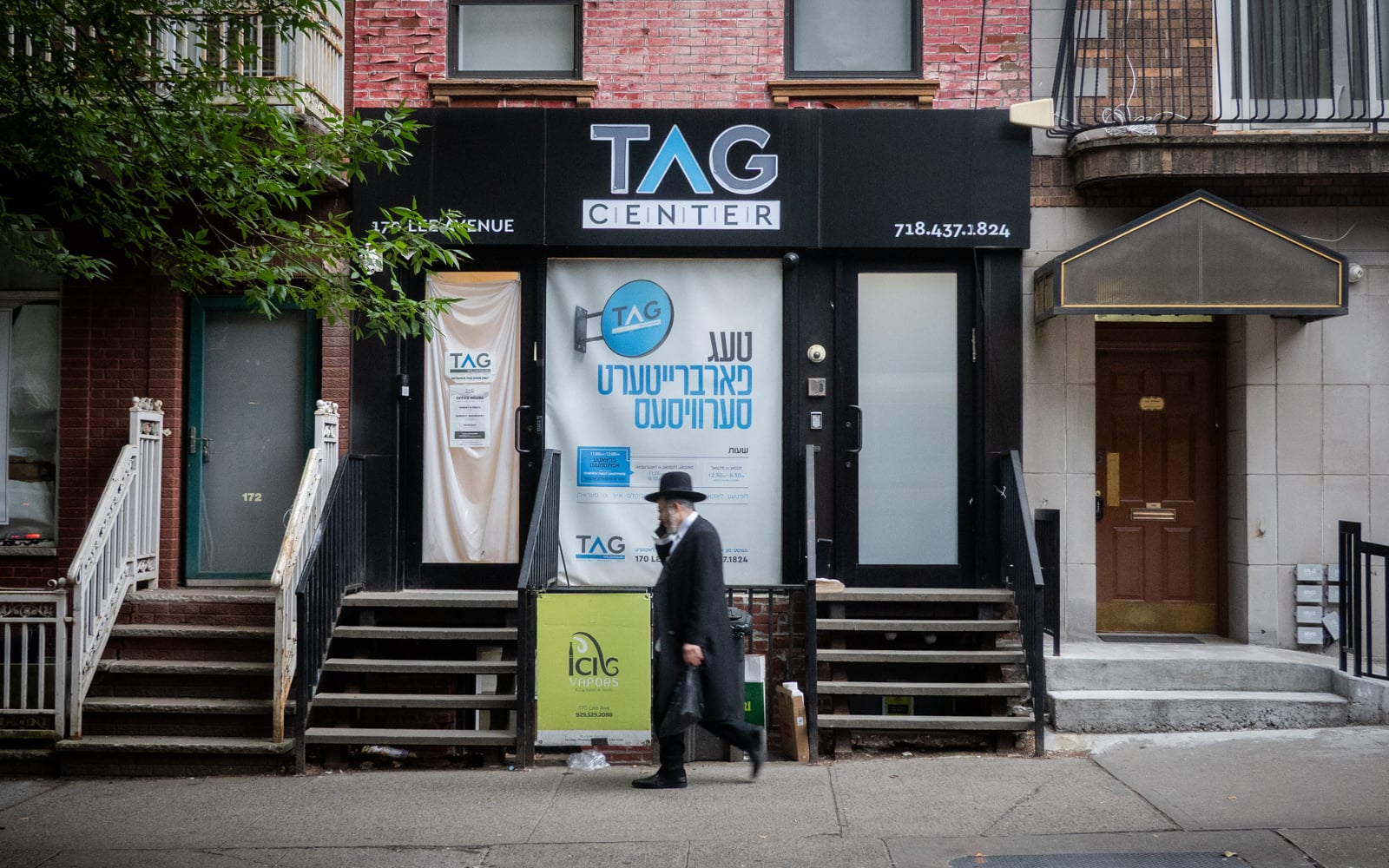
NEW YORK — In the heart of Brooklyn’s Satmar Hasidic community, a young man entered an electronics shop and made his way to the back office, where he placed a new iPhone on the table.
The store manager, Baruch Kahana, inspected the phone through thin-rimmed glasses. He plugged the device into a computer and began to tinker, blocking access to certain sites and apps to protect the customer from perceived technological risks. His objective: a “kosher” phone.
Kahana had koshered thousands of devices in his 10 years at the Technology Awareness Group (TAG), a nonprofit that says it helps religious Jews install filters on electronic devices “to retain our Yiddishe values.”
The customer’s request was a new challenge, though — he had asked Kahana to remove an AI assistant from WhatsApp, something Kahana had never done.
“Some temptations I am able to deal with myself. Some temptations I have to block,” the customer said.
Kahana got on the phone with TAG colleagues and began speaking in Yiddish. He improvised a solution and sent the customer home with an AI-restricted phone.
With the rise of large language models (LLMs) such as ChatGPT, Hasidic communities are grappling with the intersection between AI and the need to preserve religious customs. Some see artificial intelligence’s instant answers — including for religious questions — as a challenge to faith and religious leadership. Others are embracing the new technology as a potential educational tool or a way to ensure their lifestyles.
Groups that are amenable to new technology, such as rabbis affiliated with the Chabad-Lubavitch movement, are designing their own AI applications. Meanwhile, firms that serve more insular movements, including Satmar, are using AI to filter the internet and restrict access to LLMs to prevent responses on sensitive topics such as sex, politics and religion.
Keeping the faith
Clerics in other faiths are contending with similar issues, as AI platforms respond to users’ prayers and provide answers to religious queries. With the “faith tech” industry on the rise, Christians can now confide in an AI Jesus, while Muslims can turn to the Islamic chatbot WisQu.
Tensions between faith and technology are apparent in the insular Hasidic communities, though.
The Satmar community in Williamsburg, in the Brooklyn borough of New York City, lives a different lifestyle from many of its neighbors. The northern part of the neighborhood is known for its hipster affluence, while in the southern section, Hasidim speak Yiddish, attend their own schools and stick to kosher eateries.
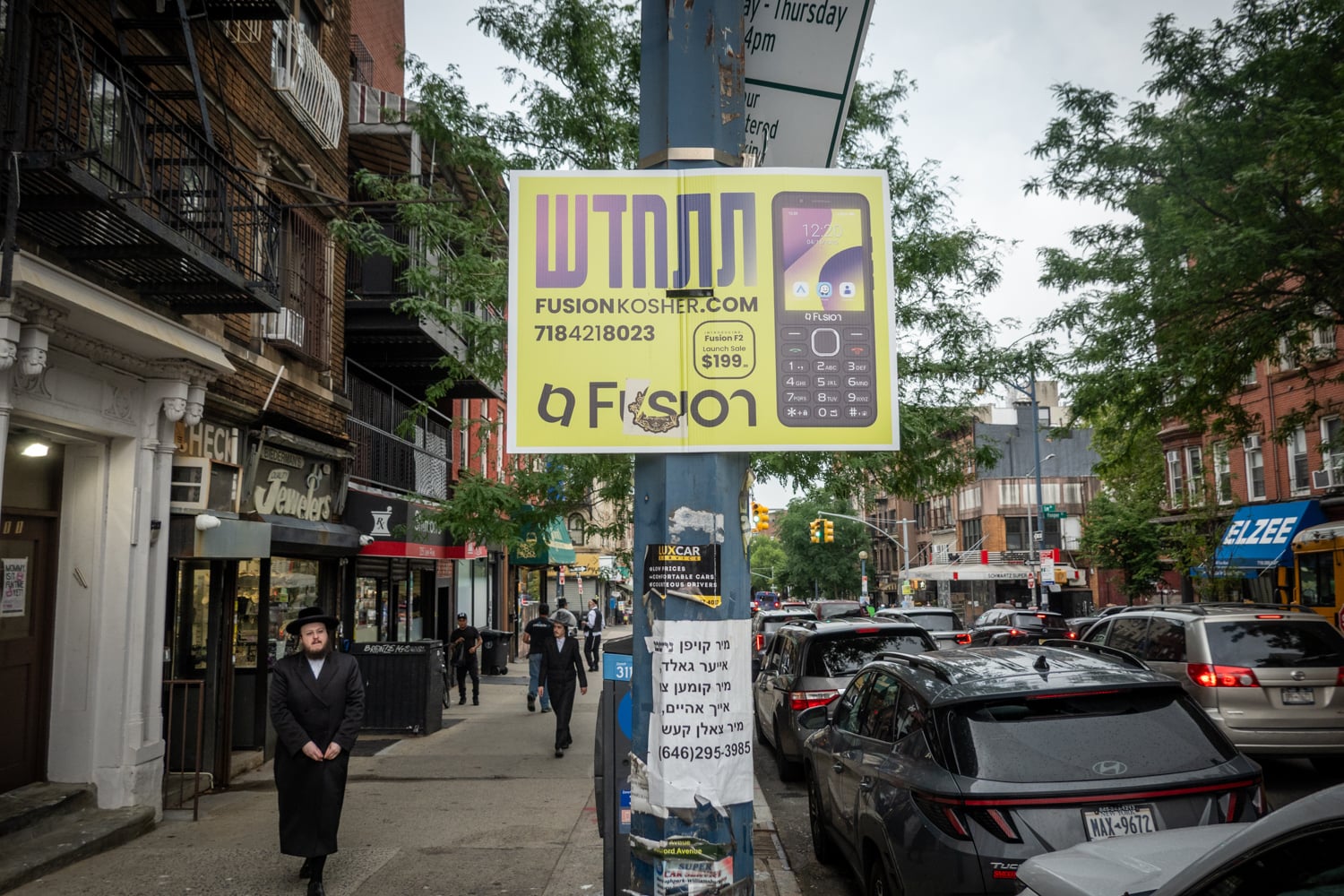
Television, internet access and social media are limited by rabbinical councils and social mores.
“Few religious communities outright reject new technologies,” said digital religion scholar Dr. Ruth Tsuria, a former Orthodox Jew.
Instead, religious movements “culture” those technologies, said Tsuria, who teaches communication at New Jersey’s Seton Hall University.
In one example, in recent decades a “kosher tech” ecosystem has emerged in Williamsburg and other Haredi — or strictly traditionally Orthodox — communities.
When smartphones first became popular, stores in these areas started selling so-called “kosher phones” — a simple flip phone lacking certain features, like an internet browser, which were seen as a potential channel for indecent secular content.
In Israel, Haredim have protested outside stores that sell unfiltered or non-kosher smartphones. Several of those protests have erupted in violence.

Challenging human authority
Today, the front line in the holy war with technology is AI, and battle lines are being drawn.
After OpenAI released the first version of ChatGPT in 2022, one Hasidic group in New York banned AI use, calling it a window to “heresy.” Some groups in Israel have also sought to limit their members’ use of AI, including for religious queries.
Generative AI has penetrated some Orthodox communities, though, including for religious uses.
In early 2025, Tsuria conducted a small, informal survey of around 40 Orthodox Jews from around the world about generative AI. Of that sample, 94% said they use AI at least once a week.
While about half said they resist using AI for religious purposes, the others acknowledged using it to search for answers to “religiously and spiritually meaningful” questions. Most significantly, 66% of the respondents who use AI said they ask the platforms questions about Jewish law, or halacha — a role traditionally reserved for rabbis.

“There’s some fear because the way we interact with generative AI feels human,” Tsuria said.
The fact that most LLMs are conversational chatbots is no accident — there were many ways AI technology could have been packaged, but OpenAI and other companies recognized the potential of making the product feel human to better connect with users, she said.
Some experts, like Israeli intellectual and historian Yuval Noah Harari, have speculated that, unlike previous digital technologies, AI could use its vast knowledge base to supplant the authority of religious scholars. With AI being treated like an all-knowing sage by millions of users, some models, like the Catholic Magisterium AI, are already mastering religious texts.
Harari summed up the dilemma at the 2026 World Economic Forum in Davos, Switzerland, saying, “What happens to a religion of the book when the greatest expert on the Holy Book is an AI?”
A way forward
Chabad, one of the largest Hasidic movements with an estimated 90,000 followers, is known for its outreach to other Jews and has long been an early adopter of new technologies.
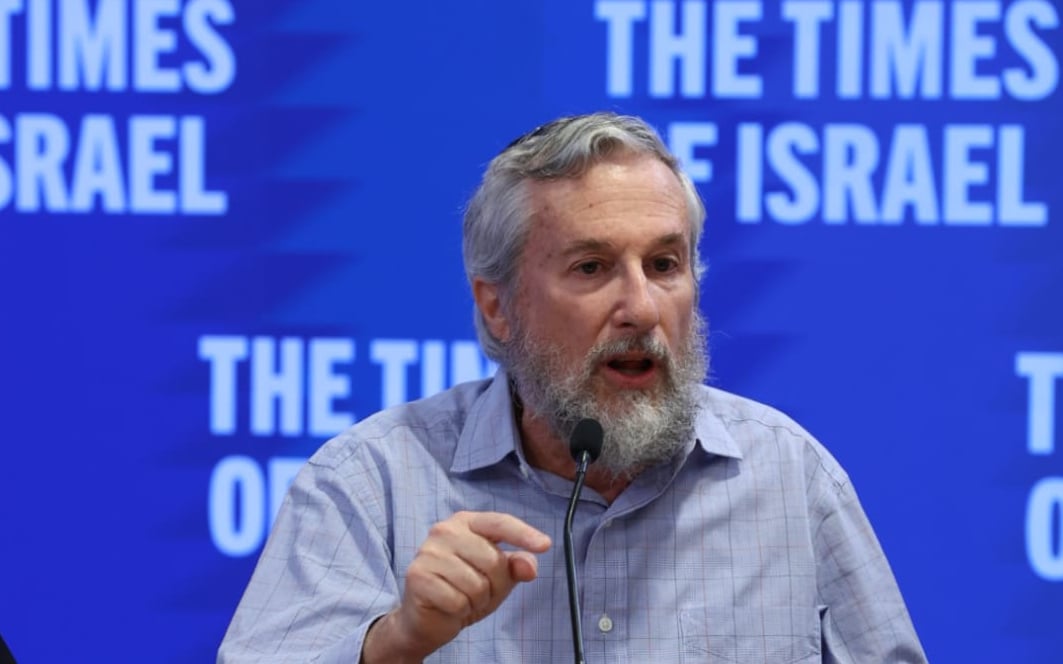
Rabbis affiliated with the movement approached computer scientist Dr. Moshe Koppel in 2025 about incorporating their literature into a Jewish chatbot. Koppel developed a program, called Rav Dicta, that can answer questions using a specialized dataset of Jewish commentary, rabbinic literature and the Torah.
Rav Dicta is among the first AI applications made in collaboration with Hasidic leaders. The program — one of several similar initiatives affiliated with the Chabad movement — is an early example of how Orthodox groups are sculpting AI for their own purposes, and how AI can influence religious practice in turn.
“My ambition is to get every significant Jewish book, from every group, into my library, then be able to respond to every question that anybody would have at whatever level they’re interested in,” Koppel said in an interview in Jerusalem.
The program comes as an array of institutions — religious and secular — train their own AI models on private datasets to provide more curated answers than those available from platforms created for the general public.
Koppel is a computer scientist, Torah scholar and political activist who runs two organizations — the machine learning nonprofit Dicta and the conservative think tank Kohelet. He was an architect of the Netanyahu coalition’s judicial overhaul, which sparked massive protests against the government in 2023.
In 2015, Koppel started researching how to answer halachic questions using AI and is now working with several Hasidic groups to build custom AI engines.
These engines, under the umbrella of Rav Dicta, answer questions based on each group’s own body of literature and the Torah. Rav Dicta is technically an LLM-based agent, meaning it sits atop the existing AI model Claude, but uses a specialized dataset to produce more refined answers.

During the annual International Conference of Chabad-Lubavitch Emissaries in November 2025, Koppel ran an AI panel in which he demoed the new AI engine in front of rabbis from around the world. The emissaries run “Chabad houses” in dozens of countries, including far-flung locales, that cater to Jewish residents and visitors.
Reactions to the panel were a mix of awe and alarm. One rabbi asked Koppel if Rav Dicta would put him out of business.
Koppel said there was no substitute for the human relationship between a rabbi and his congregant, though.
“When somebody comes to the Chabad emissary in Kathmandu, it’s because they’re looking for a human connection. The question is only a vehicle for them to develop a relationship,” Koppel told The Times of Israel.
During the interview, Koppel demonstrated Rav Dicta on his laptop, and clearly visible at the top of the page was a warning message: “Rav Dicta is not a substitute for a human rabbi. Its answers are for study, not practice.”
The Times of Israel posed questions to Rav Dicta. Asked, “Why do bad things happen to good people?” — among the hardest religious questions — the program “thought” for seven minutes, then delivered a five-paragraph response.
It began with the refrain: “What appears to us as ‘evil’ is actually hidden divine goodness that we cannot understand due to our human limitation.”
The answer was cogent and took a more mystical tone toward the end.
“In the world there are sparks of holiness that have fallen into dark places and can only be rescued through difficulties and trials,” it said.
Rabbi Mordechai Lightstone, the social media editor of Chabad.org, critiqued the response.
“It lacks the direction that a rabbi might give to a person,” he said.
Normally, when a congregant asks a religious leader such a challenging question, they do so with regard to something that happened in the congregant’s own life, Lightstone said.
He saw Rav Dicta’s answer as too generic to be useful.
“It gives a lot of food for thought, but without knowing where the person asking is coming from, the AI can’t begin to answer any of that,” he said.
Lightstone agreed that AIs will not replace rabbis any time soon.
“I’m not worried about my job being replaced by ChatGPT,” he said. “I tend to subscribe to the broader idea that this is a stochastic parrot. It’s not alive. It doesn’t have a spirit. It doesn’t understand what it’s saying.”
‘A signal from God’
For now, the Chabad-oriented Rav Dicta appears to be a winning solution to Hasidic communities’ AI challenge, providing an educational resource without supplanting religious authorities.
Elsewhere, attempts to control widely used LLMs appear to be struggling. The New York-based Orthodox technology companies Geder and Meshimer, and New Jersey’s TAG, are all facing challenges in making AI filtering work.
“We’re not doing it very effectively now,” Nechemiah Gottlieb, the founder of TAG, said in an interview.
Geder, another popular Jewish internet filtering company that says it has installed software for more than 30,000 users, uses AI software to analyze and censor web pages in real time. The software detects nudity on the user’s device and “paints over” exposed skin with a black mask, for example.
Websites evolve at a rapid pace, though, incorporating new elements that Geder’s filters are not trained to detect. In response, Geder designs new, more sophisticated filters. This amounts to a technological arms race between Jewish filtering companies and the internet.
Gottlieb sees the threat of AI as a welcome challenge, though.
“We view this as a signal from God: ‘I want you to be more religious. I’m going to stress test you. I’m going to send big challenges to the world because I want you to up your game,’” he said.
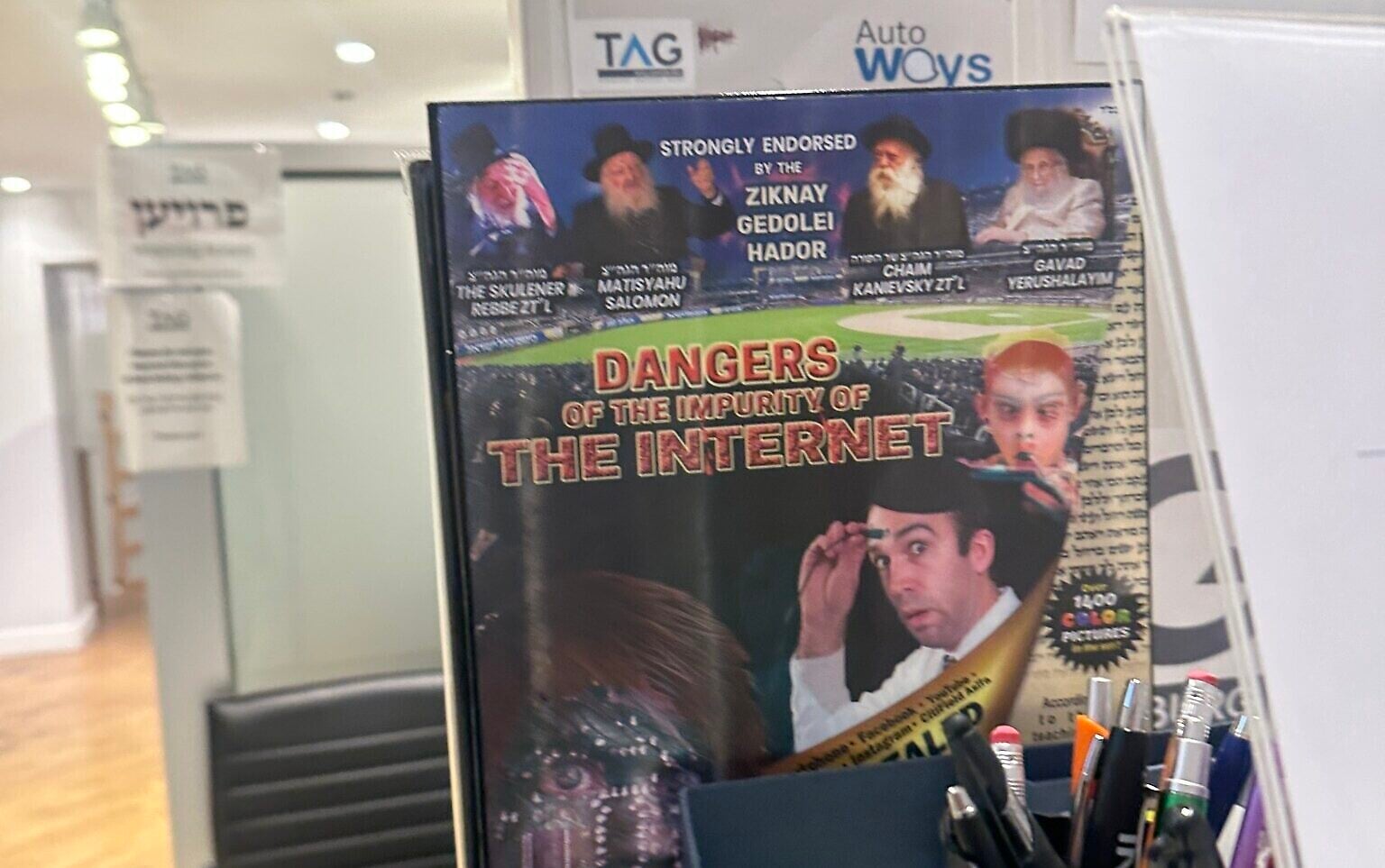
In Kahana’s TAG branch in Williamsburg, Yiddish magazines strewn on the tables warned of a technological apocalypse. One cover depicted a young Hasidic man being pulled apart by robotic arms, under the headline, “Experiments in artificial intelligence you should never try.” A four-part DVD boxset on the “Dangers of the Impurity of the Internet” sat on the front desk, showing graphics of humanoids plugging computers into their brains.
Kahana, packing up his belongings before heading to the synagogue for evening prayer, pointed out that AI is not trusted to dish out verdicts in the American justice system.
“So why should we trust it with our religion, which we believe is much higher, much truer than the laws of the land, because it’s from God himself?” he said.







The Times of Israel Community.