

Arab society stages nationwide strike over police failure to curb violent crime
Starting in northern towns, strike spreads to many Arab locales as Sahknin mayor accuses PM of not caring; Ben Gvir ridicules the protest action, says leaders back criminals
 Add ToI as a Preferred Source on Google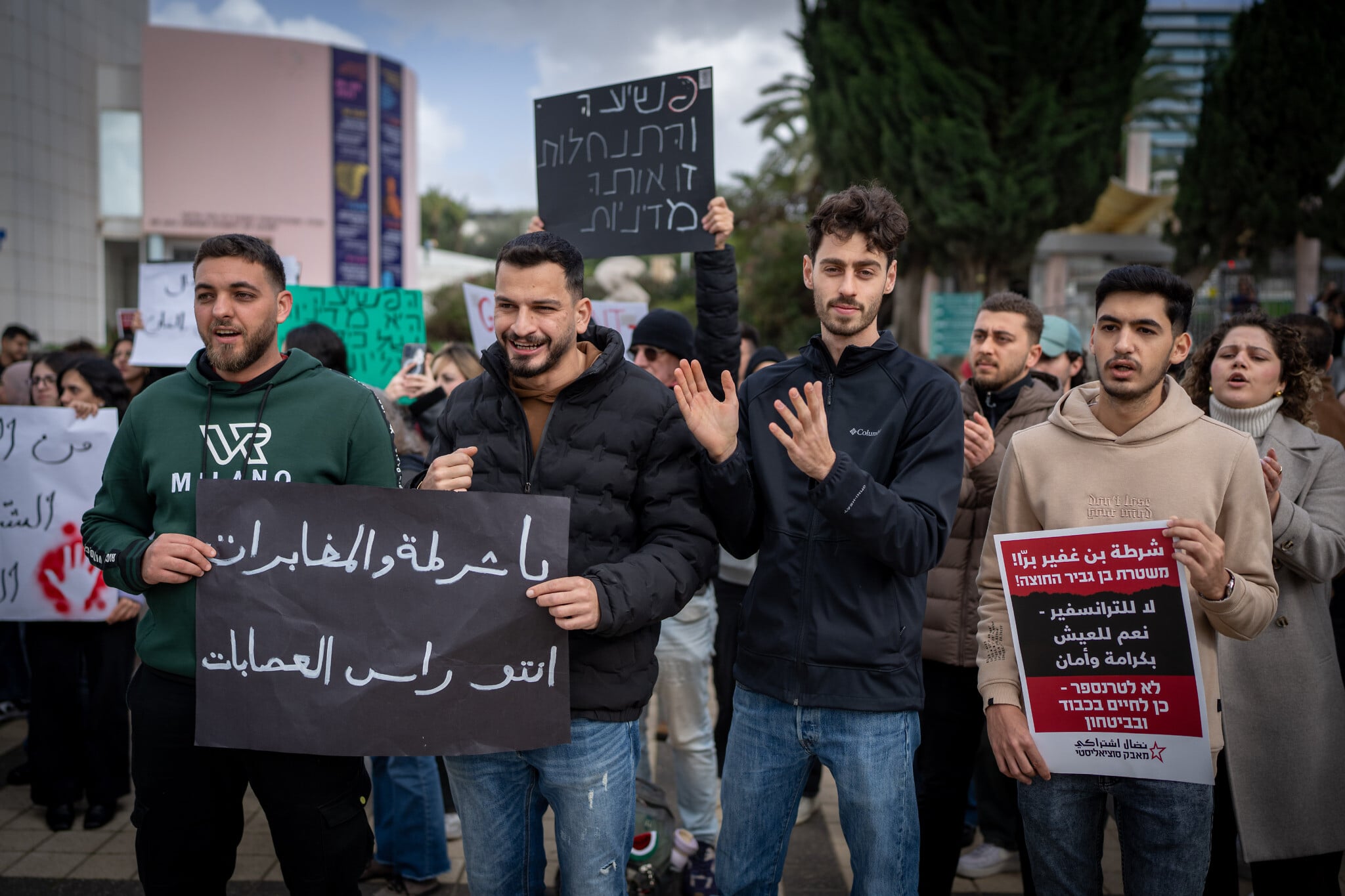
Arab leadership in Israel on Thursday held a nationwide general strike over the police’s failure to stem an ongoing wave of violent crime and near-daily killings besetting the community.
Arab society experienced its deadliest year on record in 2025, with 252 homicide victims. And since the start of January, 20 more people have lost their lives to violent crime. Polling in the past year has shown that the vast majority of Arab society lacks trust in law enforcement.
Nearly all Arab cities and towns shut down Thursday as part of the protest action, which evolved from a local strike in Sakhnin after several shop owners were targeted in extortion-related shootings.
The High Follow-Up Committee, the leading umbrella organization in Arab society, called for residents to join a 3 p.m. march from a mosque in Sakhnin to the nearest police station, demanding law enforcement stamp out protection rackets that have taken a major toll on Arab-owned businesses.
Arab Bedouin citizens in the south are also striking en masse, and a parallel demonstration is to be held in Rahat, Israel’s largest Bedouin city.
Sakhnin Mayor Mazen Ghnaim said blame for the situation rests on Prime Minister Benjamin Netanyahu: “He is responsible for providing security to every citizen, regardless of whether they are Jewish or Arab.”
כל הכבוד לסכנין.
לא סיסמאות, לא פוסטים – שביתה. מחיר כלכלי אמיתי כדי להגיד:
עד כאן‼️
בסחנין הבינו מה שרוב המגזר עדיין מפחד להבין:
זכויות לא מקבלים בתחנונים. מקבלים כשעוצרים את המערכת.
חבל שראשי רשויות, סוחרים, ו 6 ועדי עובדים עדיין מעדיפים שקט, הישרדות, ו״לא להסתבך״
במקום להשתמש… pic.twitter.com/JvzgPfIqXh— Roni ???????? (@Roni65043634) January 22, 2026
“It is probably good for the prime minister that the Arabs are being murdered,” he claimed in quotes carried by the Ynet news outlet, saying that such high homicide rates cannot occur “under a self-respecting government.”
“Apparently they don’t care,” he said. “I personally contacted the prime minister several times. Even a negative answer is an answer, but he didn’t answer at all.
“I would expect my friends, including Jewish heads of local authorities, to join in the strike. We are not against the police or against the Jewish population, but against the government and its policies.
“This situation cannot continue,” Ghnaim said, threatening that “if the Israel Police does not do its job, two million Arab Israelis will block roads in Tel Aviv, Jerusalem and everywhere.”
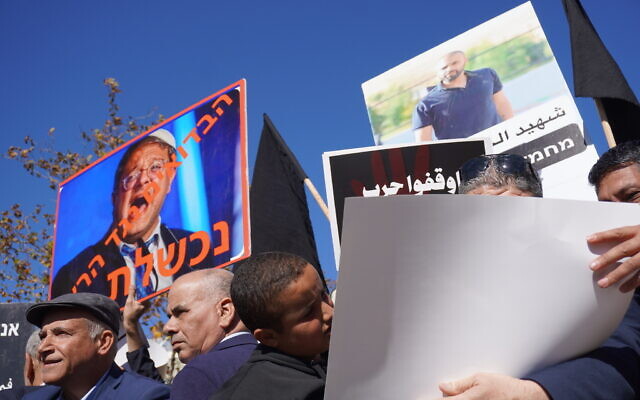
Before Thursday’s nationwide strike, Sakhnin shut down for three days, with prominent business owners closing their doors following a particularly harrowing wave of shootings at local establishments.
Hadash-Ta’al chairman MK Ayman Odeh said the strike was a “significant step on the path toward civil disobedience by peaceful means.”
“What began with a single shop owner in Sakhnin who said ‘enough’ to the phenomenon of protection rackets has quickly spread to all our cities and communities,” he said.
“We will strike, we will protest and we will fight for the lives of all of us, until our children can live with dignity and security,” he declared.
In an opinion article published on the Walla news site, fellow Hadash-Ta’al MK Ahmad Tibi said that the strike is “not a routine political act, but a civil cry for help.”
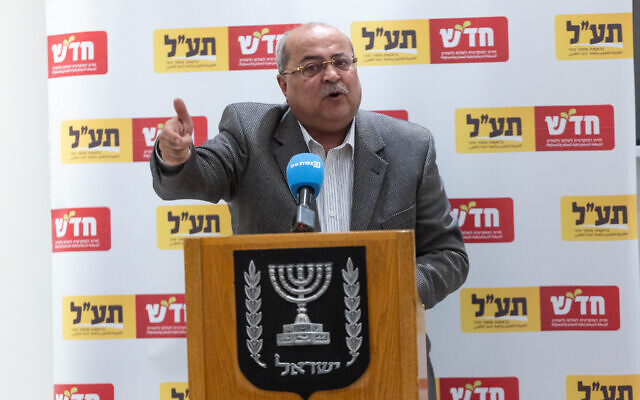
The strike “does not demand preferential treatment,” he continued. “It demands something much more basic: that the state fulfill its duty toward its citizens.
“Instead of seriously dealing with the crisis of violence in Arab society, the government chooses time and again to deflect the discussion. Senior ministers are quick to attribute the violence to ‘Arab culture’ — a false and dangerous claim. This is a discourse that removes responsibility from the state and places collective blame on an entire community.”
“Arab society is not a culture of violence,” he added. “It is a culture of work, of contribution, and of civic responsibility. Sakhnin’s struggle is a struggle for life itself. A civil, moral struggle, which asks for nothing more than the most basic right: to live in safety.”
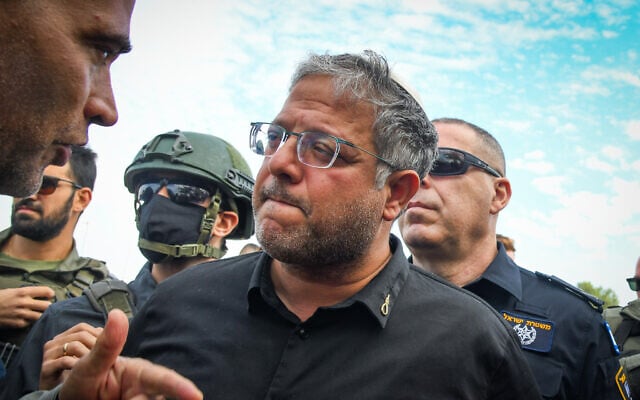
But National Security Minister Itamar Ben Gvir, who oversees police, ridiculed Arab leadership for “speaking in two voices,” saying: “On the one hand they are shouting, ‘the police are incompetent’ and on the other hand, they stand beside criminal organizations and oppose police’s every action in Arab towns.”
The far-right minister said that widespread opposition to a recent string of major police raids in Bedouin towns — one of which saw the lethal police shooting of an Arab man on his doorstep — was evidence of local leaders’ purported support for crime.
Ben Gvir said he has budgeted “tremendous resources for the war against crime and criminal organizations,” claiming his tenure has seen record numbers of arrests and billions of shekels’ worth of property seizures.
He accused local Arab politicians of “turning a blind eye to criminal activity and doing nothing to actually prevent crime.”
While Ben Gvir has blamed both Arab culture and local politicians for the crime wave, since he began overseeing the police as national security minister in 2023, the homicide rate in Arab society has doubled.







The Times of Israel Community.