

At Tel Aviv symposium, women come together to plan Israel’s feminist future
For International Women’s Day, NCJW and the Dafna Fund sponsor conference to reveal new study on women’s status in the Holy Land — and discuss fresh steps forward
 Add ToI as a Preferred Source on Google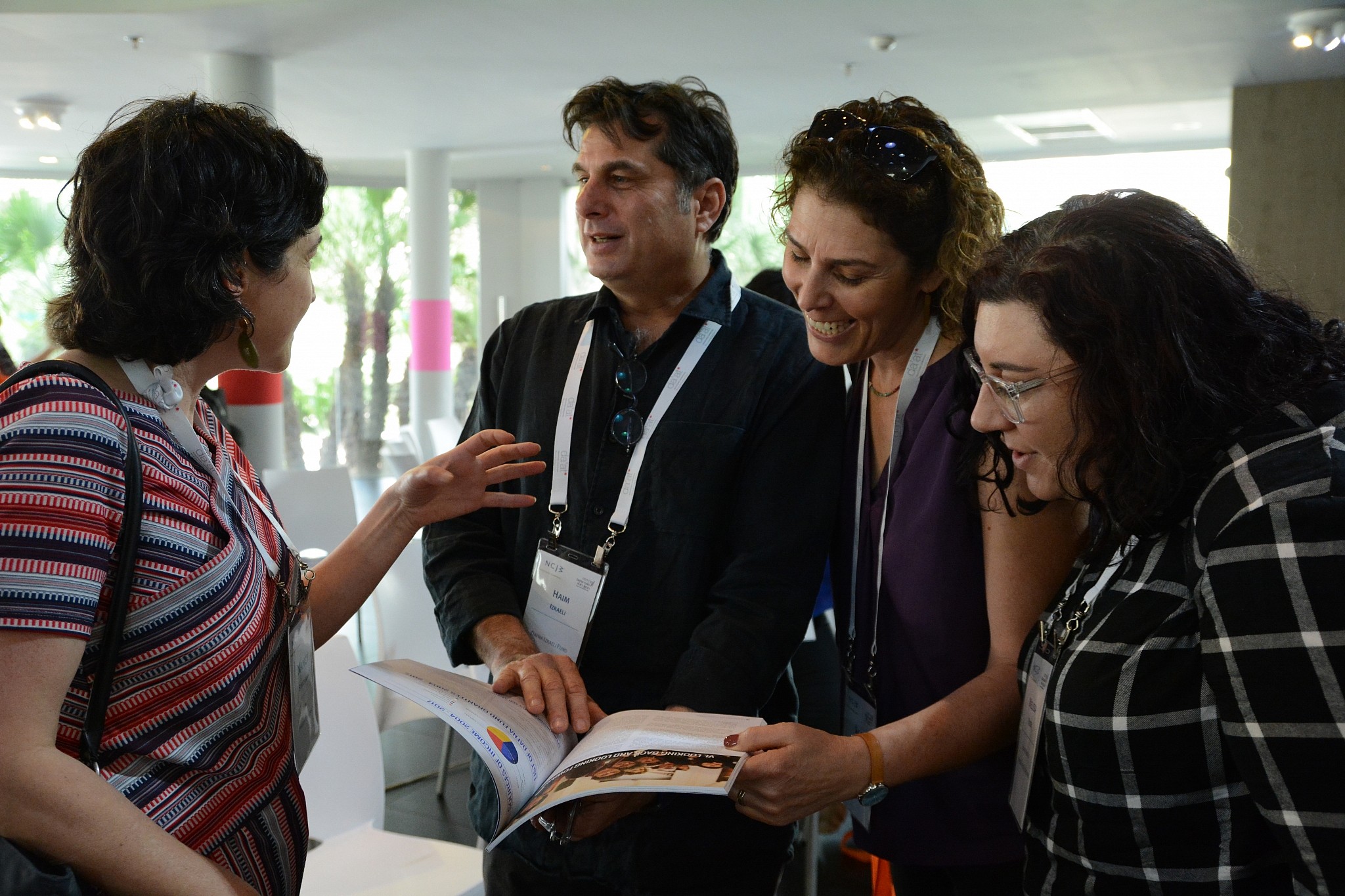
Only 20 years ago in Israel, the “f-word” was not a four-letter expletive, rather it was “feminism.”
But according to a new survey, “Past Achievements and Future Directions of Women’s and Feminist Organizations in Israel” conducted by Hebrew University professor Dr. Nancy Strichman, Israel has made impressive strides in elevating the voices of women and normalizing feminist discourse across society.
In the report, sponsored by the National Council of Jewish Women (NCJW) and the Dafna Fund, Strichman emphasized the need for significant progress and growth remains.
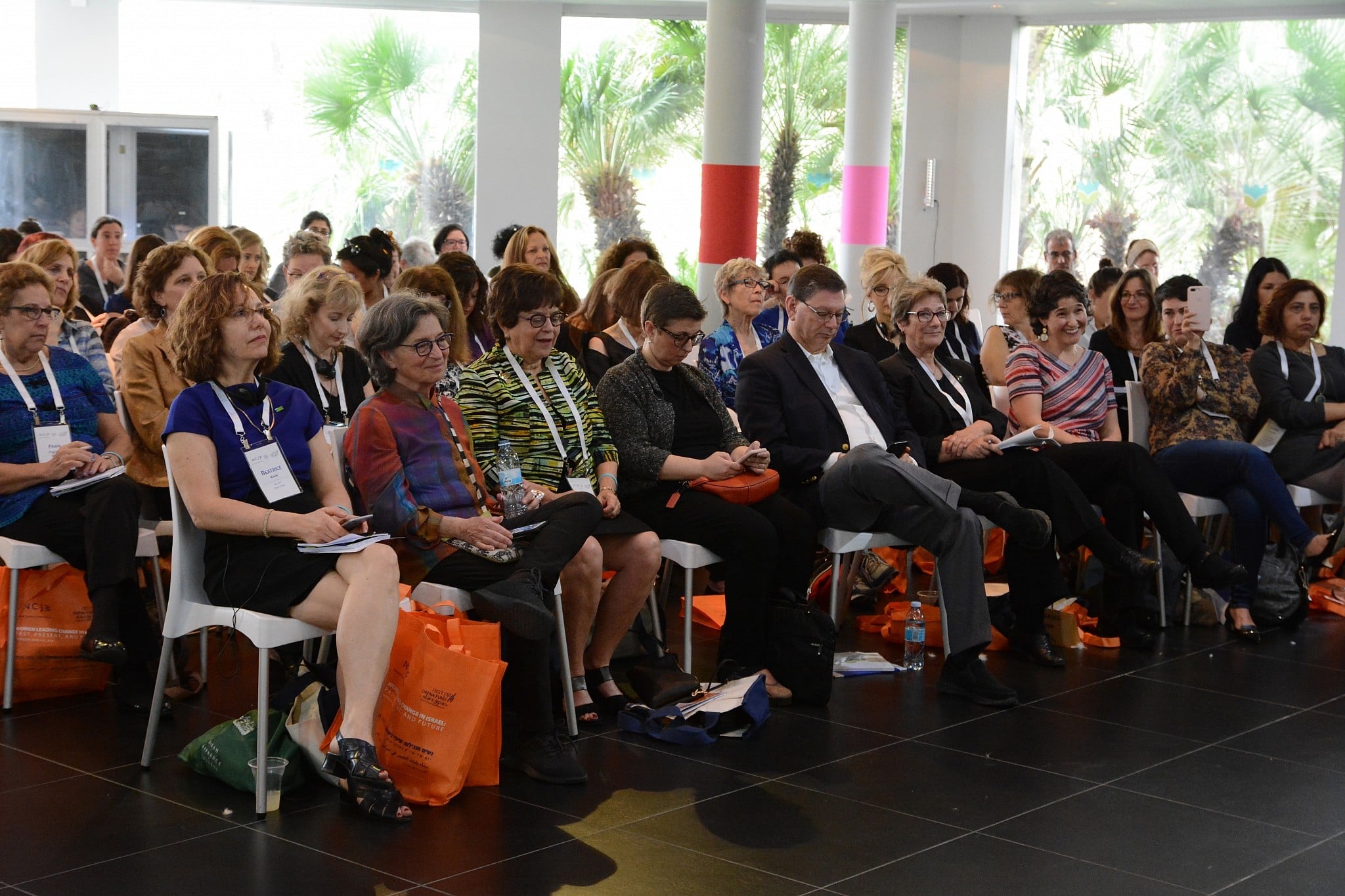
On International Women’s Day, these were the themes encompassing the heavily-female crowd gathered at a symposium in Tel Aviv’s scenic Council for a Beautiful Israel on Thursday.
The event was sponsored by NCJW and the Dafna Fund, the first and only Israeli feminist fund, established in 2003 by Professor Dafna Izraeli. The fund, which according to executive director Hamutal Gouri was known to be finite, is closing its doors at the end of the month.
The report, presented at the event, combined research based on interviews with over 300 Israeli women along with concise action items.
Speaking with The Times of Israel, Nancy Kaufman, CEO of NCJW, the oldest Jewish women’s organization in the United States, said the report illustrates how much has changed since the last study of its kind came out.
“In 15 years… there has been an explosion of activism, and we want to celebrate that,” she said.
Women at the event, she said, were there to network among Israel’s feminist leaders in order to collaborate on future efforts.
Starting with the day’s symposium, Kaufman said NCJW can further mobilize a coalition of women’s organizations and activists under a united agenda, grounded in an understanding of Israel’s key challenges which the report illuminates.
On engaging a younger generation of activists, Kaufman said she sees a lot of new rising voices in the movement.
“We brought younger people on our trip with us. You see a lot of millennials in the room today. There is an incredible generation of activists coming up,” she said.
But the Jewish Diaspora attendees brought to Israel with NCJW for the event, weren’t just in town to kibitz about feminism.
Michal Regunberg, who serves on NCJW’s board of directors, said that despite being a Jewish American organization, NCJW impacts feminist discourse and progress in Israel through funding of specific women’s organizations and initiating events such as the symposium. It was also NCJW that established Tel Aviv University’s women and gender studies program.
Honoring the matriarchs of Jewish feminism
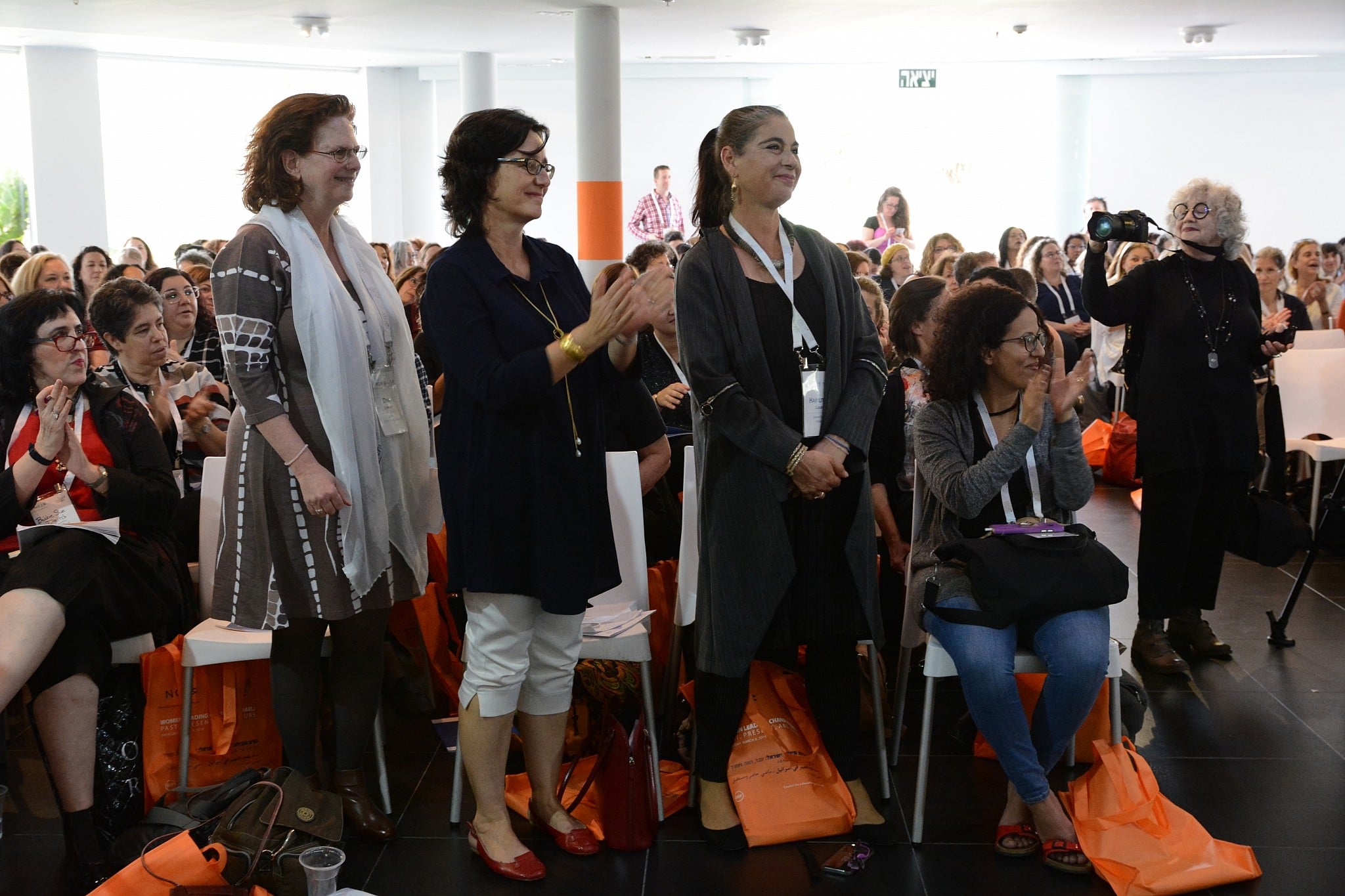
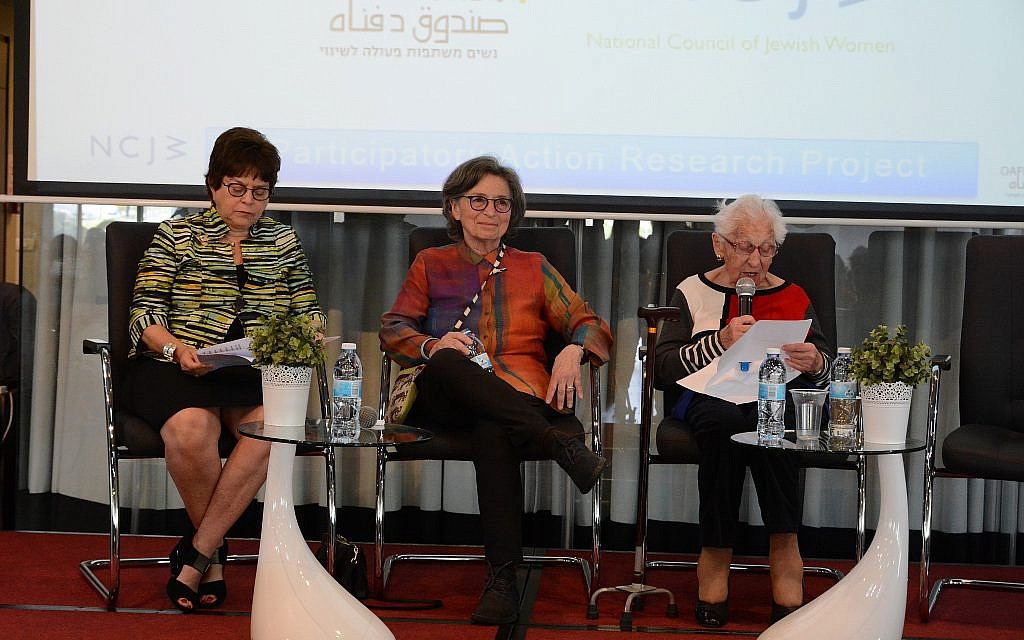
The sense of purpose shared by NCJW’s leadership was felt throughout the event as people gathered for the opening ceremony, eager to applaud the major feminist leaders in the Diaspora and Israel that took the stage.
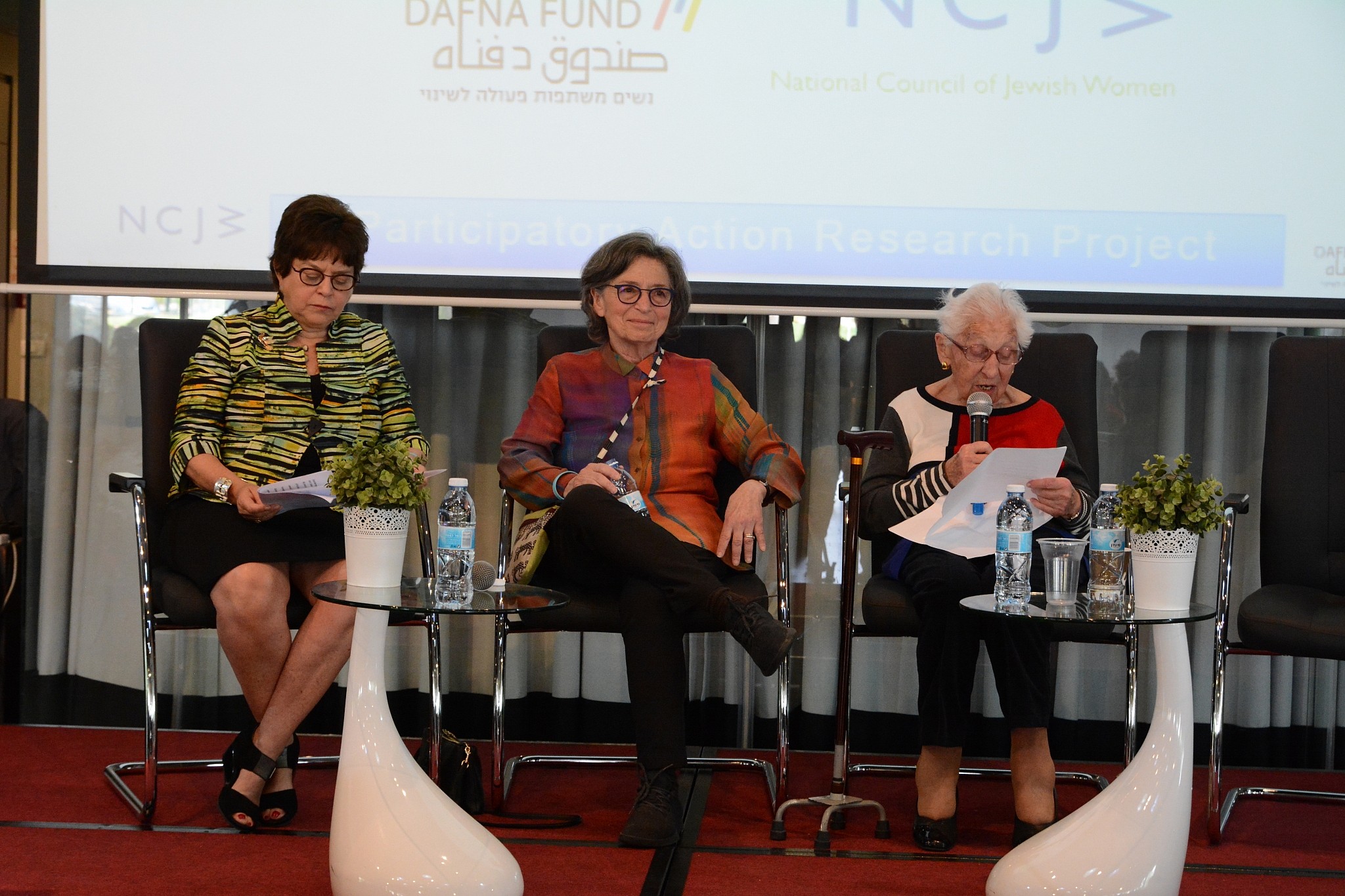
Dr. Alice Shalvi, a founding voice in Israel’s feminist movement, brought a blessing of goodwill to the group.
“May we collaborate rather than compete, joining minds and hands, marching side by side,” Shalvi said, working towards “a society of freedom, justice, and peace for all humankind.”
Infusing some star power into the event, Israeli-American actress Natalie Portman, this year’s Genesis Prize recipient, shared her good wishes over a video message at the opening session.
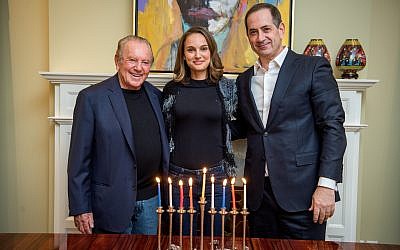
“I’m thrilled that so many powerful, talented, diverse women are gathered in Israel to celebrate achievements for women,” Portman said.
From the study, a confirmation and new direction
The focal point of the event surrounded the release of the report and its findings. Still visibly moved from Portman’s video, Strichman took the stage to break down the goals and takeaways of her study for the audience.
“There was a dramatic change that we’ve seen in the public Israeli discourse regarding the importance of the feminist agenda,” Strichman said. “Feminism has become a mainstream agenda. People now understand that to advance women, you’re advancing society.”
The study found that NGOs and new actors have had a direct impact on the field — activists on social media, in the private sector and community have effectively worked to progress the movement, she said.
At the same time, Strichman said, “There are barriers that stay firmly in place — religion and state, ongoing conflict and traditional gender roles.”
Ultimately, she said investment in women across sectors is creating a noticeable change and must continue to further advance the movement.

Speaking on the sidelines of the conference on the report’s findings, NCJW’s Kaufman said, “I think what the report brought out were fault lines — growing religionization of Israeli society and the impact of religion on women through marriage and conversation, and the fact that the conflict still isn’t resolved and its impacts on women,” she said.
Ultimately, Kaufman said, the goal ought to be getting more women to the table within every sector, including when it comes to brokering a resolution to the Middle East conflict.
“If there were more women involved in peacemaking, we’d be able to solve the conflict quicker,” Kaufman said.
Gouri reiterated this message for The Times of Israel, saying that the report grounded certain core beliefs in fact.
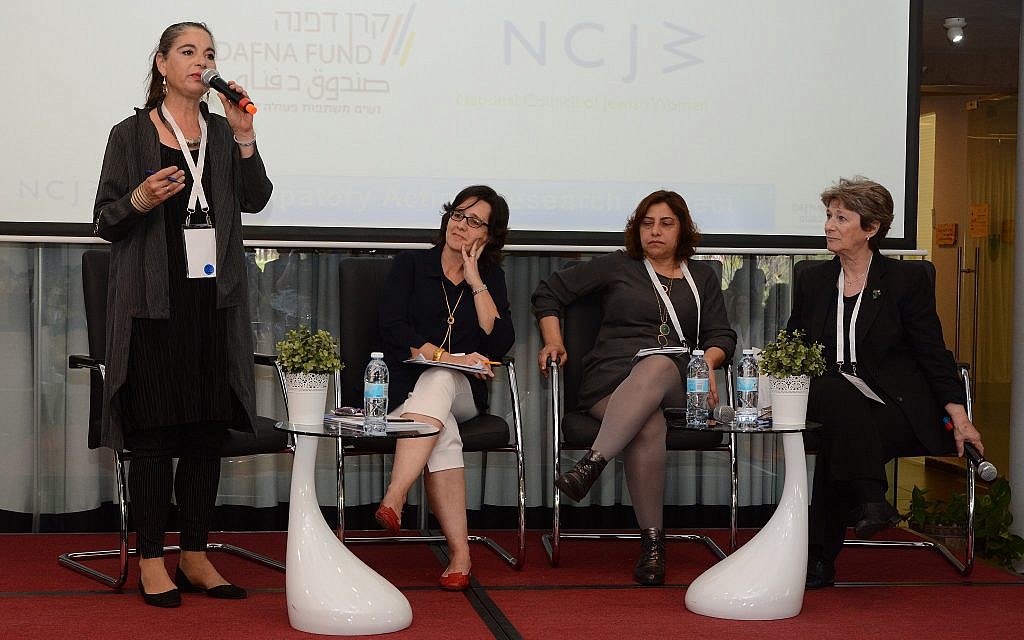
“You have this perspective and you realize that the gut feeling that you had was right all along — that we are talking about an arena that is impactful, effective, that the feminist arena has left a mark in Israeli society in a very substantial way,” said Gouri.
Political Women
While the study, she said, shows greater investment in funding for women’s issues, she believes that it is not felt on the ground. This, Shalabi said, is due to women’s groups in Israel neglecting the political sphere.
There is no organized feminist movement beyond organizations
“This report turned on a warning light that there is no organized feminist movement beyond organizations,” said Shalabi. “A movement is a political body. There were attempts to create this 20 years ago. What is happening with that?”
“The political reality marginalizes us and creates friction between women,” Shalabi said, answering her own question.
“We shouldn’t be afraid of differences in political views, but we can still insist on one feminist agenda that can change the face of democracy. We need to have a say on every issue,” she said.
“We need to have a position, not just an opinion. We have the power to do this,” Shalabi concluded.
After the panel session, attendee Devon Spitzer said she was inspired by the women she heard at the event.
The 23-year-old recently moved to Israel from the San Francisco area and works for Open Door, an Israeli organization under Planned Parenthood’s international branch to advance women’s health.
“It’s important for our generation of millennials to understand how feminism has gone forward. The movement has become so divided. But getting the perspective of feminist pioneers in Israel is so gratifying,” Spitzer said. “It shows a path forward.”










The Times of Israel Community.