

Babe in arms: The tale of a teenaged resistance fighter
70 years in the making, Andrew Borowiec’s memoir ‘Warsaw Boy’ began on a WWII toilet paper roll
 Add ToI as a Preferred Source on Google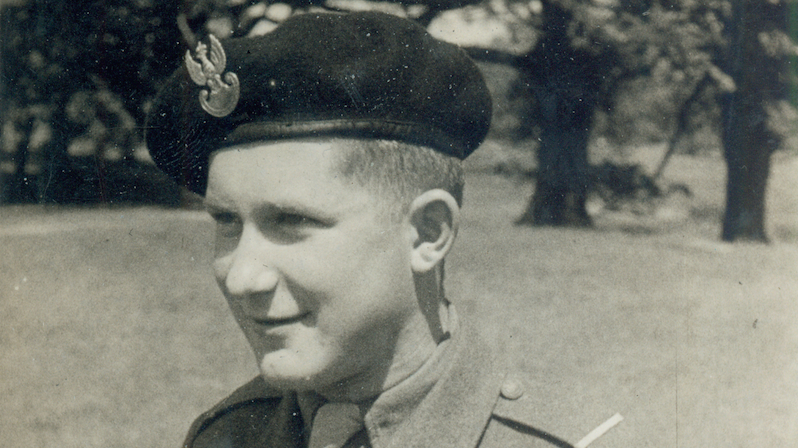
On August 1, 1944 a 15-year-old member of the Polish Resistance movement lobbed a grenade through the shattered window of a Warsaw apartment block, hitting some German soldiers who were running below.
I’m presently chatting with that same man, Andrew Borowiec. He’s now 85-years-old, and today, from his home in Cyprus, he’s explaining what it feels like to kill someone in a battle where survival means you live or die.
“The first few shots were always difficult because I was not accustomed to the idea of killing someone. But when the time came to pull the trigger it was rather a strong feeling, and you just hoped that you got the enemy,” he explains.
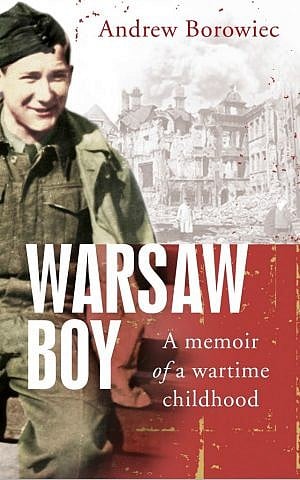
The Polish-born writer and former soldier has just recently published “Warsaw Boy,” which Borowiec began writing on a roll of toilet paper as he was convalescing in a German Prisoner of War camp in the winter of 1944.
Having taken 70 years to finally make it into print, the book is a brilliant first-hand account of day-to-day life inside a country that Nazi Germany had little else in their plans for except total annihilation. And it describes a number of journeys he took across Poland during World War II.
If Nazi policy during this period exemplified the depths of depravity mankind could sink to when ultimately committed to one ideology, Poland was the physical landscape where these dark fantasies turned into a living nightmare.
At 15 Borowiec joined the Home Army, the main Polish resistance movement at that time. He fought in the Warsaw Uprising, which was a Polish-led rebellion against the Nazis that lasted 63 days, but that eventually failed despite a long and arduous effort.
While his personal story is the main focus of the book, Borowiec also documents the faith of Jews in Nazi-occupied Poland at nearly every stage of his narrative. Our conversation, though, has taken us all the way back before the war, to Kielce in central Poland in 1934.
This was a period when Poland had the largest Jewish community in Europe. Numbering three million, they accounted for nearly one tenth of the entire population.
“Many of my classmates at school were Jewish,” Borowiec recalls fondly. “So it was a big surprise to everybody in Poland when the Jews began to be persecuted. Nobody felt that the situation would progress as it did at that time. We did know that the Germans were clamping down on the Jewish population. But of course nobody expected the Germans in occupied Poland in such a short time.”
Just eight years later, in 1942, Borowiec would find himself in a country that had been completely transformed from the beacon of tolerance he grew up in.
And the Jewish culture that had blossomed for centuries, dating back to the Polish-Lithuanian commonwealth in the Middle Ages, was on the way to permanent extinction.
As has been well documented hitherto, this primarily arose from the hate-filled policies of Nazi Germany, who began a genocide program on Jews that was unparalleled in human history. Almost six million perished in mechanical death centers such as Chelmno; Sobibor; Belzec; Majdanek; Auschwitz, and Treblinka, while others starved or were shot in various Jewish ghettos around Poland.
In one particularly moving passage, Borowiec recalls arriving at Kraków station as a 13-year-old boy. Traveling alone, he was due to meet his father in another part of the city. As he boarded a tram, he realized that the line led straight through to the heart of the Kraków Jewish ghetto.
He writes of this episode:
My first impression was that it was like being in a zoo, only with people instead of animals in the cages. I was amazed to see that there were women behind the wire wearing colourful summer dresses in the sunshine. Some of them had their armband lined with lace, while the men’s armbands were often neatly starched.
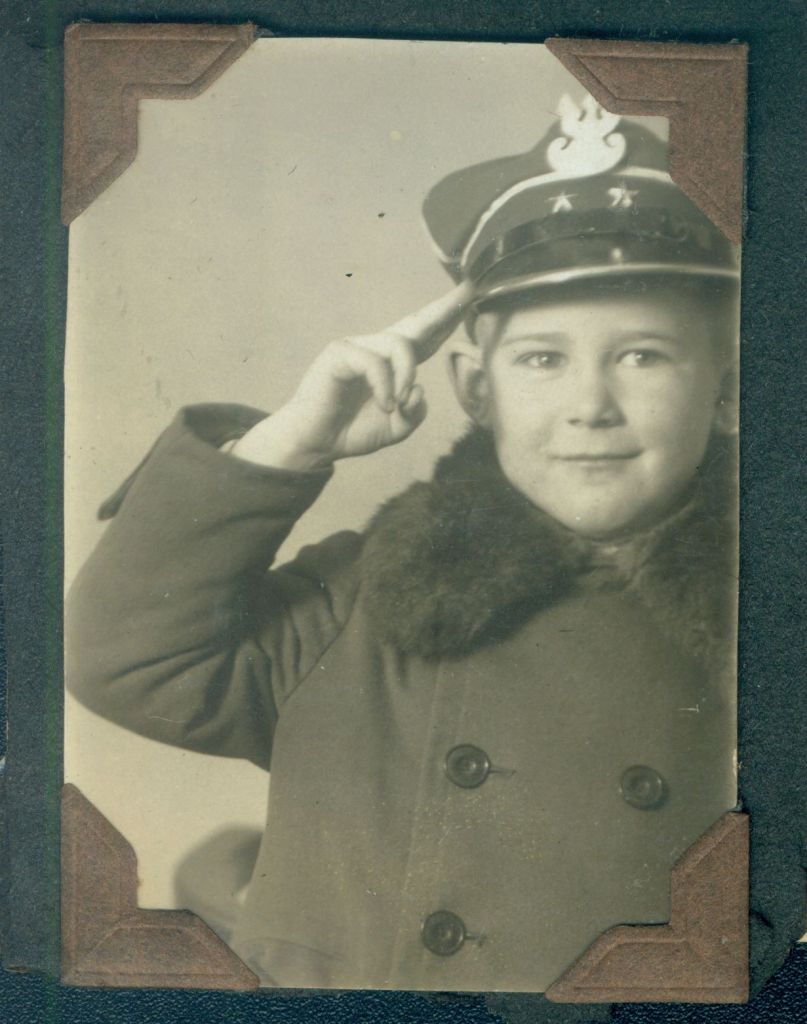
In August of that year, two weeks before his 14th birthday, Borowiec found himself being evicted, along with his family, from their home in Maków, a town in eastern Poland.
A Jewish lady who lived in a small house beside them, he says, looked on at the eviction notice with great sympathy.
At the time, Borowiec says the Germans were publicly telling all Poles that the Jews were going to be resettled.
“That’s all we knew at the time,” he recalls. “We really didn’t know how far it was going to go.”
But the fate of the Jewish population in Poland was rapidly becoming more certain day by day. On the morning of Sunday August 23, 1942, Borowiec awoke to find the entire Jewish population of Maków frogmarched into the town center by the Germans.
“It was quite rapid,” he says, recalling this particular memory as vividly as if it were yesterday.
“The Jewish population were all told to report to an empty square, like a football field, next to a railway station. And they all had suitcases with them. They didn’t know where they were going, or what the Germans were about to do with them.”
“One of the Jews, whose name was Weiss, was brought in by his family,” says Borowiec, pausing for a moment.
“They brought him in a wheelbarrow, because you see, he couldn’t walk. And the Germans shot him in the head on the spot. I think this was a signal for the Jews that wherever they were going, it certainly wasn’t going to be pleasant.”
In the summer of 1942, an estimated 300,000 Jews were deported from Warsaw to Treblinka by train. The end of the line was a harrowing finale of unspeakable human horror.
In his memoir, Borowiec attempts to recreate the sterile atmosphere the Nazis created when organizing murder on such an industrial scale.
Borowiec writes:
Soon the burial pits began to overflow their banks. Corpses were hardly covered. It was hot summer. The stench of putrefying flesh was becoming unbearable. When fresh trainloads arrived, the Jews locked in the cattle trucks smelled [death] long before they arrived. Any hopes fostered by postcards from those who had gone before then had vanished.
Meanwhile back in Warsaw, around 40,000 Jews had been corralled into a ghetto that was over a square mile. As the news of these horrific mass killings in Treblinka leaked back to the Warsaw ghetto, a surviving group made up mainly of young people formed Zydowska Organizacja Bojowa, literally the “Jewish Fighting Organization.”
Borowiec describes his own memories of the ghetto: “I didn’t actually enter the Warsaw Ghetto itself, but to get to the Catholic cemetery in Warsaw, the tramline went right around the ghetto wall, for about a kilometer. So you could see from the tramway large parts of the ghetto.”
‘I thought personally the Jews might win the fight against the Germans in the ghetto’
“There were individual Jews firing at the Germans and that happened to be in an area where I went to school. The ghetto was so near, you could almost throw a stone to where it was from my school. And you actually didn’t see much, but you heard individual shots, and sometimes, a very distinct sound of machine guns. But Jews did not walk on the streets of Warsaw, at least I did not see many doing so.”
Borowiec recalls how, for a brief moment during the ghetto uprising in Warsaw, he felt confident that Jews might be able to hold off the Germans for much longer than everybody else expected.
“I thought personally the Jews might win the fight against the Germans in the ghetto,” he says.
“But not many other people did at the time. As it turned out they were correct and I was too optimistic. The reason for my optimism was that the Jews were concentrated in one limited area. And many of them were men who were of military age, and who were trained soldiers: because compulsory service included the Jews before the war.”
“I assumed the Germans would have a much tougher time than they did. Because the Germans brought more troops than anybody expected, when they eventually liquidated the Ghetto. If I remember correctly it hardly took more than a month, which is still a long time.”
The subject of how Poles behaved to Jews during the Nazi occupation is still hotly contested among historians. Poles are often painted by many as anti-Semites who stood idly by as Germans exterminated the Jews on Polish soil.
There were thousands of Poles who risked summary execution by allowing Jews to hide
Borowiec counters that argument, quite convincingly, claiming that there were thousands of Poles who risked summary execution by allowing Jews to hide among the gentiles outside the ghetto’s wall in Warsaw.
However, he does admit that there were others who acted with less humanity. These were known as szmalcowniks: people specializing in blackmailing Jews for money. The resistance army shot these blackmailers on the spot, leaving leaflets on the scene explaining why, Borowiec writes in his memoir.
“There were Poles certainly collaborating with Germans,” he admits. “But considering the fact that there were [36 million in Poland at that time] they were a very small minority.”
It’s a strange experience today to talk with a man who can speak so effortlessly about this brutal, dark period of European history in such quotidian terms.
While the book is a memoir Borowiec began writing before the war had actually ended, you can’t help get the feeling that, with the passing of time, it somehow feels like a strange dystopian novel: one that is almost completely separate from the man who has written it.
And what about editing the memoir itself? Was it a painful experience? Given that it concerns a country that Borowiec hasn’t lived in for nearly seventy years, despite it being his homeland.
“It was a long time ago,” he tells me directly. “I’m now a very old man. So I don’t think about the war anymore. Except when I write about it, just occasionally.”




The Times of Israel Community.