

Back to the battlefield
Ya’alon, Bennett spar over illicit knowledge of military affairs during the Gaza op, while an unidentified projectile hits the south
 Add ToI as a Preferred Source on Google
Marissa Newman is The Times of Israel political correspondent.

Weeks after Operation Protective Edge officially concluded, the military campaign is wrenched back into the limelight in Wednesday’s Hebrew papers as Economy Minister Naftali Bennett and Defense Minister Moshe Ya’alon go head-to-head over the former’s alleged unlawful access to classified information on the tunnel threat. Meanwhile, the first rocket or mortar shell since the conflict ended is shot at southern Israel.
The public spat between the two ministers, amid accusations that former IDF chief rabbi Avichai Rontzki fed Bennett sensitive military information obtained during high-level meetings near Gaza (although the rabbi was not formally called up to reserve duty) dominates headlines in all three papers.
Yedioth Ahronoth spotlights the rabbi’s denial of his involvement, and Bennett’s criticism of Ya’alon’s handling during the operation.
Speaking to Yedioth, Bennett is adamant the rabbi did not leak any information or act as his “mole,” as Ya’alon charged. “If Bogie [Ya’alon] wants to argue with politicians, be my guest. Leave Rontzki out of it,” Bennett says, adding that it’s “a shame the defense minister did not display the same enthusiasm during the campaign that he is demonstrating now, at Rontzki’s expense.”
Bennett maintained he had received the information from officers during his tours down south as the fighting raged in Gaza.

The paper’s Yossi Yehoshua says the latest squabble is “the tip of the iceberg of a far deeper conflict: a lack of regard between Bennett and Ya’alon has existed for many years.”
“Bennett was the only one who challenged Ya’alon’s professional opinion during the operation: even if he was wrong in how he received the information, one must admit he had his facts correct more than once,” he adds.
Haaretz, meanwhile, highlights Ya’alon’s discontent with Bennett having taken credit for the elimination of the tunnel threat, citing sources close to the defense minister who called these boasts “lies, tales, and inventions.”
The paper notes that Bennett maintains close ties with several senior military officials dating from his service in an elite IDF unit, but reports that an “unofficial inquiry in the army concluded that the information was transferred through Rontzki.” The ex-IDF rabbi was consequently distanced from meetings, but was not subject to other disciplinary measures, it reports.
Like Yedioth, the paper also quotes the disgruntled economy minister, who once again dismissed the allegations against Rontzki, saying: “What information could I get from Rontzki? On the kugel supply rate in the units? He told me about the soldiers’ morale. Nothing more.”
Israel Hayom quotes an unnamed security official who maintained that the economy minister had heard, through Rontzki and sources in the Givati Brigade, that the latter were set to destroy the tunnels.
“When Bennett heard this, he immediately demanded the tunnels be destroyed, and presented it as his initiative. In practice, the brigade was already prepared, because it received an order from the political leadership to prepare, and the order was not given by Bennett who only heard about it in retrospect, but rather by the prime minister and defense minister,” the source said.
Meanwhile, the papers also focus on the fire on southern Israel on Tuesday night, the first since the August 26 ceasefire, but are a bit fuzzy on the details.
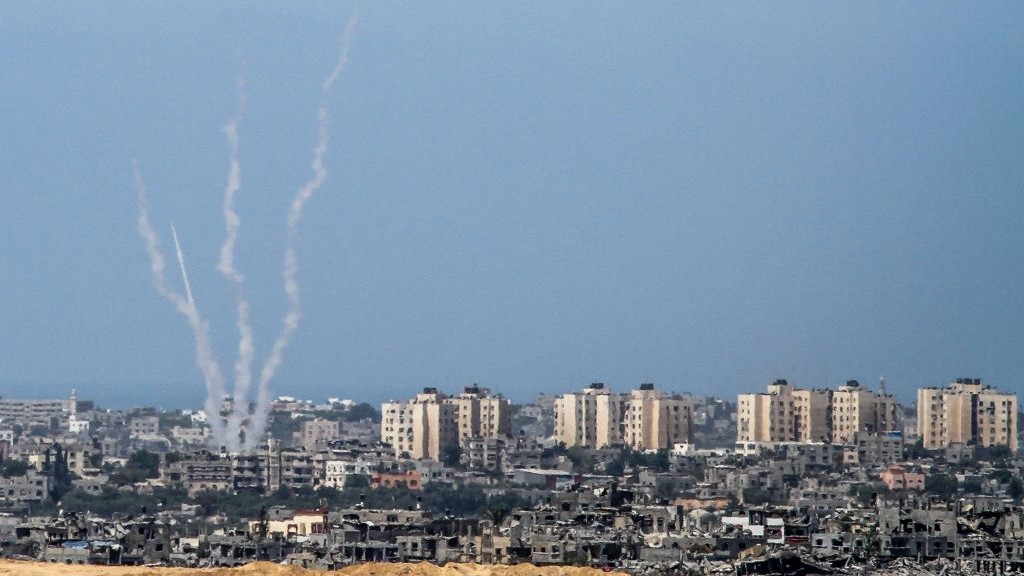
Yedioth reports it was a rocket which landed in an open area in the Eshkol region. Haaretz says it was a mortar shell, while Israel Hayom indicates there was “fire” but does not elaborate. The three papers also feature Hamas’s denial that it fired at Israel, and report that the Code Red siren did not sound.
After a migrant boat with Palestinians on board sinks on Monday off the coast of Malta, Haaretz features a report on the thousands of Gazans fleeing the coastal enclave to Europe. The refugees are smuggled through tunnels to Egypt, where they are brought to the port and board a ship to European countries, it reports.
“This trip costs $3,500 to $4,000 dollars a person. People who want to go make arrangements ahead of time to come to the entrance to a tunnel in Palestinian Rafah. It’s a relatively small tunnel; most of the big ones have been blocked by the Egyptians. People crawl dozens of meters and at the end of the tunnel on the Egyptian side of Rafah a minibus or other vehicle waits for them and takes them to Port Said,” a smuggler told Haaretz.
“The man said that once they get to Port Said or other locales, they wait in an apartment or other building that has been prepared for them ahead of time. He added that Egyptian security officials are bribed to look the other way and stamp passports with forged stamps,” it reports.
Quoting a refugee who successfully managed to reach Italy, Haaretz writes: “When the boat approaches the shore it issues a distress call and Italian navy and Red Cross ships pick them up. In other cases, the boat approaches the shore and people jump into the water with life jackets, and are rescued by the Coast Guard or the Red Cross.”








The Times of Israel Community.